China’s auto industry association supports China-EU consensus on trade of hybrid and electric vehicles
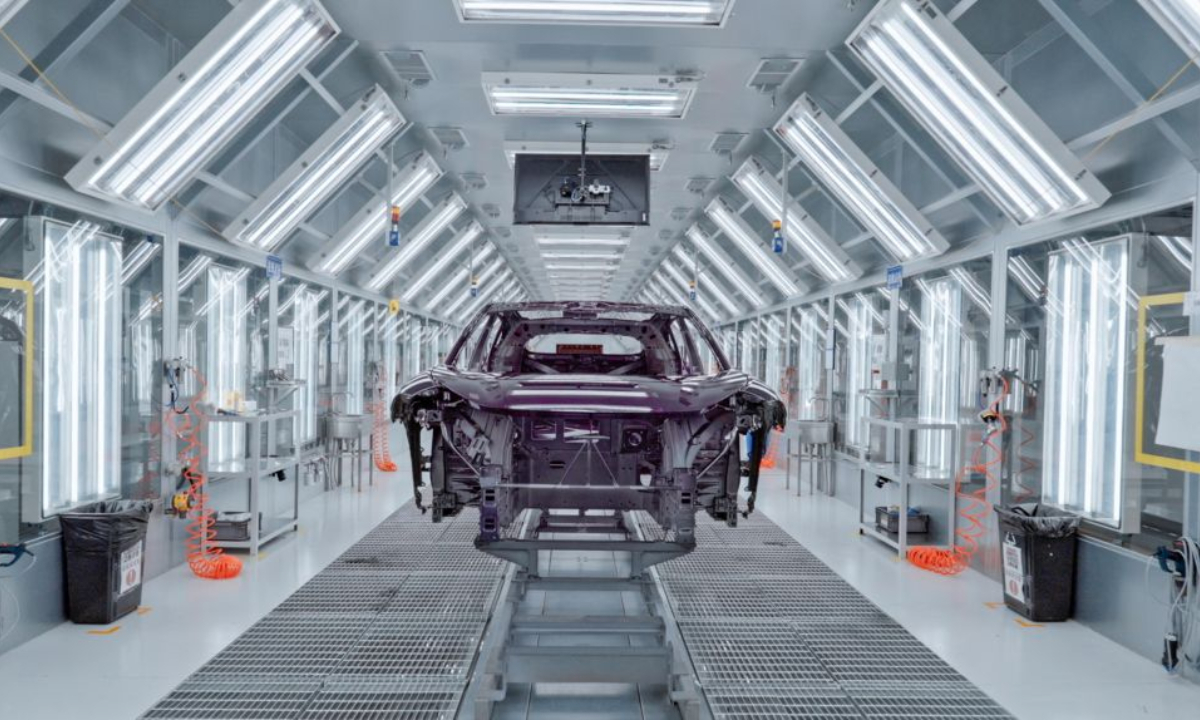
This photo taken on July 28, 2025 shows a view of China Changan Automobile Group's digital and intelligent factory for the new energy vehicle AVATR in southwest China's Chongqing Municipality. (Xinhua/Chen Cheng)
The China Association of Automobile Manufacturers (CAAM) on Wednesday welcomed the positive outcomes of consultations between China and the EU on hybrid and electric vehicle trade.
The association said that it was ready to continue playing its bridging role and to support China and EU to find common ground under the trade and investment consultation mechanism.
Global trade protectionism is rising, international economic and trade uncertainties have increased markedly, and the automotive industry is highly globalized, with extensive industrial and supply chains and close cross-border collaboration, which faces multiple challenges such as policy barriers and supply chain restructuring, the CAAM said in a statement posted on its WeChat account.
If trade frictions are allowed to escalate, they will drive up business costs, disrupt market operations, harm consumer interests, and affect the transformation and upgrade of the automotive industry, the association said.
As major global economies and automotive markets, China and the EU feature highly complementary industries and considerable scope for cooperation. The association would continue to serve the fundamental interests of both sides and remains committed to managing differences and properly handling frictions through institutionalized consultations, replacing confrontation with dialogue and resolving disputes through cooperation, it said.
Under the framework of the multilateral rules of the WTO, China and the EU reached the consensus on hybrid and electric vehicle trade by explicitly upholding the three principles of being fact-based, non-discriminatory and rule-compliant. This consensus helps stabilize industry expectations on both sides, maintain the stability and smooth functioning of automotive industrial and supply chains, and create a more predictable environment for automakers to conduct trade and investment cooperation. It also helps safeguard the common interests of industries and consumers on both sides and prevent trade frictions from escalating, the association said.
By using the WTO framework to address frictions through dialogue and consultation, China and EU have set an example for the international community in managing differences, CAAM said.
The association noted that it was ready to continue serving as a bridge, strengthen communication and coordination, and support China and the EU in finding common ground under the trade and investment consultation mechanism, implementing the consensus and properly handling differences. It expressed its readiness to work with all parties to safeguard a fair, open and non-discriminatory international trade environment, and support the green, low-carbon transition and sustainable development of the global automotive industry.
RELATED ARTICLES