ARTS / CULTURE & LEISURE
Shanghai program opens new literary horizons for international writers
Venturing into new genres
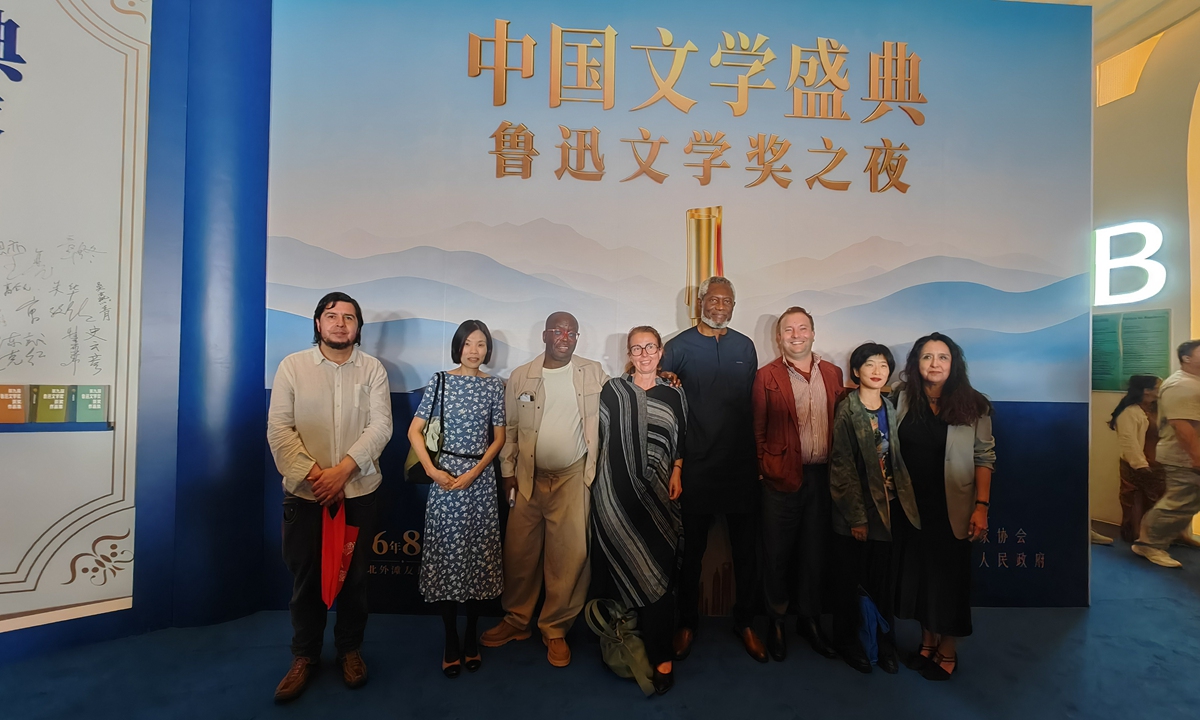
International writers attend the Lu Xun Literature Prize award ceremony. Photo: Courtesy of Hu Peihua
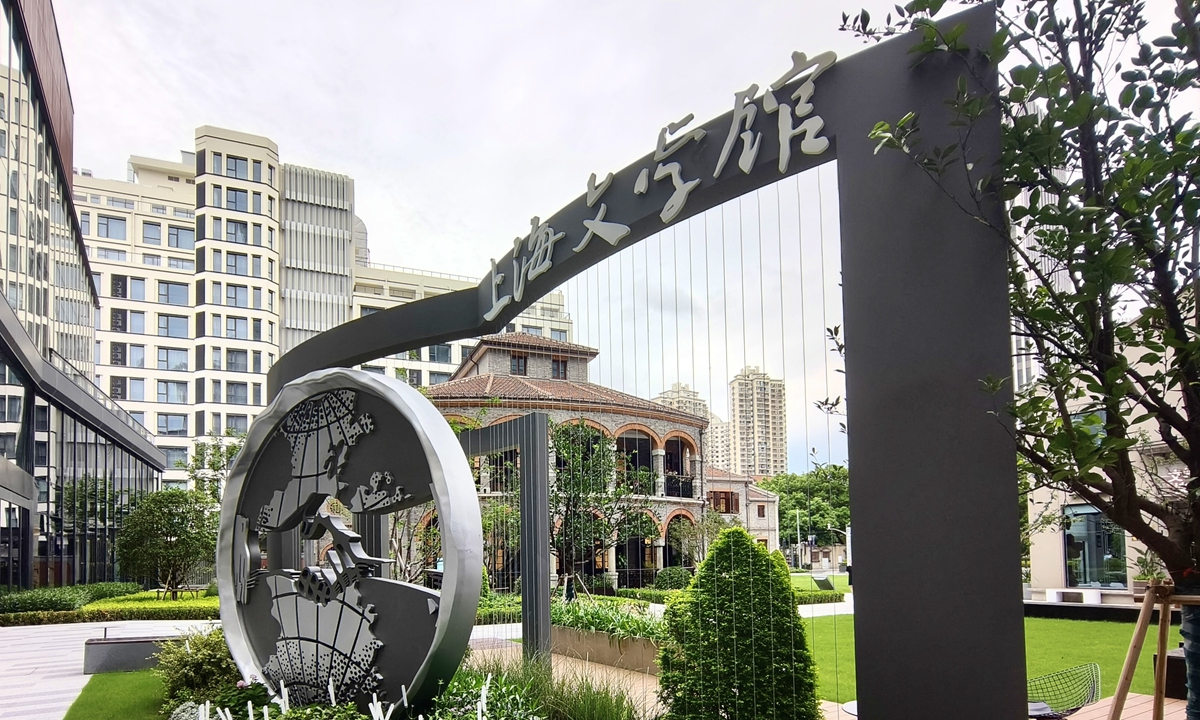
The Shanghai Literature Museum Photo: VCG
While taking part in a writing program in Shanghai, US writer Cleo Qian told the Global Times during an exclusive interview that she has welcomed the opportunity to meet international writers and has been inspired to explore literary genres that she had seldom ventured into before.Qian is one of nine writers participating in the 2026 Shanghai Writing Program, running from August to the end of October. Organized by the Shanghai Writers' Association (SWA), this year's program is themed with "Earth as Home" and brings these nine writers from countries including the US, Germany, South Africa and Peru to Shanghai for a nearly two-month residency featuring literary exchanges and cultural engagement.
Since the launch of the program in 2008, a total of 131 writers from 45 countries have participated in the event, Hu Peihua, director of the international liaison office of SWA, told the Global Times. It is the first residency and exchange program for international writers in the Chinese mainland, serving as an innovative platform for Shanghai to advance people-to-people diplomacy through sustained engagement in the literary field.
With the goal of helping international writers gain a deeper understanding of Shanghai and China, the program promotes people-to-people exchanges through literature, focusing on professional dialogue, cultural immersion, and firsthand experiences of the city, Hu noted.
This year, the nine writers have engaged in panel discussions with Chinese counterparts and readers at literature salons, visited local cultural institutions such as the Shanghai Literature Museum, and attended the Lu Xun Literature Prize award ceremony, one of China's top literary honors.
Interest in contemporary works
Qian, a fiction writer and poet, is from California and author of the story collection LET'S GO LET'S GO LET'S GO.
She usually doesn't write science fiction, but inspired by the program's theme, she wrote a science fiction short story named Distant Relation.
"The topic made me think about immigrants and expatriates, questions of belonging, and made me wonder what homes we might have beyond this Earth - which naturally led to thoughts about alien life and what might exist far beyond us, in the stars," Qian noted.
In recent years, she has read English translations of contemporary works by Chinese writers including Sheng Keyi, Shuang Xuetao, Yan Ge, Xu Zechen, Can Xue and Liu Cixin.
"I am particularly interested in surrealism and speculative elements employed in contemporary Chinese literature. For example, Shuang Xuetao has a book translated into English titled Rouge Street, which collects together three of his novellas, several of which have magical realist or surrealist elements," she said.
"Yan Ge's novel Strange Beasts of China has a compendium of imaginary animals, such as sorrowful and joyful beasts, which all have a strong allegorical quality. I'm interested in the use of these techniques - allegory, magical realism, surrealism - and how writers use them to depict a world that is volatile and unstable," said Qian, who has taught creative writing at Oberlin College in the US.
Strange Beasts of China, a magical realism and science fiction work, is one of the many Chinese books that generated considerable discussion among overseas readers in 2021.
After Liu Cixin's The Three-Body Problem captured global attention by winning the 2015 Hugo Award, the phenomenal book turned a once-niche genre in China into a booming industry, with annual revenues exceeding 100 billion yuan ($14.9 billion) for three consecutive years since 2023, the Xinhua News Agency reported in March.
During a salon, German writer Dagrun Hintze explained that for her home is not fixed or unchanging. Even when home involves hurt and disappointment, people can still find warmth there.
She also noted that, in the age of social media, face-to-face literary exchanges remain irreplaceable.
Hintze lives in Hamburg and has published two volumes of essays, a collection of short stories, and two volumes of poetry. Her new poetry collection is due out in November.
She told the Global Times that she hopes to see more German translations of works that reflect contemporary life in China in addition to classic literature.
"I would be very interested in books that describe contemporary life in China, the world young people inhabit and their perspectives on reality. My impression is that German translations of such books are relatively scarce in the market. A diversity of literary voices from China would certainly help to break down stereotypes," Hintze noted.
Soaking everything up
In August, seven writers from six APEC member economies, including Mexico, Peru and Singapore, took part in the "2026 Global Writers in Guangdong Program" held in South China's Guangdong Province.
During the Guangdong program, Mexican writer Manuel Becerra and Peruvian poet Gian Pierre Codarlupo expressed their desire to translate Chinese poetry, helping bring the voices of contemporary Chinese poets to Western readers.
The nine writers of the Shanghai program will return to their hometowns soon and turn their inspiration and experiences in Shanghai into new literary works.
"This program has brought me into contact with so many people. I will no doubt be thinking about the people I met, wondering how they live, what they feel, and what their hopes and fears are, for a long time to come. We'll see how that comes out in my stories," said Qian.
Hintze said that she fell in love with Shanghai. "I'll write about my time here in some form, but for now I'm a sponge, soaking everything up and wanting to experience as much as possible. I already know I want to come back to Shanghai," she noted.
RELATED ARTICLES