IN-DEPTH / IN-DEPTH
Children’s greetings, a breathing aid and an old photo capture six decades of China-Tanzania medical ties
Trust that grows
By Published: Oct 14, 2026 10:09 PM
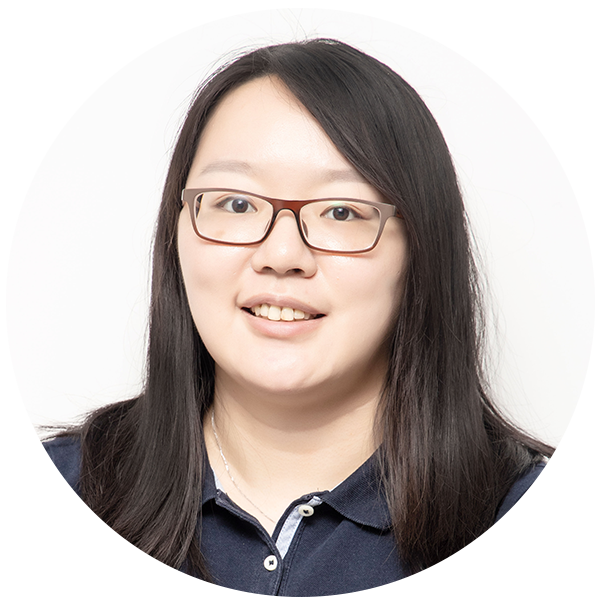
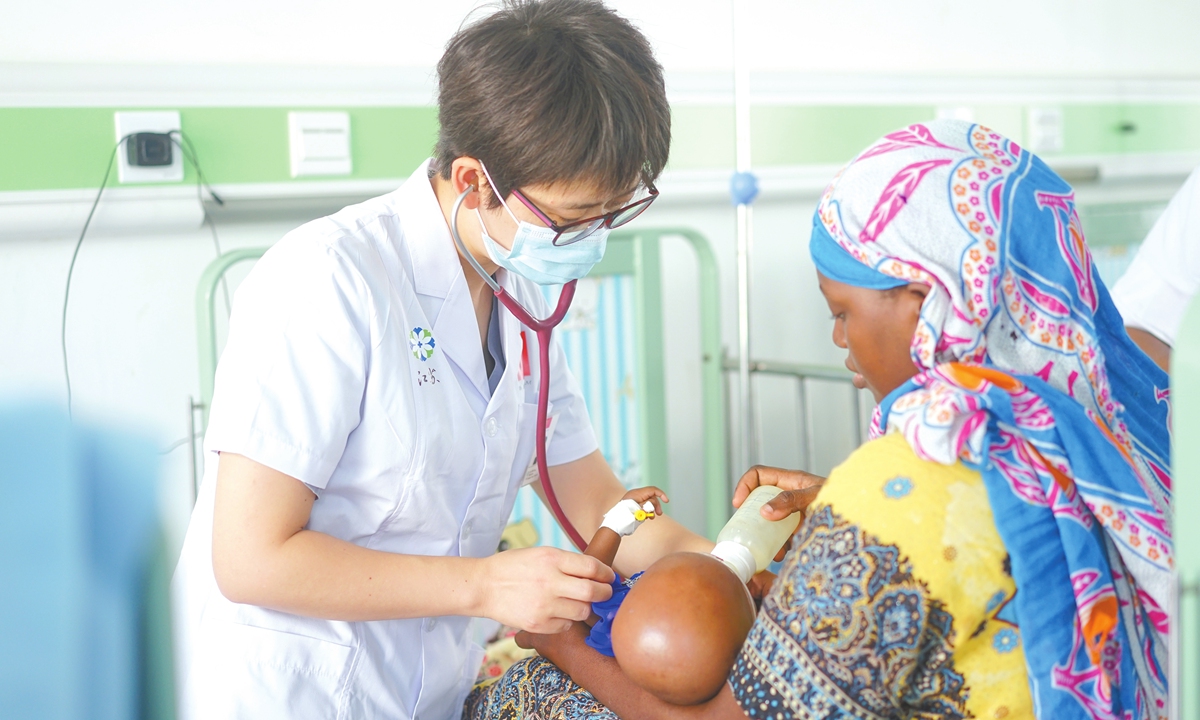
Chinese pediatrician Ding Ling examines a young patient on Pemba Island, Zanzibar, Tanzania. Photo: Courtesy of Ding Ling
On evening walks around Pemba Island, pediatrician Ding Ling and her colleagues often heard children calling out to them.
The youngsters recognized the Chinese national flags on their T-shirts, shouted "China" and ran toward the doctors to say hello.
Ding recalled the greetings during an interview with the Global Times about her assignment in Tanzania's Zanzibar archipelago, where she served from July 2019 to September 2020.
Ding had come from the Second Affiliated Hospital of Nanjing Medical University in East China's Jiangsu Province. She was one of nine members of the Pemba unit of the 29th Chinese medical team to Zanzibar, working alongside local colleagues at Abdulla Mzee Hospital.
Her posting was part of a medical partnership stretching back to 1964, when China began sending medical teams to Zanzibar, with Jiangsu responsible for organizing the missions. Successive teams have worked with local health professionals, treating patients and sharing their experience, introduced Chinese Consulate General in Zanzibar Li Qianghua.
Over the past decades, China has been actively contributing to the global health cause. At a national meeting on health held in Beijing on Monday and Tuesday, China called for efforts to be made to actively promote the building of a global community of health for all, work with other countries to address major challenges in the health sector, and continuously improve the health and well-being of people around the world.
China has dispatched medical teams to 59 countries and regions since late 2012.
On Pemba Island, years of working together and caring for local families have also nurtured friendships, allowing people to get to know China through the doctors they meet and the help they receive.
For Ding, the welcome she received carried the work of her predecessors. She told the Global Times that earlier teams had helped establish clinical procedures and taught techniques that local colleagues continued to use.
"The impression Chinese doctors have left over the years has made local people feel close to us and trust us," Ding said.
At schools where the team offered free consultations, children often gathered for photographs and welcomed footballs and other gifts. That trust also accompanied her into crowded outpatient corridors and wards filled with seriously ill children, where finding a way to help often required adapting to the equipment and medicines available.
Finding a way to cure
One of the patients Ding remembers most was a premature baby struggling to breathe. The child's mother had undergone a hysterectomy after severe bleeding.
The baby needed respiratory support. In China, Ding would have had access to equipment designed for that purpose. On Pemba Island, she had to find an alternative.
"There was no ventilator," Ding recalled. "I used infusion tubing and an infusion bottle to make a simple CPAP (Continuous Positive Airway Pressure) device."
A CPAP device uses mild air pressure to keep the airways open and support breathing. Using the supplies available, Ding assembled a simple system with tubing and a bottle containing water to provide that support.
The child survived and soon after was discharged from hospital. A report by news website oujiangsu.com published during Ding's assignment in August 2019 recorded the mother holding her baby and crying with relief.
Such work required close observation and clinical judgment. Ding recalled that even basic tests could be difficult to obtain: equipment frequently broke down, and neither imaging nor a routine blood count could always be relied upon.
"In most cases, we had to rely on our clinical experience to assess the illness, make a diagnosis and treat it," she said.
Other requests took the team beyond the hospital. On July 26, 2019, local health authorities sought help with an unexplained illness affecting children in northern Pemba. Skin lesions and damage to the eyes and face had alarmed families and medical workers, who feared it might be contagious. Similar cases had occurred for more than a decade.
The doctors needed to understand the cause and explain what families could do to protect their children.
Ding and her teammates reviewed photographs and medical information, searched the literature and contacted specialists at her hospital in Nanjing.
They needed to prepare for the visit while the nature of the illness remained uncertain.
Pediatric and dermatology experts joined the discussion as the team prepared medicines, protective supplies and information for local medical staff and residents.
The following morning, the doctors traveled through heavy rain to Kwale, where children and their families were waiting. They collected medical histories, examined the patients and discussed their findings with the specialists in China through a video call.
Their clinical assessment pointed to xeroderma pigmentosum, a rare inherited condition that makes the skin and eyes particularly sensitive to ultraviolet radiation and increases the risk of skin cancer.
The explanation addressed the fear of contagion. The team discussed the condition with local doctors and families, outlining measures to limit sun exposure and protect the children's skin and eyes.
Follow-up visits brought further advice and supplies such as sunglasses and sun hats, according to a later report based on Ding's recollections. Identifying the condition gave families a clearer basis for managing it, although the children still needed ongoing protection and medical care.
The response also left a small, personal record of appreciation. After the visit, the local health director changed her WeChat profile picture to a photograph with the Chinese medical team.
For Ding, explaining illness was part of everyday pediatric care. Therefore, she and her colleagues compiled a maternal and child health handbook, which local health authorities distributed to hospitals and other health departments. This gave families a resource they could consult again after their conversations.
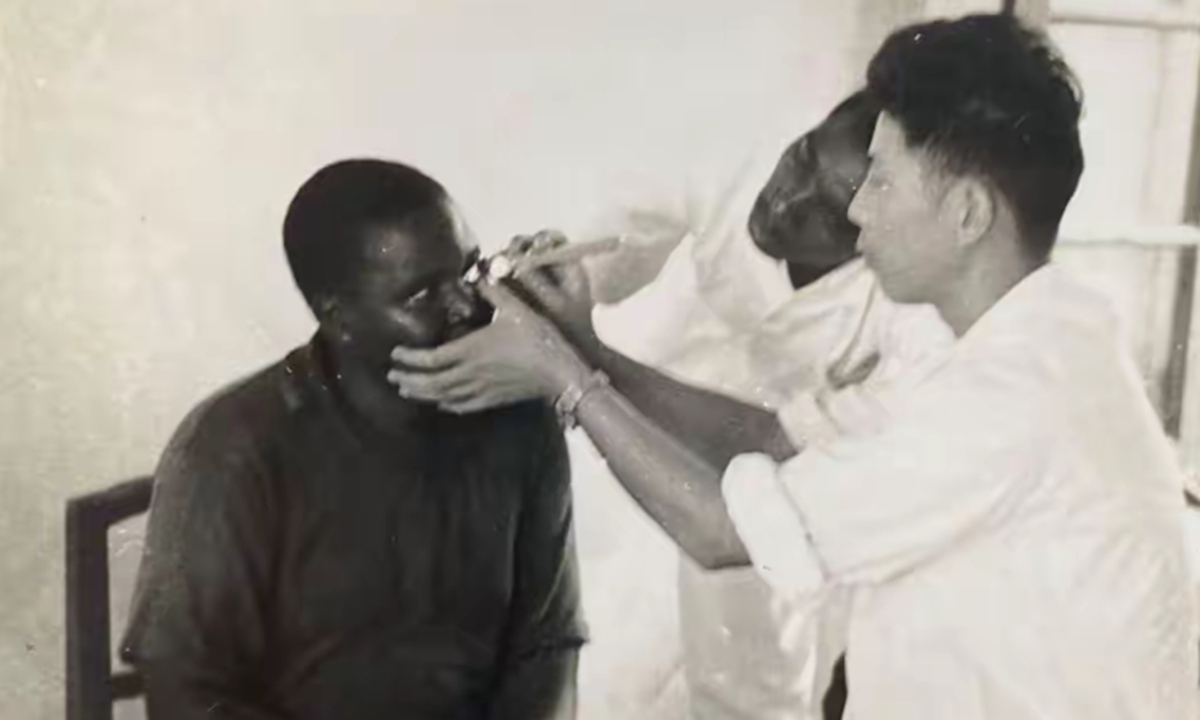
File photo: Chinese ophthalmologist Zhou Zhende examines a local resident during his assignment in Zanzibar, Tanzania. Photo: Courtesy of Liu Xin
Getting to know each otherFor Khadija Abdi, the Chinese medical team had been familiar since childhood. Hearing about its work on Pemba Island helped inspire her ambition to become a doctor.
In 2019, she began working at Abdulla Mzee Hospital as an assistant to Chinese physician Zhu Shushu. In August 2021, Abdi wrote in the Zanzibar Mail that she was worried she would never meet another colleague as approachable as Zhu.
Her next Chinese colleague was Guo Jiqun, a cardiologist from Zhenjiang, Jiangsu Province, serving with the 30th medical team. During examinations, he encouraged local colleagues to listen to heart murmurs, explained what they meant and used ultrasound to check his findings.
She had initially felt uneasy about working with a male physician. Abdi soon noticed his gentle manner with patients and his interest in local customs.
Guo asked about everyday life and religious practices, and tried to learn Swahili to communicate with patients. Their conversations, Abdi said, made her feel relaxed and happy.
Working together could also mean finding scarce equipment during an emergency. Guo recalled treating a 24-year-old woman who had given birth to twins a week earlier and developed severe heart failure. Her oxygen saturation had fallen to 53 percent despite oxygen therapy.
Guo worked with an anesthesiologist and local medical staff to obtain a functioning ventilator. With respiratory support and medication, her oxygen saturation rose to 98 percent after two hours, and she subsequently recovered.
"Our most precious and happiest moment was when we saw the patient smile for the first time," Guo said.
The partnership extended into schools and public conversations. Guo's team once demonstrated handwashing with running water during the COVID-19 pandemic, appeared on local radio, and distributed posters explaining preventive measures.
Ding had volunteered for the overseas medical assignment with her family's support. In schools, she remembered children gathering eagerly around the visiting doctors. As a mother of two, she hoped that helping other children would also set an example for her own children.
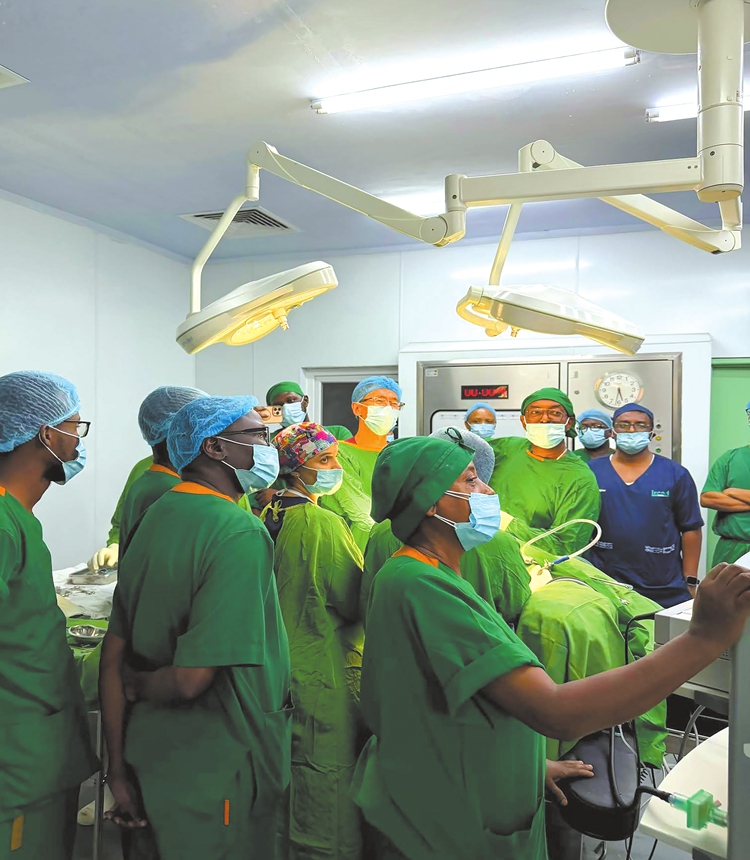
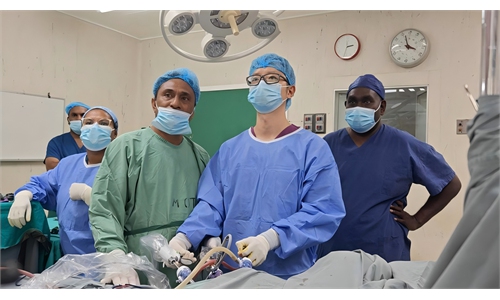
Chinese and local doctors perform surgery together in Zanzibar, Tanzania. Photo: Courtesy of the 35th Chinese medical team to Zanzibar
Trust across generations
For pediatrician Liu Xin, who joined the 30th medical team after Ding's posting, working on Pemba Island also meant searching for an earlier generation of Chinese doctors.
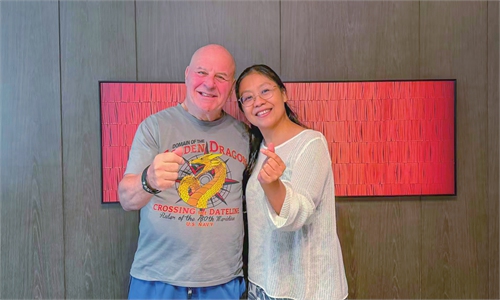
A family elder, ophthalmologist Zhou Zhende, had served in Zanzibar from January 1968 to February 1971. He had taught Liu's mother, herself an eye doctor, but had spoken little about his overseas work. Before Liu left China, an uncle gave her copies of photographs from Zhou's assignment.
A photograph in the office of Haji, then director of Abdulla Mzee Hospital, offered a clue. It showed him with other students from Zanzibar and their Chinese teachers in Nanjing in the 1970s.
Haji had trained with Chinese medical teams before studying in Nanjing from 1975 to 1977. His career later included pediatrics, medical education and hospital management.
Liu sent the picture to her family. Her uncle found the same photograph in Zhou's album and identified him among the teachers. A student list preserved in Zhou's notes included Haji's name. Haji confirmed with Liu that Zhou had been one of his teachers.
The search then led to Omar, an elderly ophthalmologist who had trained with Chinese specialists and later become director of Abdulla Mzee Hospital.
When Liu showed him Zhou's photograph, Omar recognized his former teacher. He asked where Zhou was and how he was doing. Learning that Zhou had passed away, he took Liu's hand, his eyes filling with tears.
Omar remembered learning to perform eye operations independently under Zhou's guidance, including cataract surgery that restored a local teacher's sight.
"He was very conscientious and set high standards," Omar told Liu. "When he found a problem, he pointed it out gently and patiently taught me how to correct it, just like an elder brother."
Omar went on to train other doctors such as Haji, who told Liu that the older physician's kindness had become as familiar locally as his medical skills. People knew him simply as "Father."
The hospital itself carried that continuity. Chinese support helped rebuild Abdulla Mzee Hospital in 2016. More recently, equipment donated in March 2025 included portable ultrasound devices, biochemical analyzers and monitors, as well as medicines, according to China's consulate general in Zanzibar.
The rotation of medical teams continues. At a departure ceremony in Nanjing in September, Jiangsu prepared to send its 36th team to Zanzibar for a year-long assignment.
For Ding, the warmth of children's greetings outside the hospital accompanied a similar sense of trust within it.
"We devote ourselves wholeheartedly to treating patients. As a doctor, I felt truly respected and trusted," she said.
RELATED ARTICLES