Takaichi's ritual offering to war shrine further exposes distorted historical view, commitment to neo-militarism: Chinese expert
By Published: Oct 17, 2026 11:49 AM

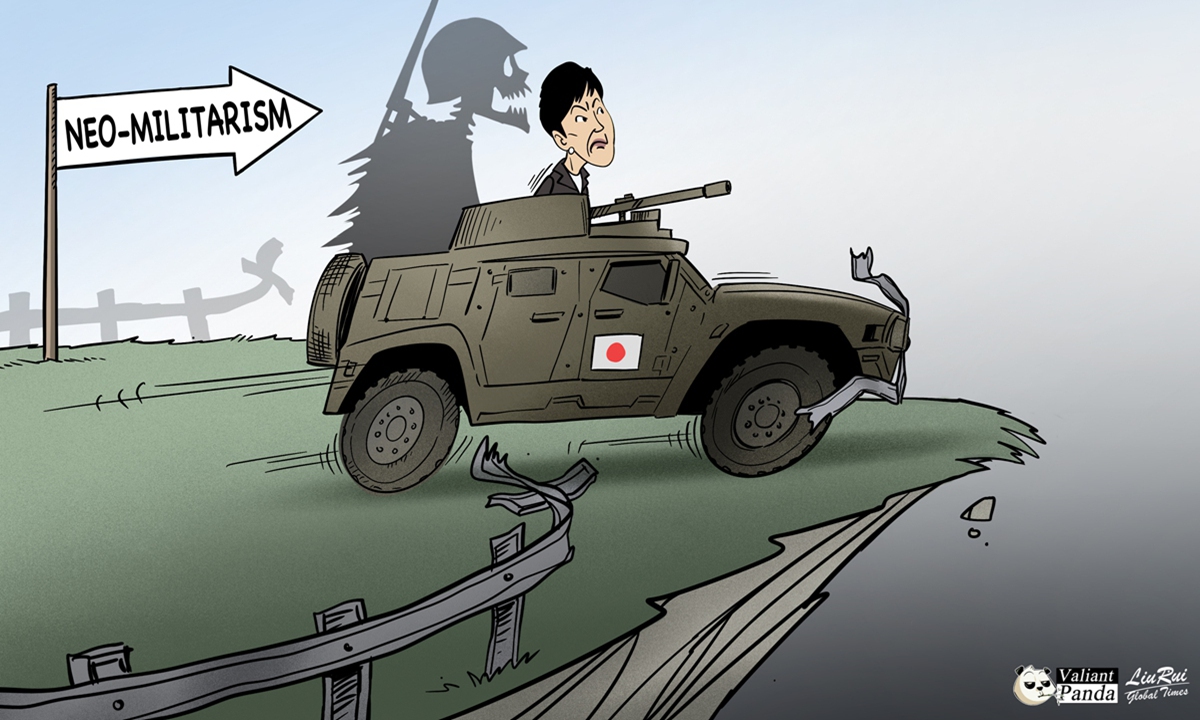
Militaristic emblem Illustration: Liu Rui/GT
Japanese Prime Minister Sanae Takaichi on Saturday sent a ritual offering to the notorious Yasukuni Shrine under the title of "prime minister," while likely avoiding personally visiting the war shrine out of consideration for relations with China and South Korea, according to Japanese media.
Takaichi's latest move further lays bare her distorted view of history and obstinate commitment to pursuing neo-militarism, a Chinese expert said, warning that this would further damage Japan's already strained relations with neighboring countries, including China, South Korea and Russia.
Takaichi sent a ritual offering known as masakaki to the war shrine in Tokyo on Saturday, the first day of its three-day autumn festival, under the name "Prime Minister Sanae Takaichi," Japan's Kyodo News reported.
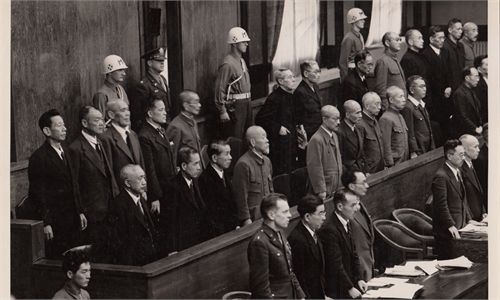
The Yasukuni Shrine honors 14 convicted Class-A war criminals responsible for Japan's war of aggression, and is widely considered as a spiritual tool and symbol of Japanese militarism.
Lü Chao, an expert on East Asian studies and a professor at the Liaoning Academy of Social Sciences, told the Global Times that Takaichi's latest offering, following several similar moves earlier this year, was likely a political performance aimed at courting far-right forces at home.
However, the repeated gestures exposed Takaichi's distorted view of history, which fails to distinguish right from wrong, and laid bare her stubborn commitment to pursuing neo-militarism, Lü said, adding that the latest move risks reinforcing the growing impression that Japan is moving further down the path of neo-militarism and raising concerns about the country's future direction and its relations with regional neighbors.
Notably, Takaichi is unlikely to visit the shrine in person during the festival, Kyodo reported, citing a source close to the prime minister. The report suggested she was seeking to avoid further diplomatic friction with China and South Korea.
Japanese broadcaster TV Asahi also reported Saturday that Takaichi was expected to refrain from personally visiting the shrine out of consideration for relations with China, which have cooled following her remarks regarding the Taiwan region, as well as Japan's relations with South Korea.
Takaichi's reported plan to forgo a personal visit to the war shrine reflects a combination of domestic and international pressures rather than a fundamental change in her position on historical issues, Lü said.
Domestically, dissatisfaction has been growing among sections of Japanese society, including business and political circles, over the damage Takaichi's policies have caused to China-Japan relations; internationally, many countries in the Asia Pacific and beyond are increasingly concerned about the resurgence of Japanese militarism, according to Lü.
These pressures have apparently made Takaichi wary of personally visiting the shrine in her capacity as prime minister, the expert said.
Saturday's offering was the latest in a series of similar gestures by Takaichi this year. During the shrine's spring festival in April, Takaichi sent a masakaki offering and made a monetary offering at her own expense, according to Kyodo News.
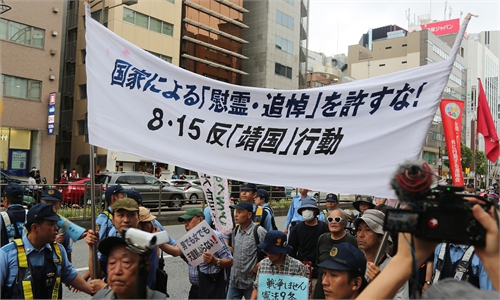
On August 15, the anniversary of Japan's defeat and surrender in World War II, she again sent a monetary offering to the shrine. She also reportedly performed a remote act of worship toward the war shrine from a parking lot at Tokyo's Nippon Budokan, according to Japanese media reports.
China has strongly condemned these moves. On August 15, in response to Takaichi's monetary offering and visits by certain Japanese cabinet members to the war shrine, the Chinese Foreign Ministry issued a statement saying that China strongly deplored Japan's negative moves related to the Yasukuni war shrine, and had lodged serious protests with Japan.
"No pretext whatsoever can hide the Japanese politicians' true intention which is to change the verdict on the war criminals, cover up Japan's war crimes, distort the historical facts, and pave the way for accelerating remilitarization," a spokesperson said in the statement.
"This is an affront to historical justice, a challenge to the foundational norms of civilization, and a provocation against the postwar international order. Such behaviors have been firmly rejected by the overwhelming majority of the international community," the spokesperson further stated.
Takaichi's latest gesture also stands in stark contrast to her recent rhetoric about improving relations with China.
In a policy speech to Japan's parliament on October 5, Takaichi described China as an "important neighbor" and expressed her intention to build a stable bilateral relationship, according to Channel News Asia.
The remarks attracted attention as a possible signal of Tokyo's willingness to ease tensions after nearly a year of strained relations following Takaichi's erroneous remarks on the Taiwan question.
However, Lü dismissed the recent rhetoric as insincere, noting that Takaichi has neither retracted her erroneous remarks on the Taiwan question, which concerns China's core interests, nor offered a formal apology. "Such gestures cannot deceive the Chinese people," Lü said.
RELATED ARTICLES