China’s cumulative carbon emission trading volume exceeds 1 billion tonnes; country offers insights for global action addressing climate change
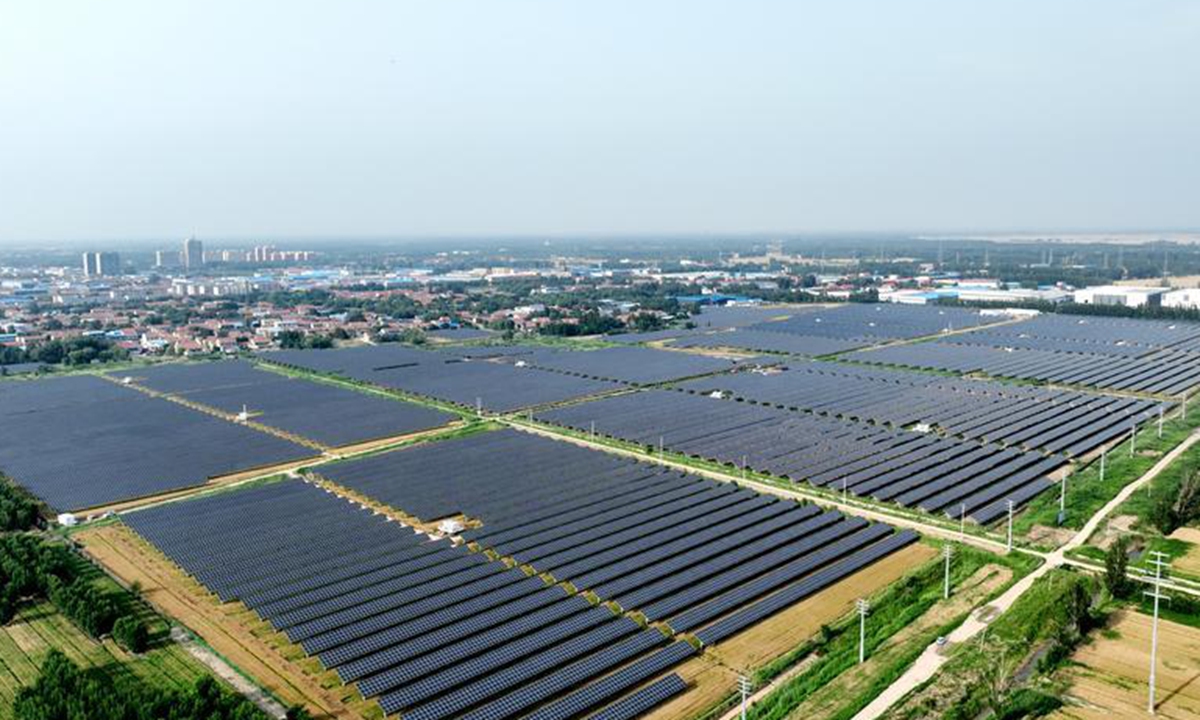
An aerial drone photo taken on June 3, 2026 shows a farming-photovoltaic power complementary project in Huimin County, Binzhou City, East China's Shandong Province. Photo: VCG
China has established the world's largest carbon emissions trading market, with cumulative trading volume in its national carbon emissions trading market surpassing one billion tonnes, an official from the Ministry of Ecology and Environment said on Wednesday, highlighting it as one of China's key achievements in tackling climate change.
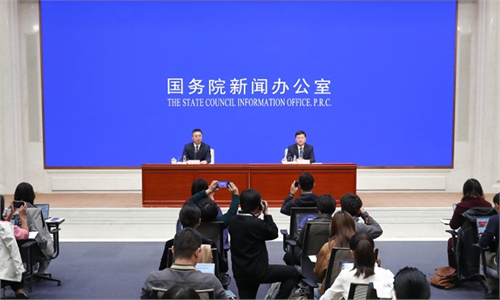
The figures were released at a press conference on Wednesday ahead of the 31st Conference of the Parties (COP31) to the United Nations Framework Convention on Climate Change (UNFCCC), which will be held in Antalya, Turkey, from November 9 to 20. A Chinese expert said China's sustained efforts in climate action can offer valuable experience for other countries.
In just over five years, China has established the world's largest carbon emissions trading market, covering about 8.3 billion tonnes of carbon dioxide, or more than 65 percent of the country's total emissions , said Li Gao, vice minister of ecology and environment, during the press conference held by the State Council Information Office, per Xinhua.
In terms of emissions reduction and efficiency gains, China helped reduce carbon dioxide emissions from the thermal power sector by approximately 530 million tonnes during the 14th Five-Year Plan period (2021-25).
Internationally, China's carbon market has received widespread recognition for its achievements and has become an important platform for showcasing the country's efforts to address climate change, the CCTV report said.
During the same conference, Li also said that China will send a delegation to attend COP31 and will actively advance international climate negotiations.
COP31 will conduct negotiations and consultations on nearly 100 agenda items related to the implementation of the UNFCCC and the Paris Agreement, covering mitigation, adaptation, finance and just transition, per CCTV News.
"As a responsible major developing country, China has consistently participated in and advanced international climate negotiations in a proactive and constructive manner," Li said, adding that China will contribute Chinese wisdom, solutions and strength to the success of COP31.
Ma Jun, director of the Institute of Public and Environmental Affairs, told the Global Times that the gap between emission reduction pledges and real action remains wide, with current global efforts falling short of global climate targets and climate overshoot increasingly unavoidable. Geopolitical divisions fragment global governance, hinder climate cooperation and complicate efforts to balance energy, food and climate security, he noted.
Some developing countries also struggle to balance climate mitigation and adaptation with economic growth and poverty alleviation, constrained by severe shortages of finance, technology and capacity, Ma added.
The expert noted that China's sustained climate action offers a valuable lesson by integrating emissions reduction with pollution control and green transformation. Linking clean energy, energy-efficiency upgrades and electric vehicles with environmental improvement, resource recycling, industrial upgrading and job creation can address climate change while creating new sources of green growth.
Through South-South cooperation, China can help other developing countries strengthen their capacity for independent climate action and reduce transition costs by sharing appropriate technologies, project experience and training. These lessons should, of course, be adapted to each country's resource endowments and stage of development, Ma noted.
Li said during the press conference on Wednesday that China has built the world's largest and most complete clean energy industrial chain, with green and low-carbon industries becoming an important engine of economic growth, according to a report by the Xinhua News Agency.
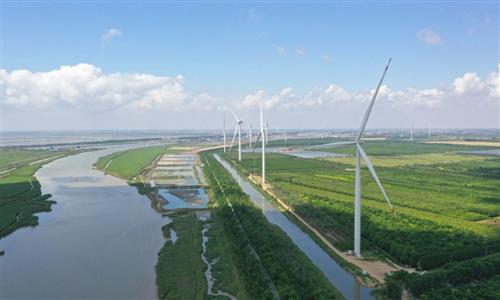
By the first half of 2026, the country's total installed renewable energy capacity reached 2.46 billion kilowatts, accounting for 60.7 percent of total national power generation capacity. At the end of July, installed solar power capacity surpassed coal power for the first time in history, making it China's largest single power source.
Moreover, China's combined installed capacity of operational and approved nuclear power units has risen to first place in the world. New energy vehicle production and sales have ranked first globally for 11 consecutive years.
On Wednesday, the Ministry of Ecology and Environment also released an annual report on China's policies and actions for addressing climate change 2026, outlining China's basic position and proposals for the COP31.
"China will continue to play a proactive and constructive role, support Turkey in its capacity as the COP31 Presidency and Australia as the President of Negotiations, and work with other Parties in the spirit of a community with a shared future for humanity to ensure that COP31 focuses on implementation and cooperation," it reads.
RELATED ARTICLES