Chinese scientists confirm Xujiayao hominins as Denisovans, revealing shared physical traits
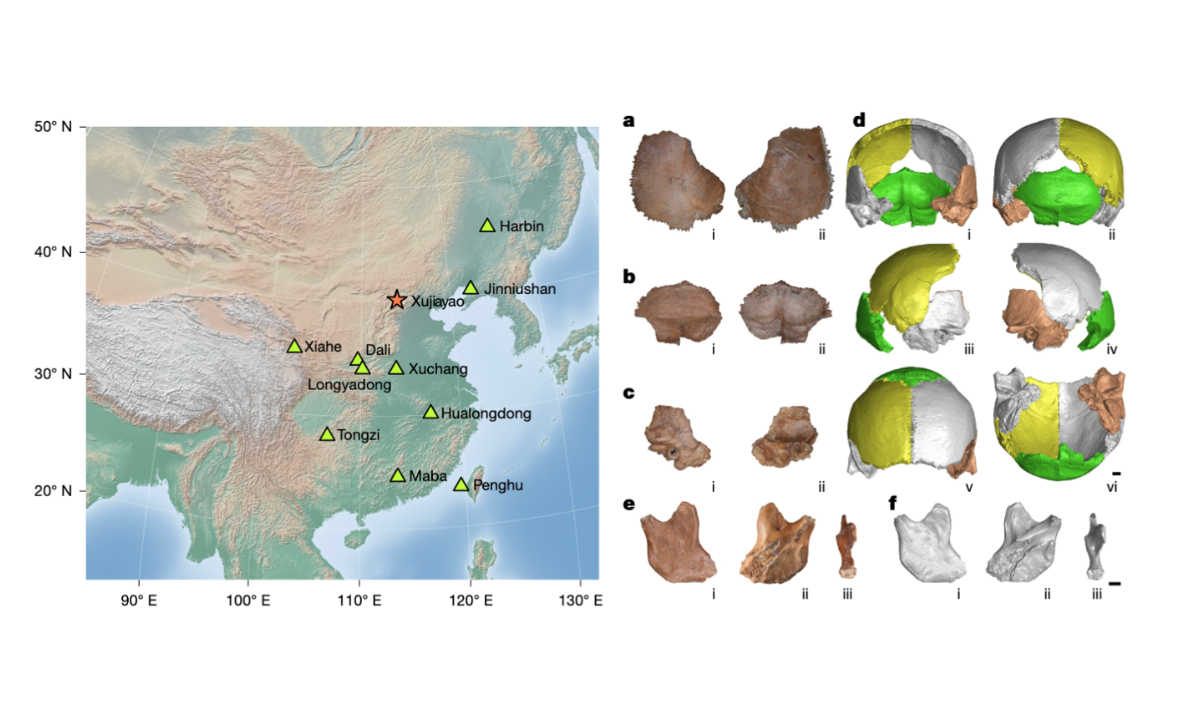
Photo: Courtesy of Fu Qiaomei
Chinese scientists have identified the Xujiayao hominins, whose fossils were unearthed in North China’s Hebei Province, as Denisovans, a distinct branch of ancient humans, through palaeoproteomic analyses and morphological comparisons, revealing shared physical traits of Denisovans, a breakthrough in resolving a long-standing debate over the classification of archaic humans in East Asia during the late Middle Pleistocene, the Global Times learned from the research team on Wednesday.
The study was published in the international journal Nature on Wednesday.
First identified in 2010 through DNA analysis of a finger bone discovered in Denisova Cave in Siberia, Denisovans are now known to have inhabited a wide area spanning northeastern East Asia, the Qinghai-Xizang Plateau, southwestern and southeastern China, and parts of Southeast Asia from around 300,000 to 45,000 years ago, possibly later. However, despite growing fossil and molecular evidence, scientists have struggled to establish clear morphological criteria for identifying Denisovans.
Identifying shared Denisovan traits requires an ideal archaeological site with molecularly confirmed Denisovan remains, abundant human fossils, well-defined stratigraphic context and reliable dating.
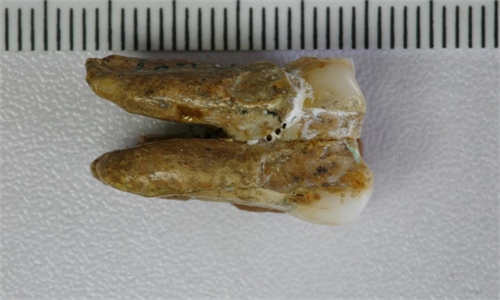
The Xujiayao hominins, dating to 199,000 to 138,000 years ago, have recently been classified as Homo longi, a group that includes Siberian Denisovans. Excavations at the Xujiayao site from 1976 to 1979 unearthed 20 human fossils, including cranial remains, mandibles and teeth, representing at least 16 individuals at different stages of life, making it one of the hominin sites in East Asia with the clearest stratigraphic records and richest fossil assemblages from the late Middle Pleistocene.
If the Xujiayao hominins are confirmed to be Denisovans, the discovery would clarify their taxonomic status, help establish the shared morphological traits among Denisovans, and address gaps in research on Denisovans compared with Neanderthals and modern humans.
To clarify this question, a joint research team led by Fu Qiaomei and Xing Song, both are researchers at the Institute of Vertebrate Paleontology and Paleoanthropology, Chinese Academy of Sciences, in collaboration with researchers from Nanjing Normal University, Peking University and other institutions, conducted palaeoproteomic and morphological analyses of the Xujiayao hominin fossils. The findings have provided clear evidence that the Xujiayao hominins belong to the Denisovan lineage.
Building on these findings, the team has identified key Denisovan traits in the skull, jaw and teeth, including primitive features resembling those of Homo erectus and more derived characteristics shared with later members of the genus Homo. These include a low, broad cranial vault, thick skull bones, short mastoid processes, and simplified premolar chewing surfaces.
Although the Xujiayao fossils lack facial remains, evidence from comparable fossils unearthed at other sites suggests that Denisovans had low, receding foreheads, prominent brow ridges, flat faces and less pronounced jaw protrusion.
Using molecularly confirmed Xujiayao fossils as a reference, the study has identified shared Denisovan traits in the skull, jaw and teeth, establishing the first morphology-based identification framework for the group in the 16 years since discovery.
This finding advances Denisovans from a mysterious group identified primarily through molecular evidence to an ancient human group that can be recognized, compared and classified based on morphological characteristics, fundamentally deepening people’s understanding of the pattern of human evolution in East Asia during the Middle Pleistocene.
RELATED ARTICLES