Ukraine Illustration: Liu Rui/GT
Tension between the US and Ukraine has once again erupted into the open. Recent remarks by US Vice President JD Vance have laid bare a long-standing yet often obscured reality in US-Ukraine relations: Ukraine is not a formal US ally, and Washington does not want it to join NATO. Vance also called on Ukraine to stop striking Russian energy facilities.
His comments appear to mark a clear boundary of US interests underpinning its Ukraine policy. The US may support Ukraine, but that does not mean it will underwrite every demand Kiev makes. Ukraine can rely on American aid, but it cannot expect Washington to stand unconditionally on its side.
Vance has not articulated a brand-new policy. His statement is a public restatement of the current US administration's consistent position. The previous US administration, by contrast, stressed the moral imperative of supporting Ukraine, tying Ukrainian security closely to European security and US credibility, fostering a political relationship that resembled an alliance - despite the fact that Ukraine is not a NATO member, nor does it have a mutual defense treaty with the US.
That it is not a formal ally has always been true. What stands out now is that the US no longer blurs this line deliberately, but proactively spells it out publicly.
"Ukraine is trapped in an awkward, painful position. It cannot do without US assistance, yet it holds no leverage over Washington," Zhang Hong, a research fellow at the Institute of Russian, Eastern European and Central Asian Studies at the Chinese Academy of Social Sciences, told the Global Times.
Why is the US choosing this moment to publicly reaffirm this status? The answer lies in Vance's other demand: "Ukraine should stop attacking Russian energy facilities." An earlier diesel fuel deal struck between the US and Russia had already opened rifts in US-Ukraine relations. Compared with Ukraine's battlefield priorities, the US prioritizes its own energy market positioning and domestic political pressures.
Compounding this, Washington has delayed deliveries of a batch of weapons to Ukraine. By partially cutting the aid pipeline while explicitly defining the bilateral relationship as non-allied, the US is essentially creating diplomatic cover to ratchet up pressure on Kiev. Should Ukraine's military actions run counter to core US interests, Washington can potentially scale back support and recalibrate its policy, laying full blame for escalation at Kiev's door. Aid is a discretionary favor, while rolling back support is seen as a legitimate policy choice - this has become the underlying logic of the US' Ukraine strategy.
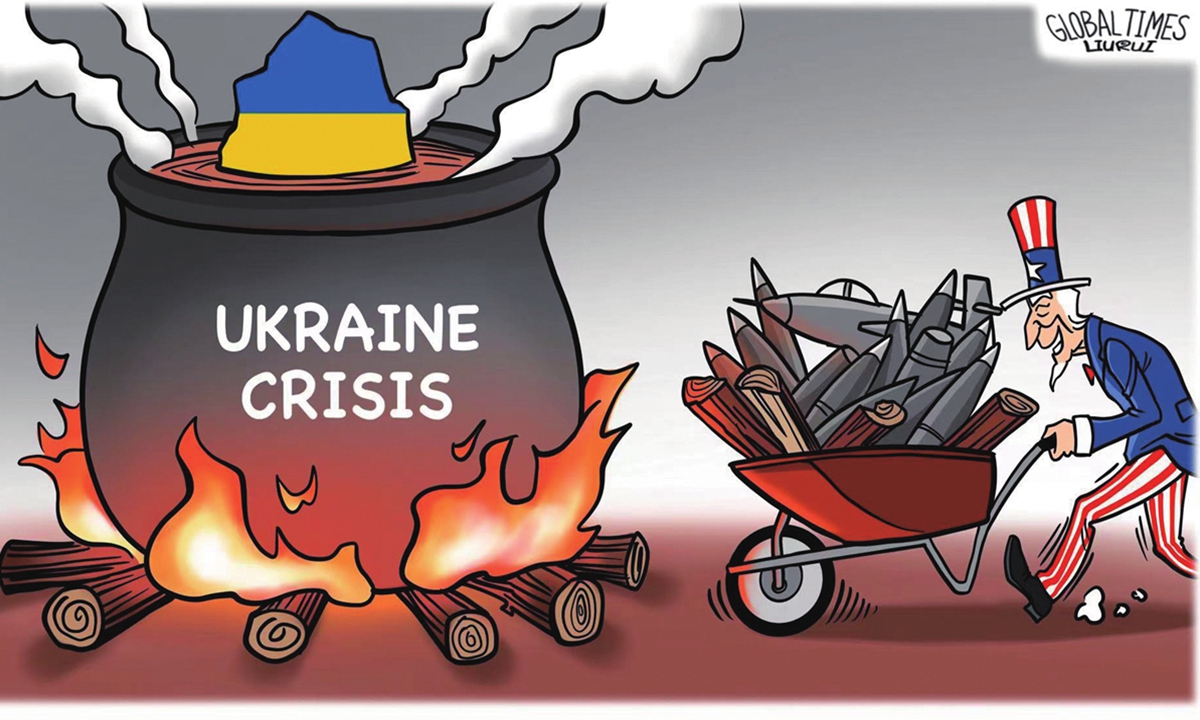
This does not mean Ukraine has lost its strategic value to the US. "In the European theater, the Ukraine crisis remains a key instrument for the US to sustain transatlantic security bonds. The US, in turn, retains sway over Europe's security agenda and reaps economic gains from defense industrial cooperation," Zhang explained.
Toward Russia, the Ukraine crisis also serves as a vital topic for US diplomatic maneuvering. Whether negotiating ceasefire terms, security consultations or potential future energy and economic accords, Washington keeps the Ukraine crisis alive to preserve room for bargaining with Moscow, he added.
Washington's support for Ukraine has never been an open-ended, unconditional moral obligation, but a strategic choice weighed rigorously against costs and benefits. Clearly, Ukraine's interests and grievances are never Washington's priority.
Even when it comes to making the kind of deals Washington wants, Ukraine lacks the leverage to deliver. Ukraine's mineral resources available for potential deals are valued at around $500 billion, while potential joint projects between the US and Russia are worth as much as $14 trillion. By comparison, Ukraine's bargaining power is overwhelmingly outmatched.
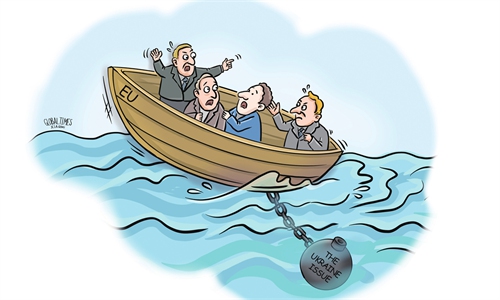
Ukraine has tried to tie itself to Europe, hoping European leaders would lobby Washington to sustain aid. Yet Europe maintains its own interest calculations, and the support it can offer Kiev is steadily dwindling. This leaves Ukraine stuck in a dilemma.
The US is deliberately decoupling its own interests from Ukraine's aspirations. It has no objection to continuing to use the Ukraine issue to pressure Russia, yet refuses to assume treaty obligations for Ukraine's security goals. Partnership continues when Kiev's military moves align with Washington's objectives; when interests collide, Ukraine's demands are the ones usually sacrificed.
From the moment Washington clarified the boundaries of US-Ukraine relations, one truth emerges: Ukraine has always been a geopolitical tool for the US, never its core interest. This unequal dynamic of dependence and limited bargaining power has left Ukraine in an awkward and passive position from the start.
RELATED ARTICLES