China US
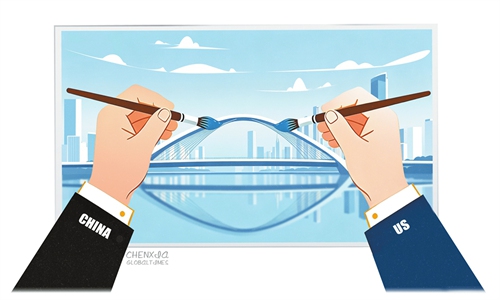
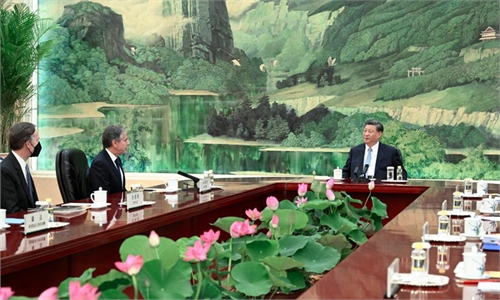
The meeting between the Chinese and US heads of state in Washington last month, dubbed "handshake across the Pacific," attracted global attention. With so much to unpack, here are ten key takeaways.
Takeaway 1: Unprecedented high-level courtesy
The year 2026 is indeed an important year for China-US relations. In May, China received President Donald Trump with warm hospitality, a visit still fresh in memory. This time, the US reciprocated with courtesies of the highest order. From the airport welcome and White House arrival ceremony to the state dinner featuring Chinese red, every detail spoke volumes about the respect the US holds for the Chinese leader and the great importance it attaches to this visit.
Takeaway 2: New substance to China-US relations
During the three-day visit, the two leaders spent nearly nine hours together, discussing global affairs, bilateral cooperation, history, culture, and people-to-people exchanges. Over the years, the two presidents have developed a strong rapport built on mutual respect and candor. At critical junctures, head-of-state diplomacy remains essential in steering China-US relations. The two sides have also agreed to build a constructive China-US relationship of strategic stability based on respect, fairness and reciprocity. On this basis, the two major countries have taken another step toward a right approach to getting along with each other in the new era.
Takeaway 3: The Taiwan question still at the core of China-US relations
The Taiwan question invariably features in meetings between the Chinese and US presidents, and this visit was no exception. In China-US interactions, the one-China principle is the most fundamental red line that must not be crossed. We will continue to watch what the US says and does. Seeking "Taiwan independence" by soliciting US support is a dead end.
Takeaway 4: Working in the same direction on economic and trade relations
As a focal point of global attention, stability in China-US economic relations bears not only on the livelihoods of both peoples, but also on the broader political and economic landscape of the world. Economic cooperation should be the ballast and engine of China-US relations, not an obstacle. Before the visit, the two sides' economic and trade teams held consultations and achieved positive results. Public and market reactions were positive, recognizing the trade "truce" as a win for China, a win for the US, and a win for the world.
Takeaway 5: Steering AI for the good of humanity
AI was another major topic. It is widely believed in the international community that ensuring AI's development for the good of humanity serves the greatest shared interest of China and the US, both leading countries in AI. Following their discussion on AI in Beijing, the two leaders agreed in Washington to establish a China-US AI dialogue to exchange views on AI-related risks and benefits, and to set up a communication channel on AI-related incidents. This is undoubtedly good news for humanity's future
Takeaway 6: Historical echoes of China and the US fighting side by side
During the visit, the two presidents repeatedly recalled the history of China and the US fighting together in World War II. Today, descendants of the Flying Tigers have renewed the bond through their visits to China, passing down from generation to generation the spirit of defending peace and standing together in harm's way. At a time when Japanese militarism is resurging in new forms and causing concern, this history carries immediate relevance. The justice that the Chinese and American peoples defended with blood and sacrifice must not be challenged, and the postwar international order and regional peace must not be undermined.
Takeaway 7: People's friendship as the bedrock of China-US relations
If the Flying Tigers embody friendship forged in wartime, then the reunion of American teacher Ronald Sakolsky and Chinese sand-control pioneer Yin Yuzhen after more than 25 years is a moving peacetime story. And similar stories abound. Today, people-to-people exchanges are becoming increasingly vibrant, from "pickleball diplomacy" to growing American interest in travel, shopping, and everyday life in China.
Takeaway 8: A new chapter of panda friendship
Both Chinese and American people love giant pandas. In 1972, when giant pandas Ling Ling and Xing Xing first arrived in Washington, DC, more than 8,000 Americans braved the rain to welcome them, and over 1 million visitors came to see them in their first month of stay.
Now, Ping Ping and Fu Shuang have arrived at Zoo Atlanta, a longtime home to Chinese giant pandas. More than 20 years ago, Yang Yang and Lun Lun made their home there and raised a family, becoming beloved among the American people. It is hoped that the new pandas will continue this bond of affection and be well cared for.
Takeaway 9: 'Rose diplomacy' in full bloom
When Trump visited Beijing's Zhongnanhai leadership compound in May, he reportedly expressed admiration for the Chinese roses there, and the Chinese side promised him some as a gift. Months later, the Chinese roses crossed the Pacific Ocean to the US and would take root in the White House Rose Garden. Chinese and American roses, each beautiful in its own way, will bloom side by side. This is a fitting symbol of how China and the US, despite their different histories, cultures, and systems, can seek common ground and coexist in harmony.
Takeaway 10: From China's Temple of Heaven to the US National Archives
Cultural programs are always a highlight of state visits. In May, the two leaders visited the Temple of Heaven in Beijing, where they appreciated the Chinese civilizational ideal of harmony between humanity and nature. This time, the two leaders visited the US National Archives in Washington, DC. From the Temple of Heaven to the National Archives, one idea runs through both visits. As two major countries, China and the US should understand each other's history, respect each other's culture and develop a deeper appreciation of each other's civilization.
The author is a commentator on international affairs, writing regularly for Xinhua News, Global Times, China Daily, CGTN and so on. He can be reached at shaoxia2019@163.com.
RELATED ARTICLES