2,054 aftershocks recorded after magnitude-7.0 earthquake in Baqen as geo-analysis on 80 glacial lakes and 145 glaciers unfolds
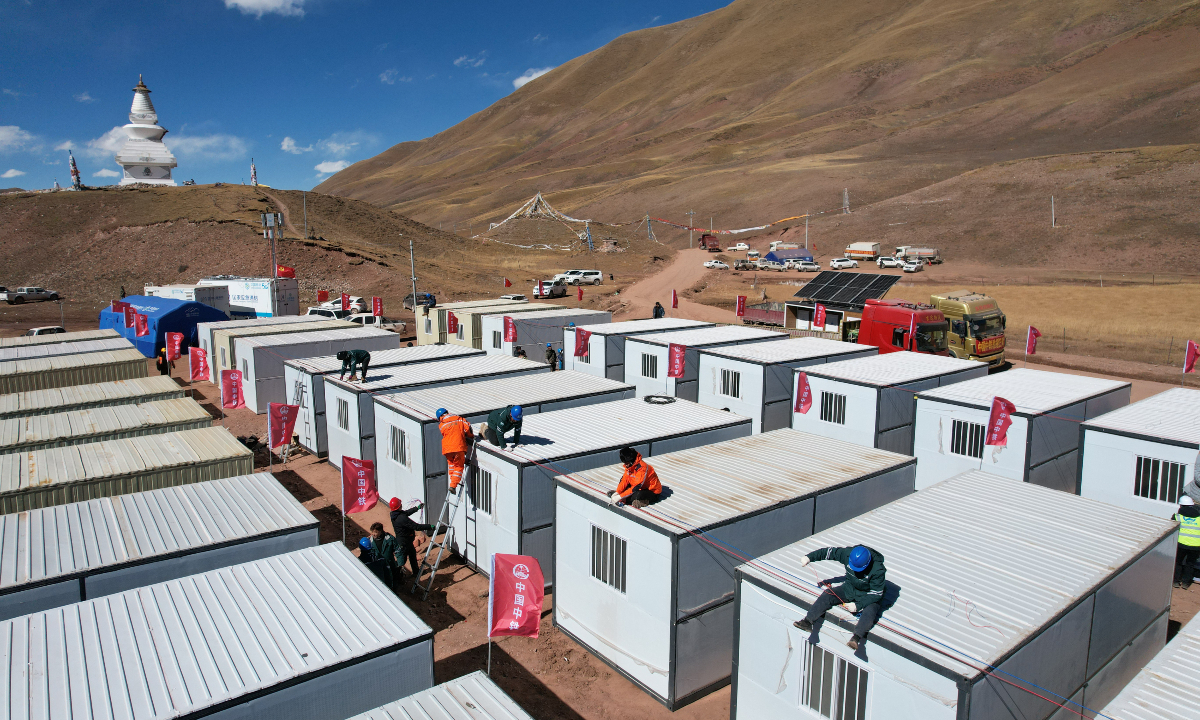
Power workers install electricity connections for prefabricated shelters at a temporary relocation site in Maru Township, Baqen County in Southwest China's Xizang Autonomous Region, on October 25, 2026. Photo: IC
Following the magnitude-7.0 earthquake in Baqen County of the city of Nagqu, Southwest China's Xizang Autonomous Region, 2,054 aftershocks had been recorded as of Monday morning. Rescue and relief operations are progressing steadily to ensure basic food and water supplies and support the orderly resumption of normal life and production in affected areas, China Central Television (CCTV) reported on Monday.
According to the China Earthquake Networks Center, among the aftershocks, 10 measured magnitude-4.0 to -4.9, and two measured magnitude-5.0 to -5.9. No aftershocks of magnitude-6.0 or above had been recorded. The strongest aftershock measured magnitude-5.7, with its epicenter 19 kilometers from that of the main quake.
Rescue operations are progressing steadily. The Chinese People's Armed Police Force Xizang Corps having searched 475 households across seven villages in the Maru Township area as of 3 pm Sunday and providing medical assistance.
Rescue workers continue to provide hot meals and drinking water to affected residents, meeting their basic needs and supporting the orderly restoration of normal life and production in the earthquake-hit areas.
Gangqie Township, one of the areas hit hardest by the earthquake, is stepping up efforts to relocate affected residents and distribute cold-weather supplies. Seventeen temporary shelters have accommodated more than 900 households. At a temporary shelter in a village in Gangqie Township, 200 prefabricated houses are being built to ensure that affected residents can move in as soon as possible.
Local authorities have also deployed emergency teams to inspect buildings, identify safety hazards and classify damaged homes, providing a basis for future repairs and reconstruction.
Peng Jie, a volunteer from South China's Guangxi Zhuang Autonomous Region who traveled for two nights and three days to reach the earthquake-hit area in Xizang, told the Global Times on Monday that he arrived on Sunday and spent the night in his own tent, enduring temperatures of around -10C. With the initial search-and-rescue operations largely completed, relief efforts have shifted toward providing shelter and daily necessities for affected residents.
Drawing on his experience as a survivor of the magnitude-8.0 quake that hit Wenchuan of Sichuan in 2008, Peng said he hopes to provide psychological support to survivors, many of whom may be struggling with anxiety over aftershocks or the loss of family members. He plans to share practical safety advice on how to respond to aftershocks. Through one-on-one conversations and emotional support, he hopes to help affected residents overcome their fears and regain confidence, Peng said.
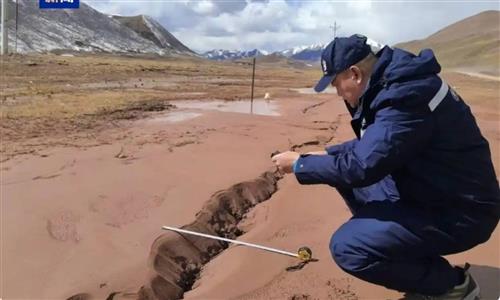
Following the Baqen earthquake, China's Ministry of Natural Resources has completed inspections of potential geological hazard sites within 50 kilometers of the earthquake's epicenter and is continuing to monitor the risk of secondary geological disasters, CCTV reported on Monday.
The ministry has activated a Level III geological disaster response and sent additional experts to the earthquake-hit area to assess potential secondary geological hazards with local teams.
Remote-sensing analysis of 80 glacial lakes and 145 glaciers within 50 kilometers of the affected area found that the earthquake had limited overall impacts on them, with no earthquake-triggered glacial lake outburst disasters detected so far.
RELATED ARTICLES