IN-DEPTH / IN-DEPTH
Xiong'an is turning bold ideas into reality, offering world new vision for smarter cities and better governance
A Young City, A Global Vision
By and Hu Jinyang in Xiong’an Published: Oct 26, 2026 09:50 PM

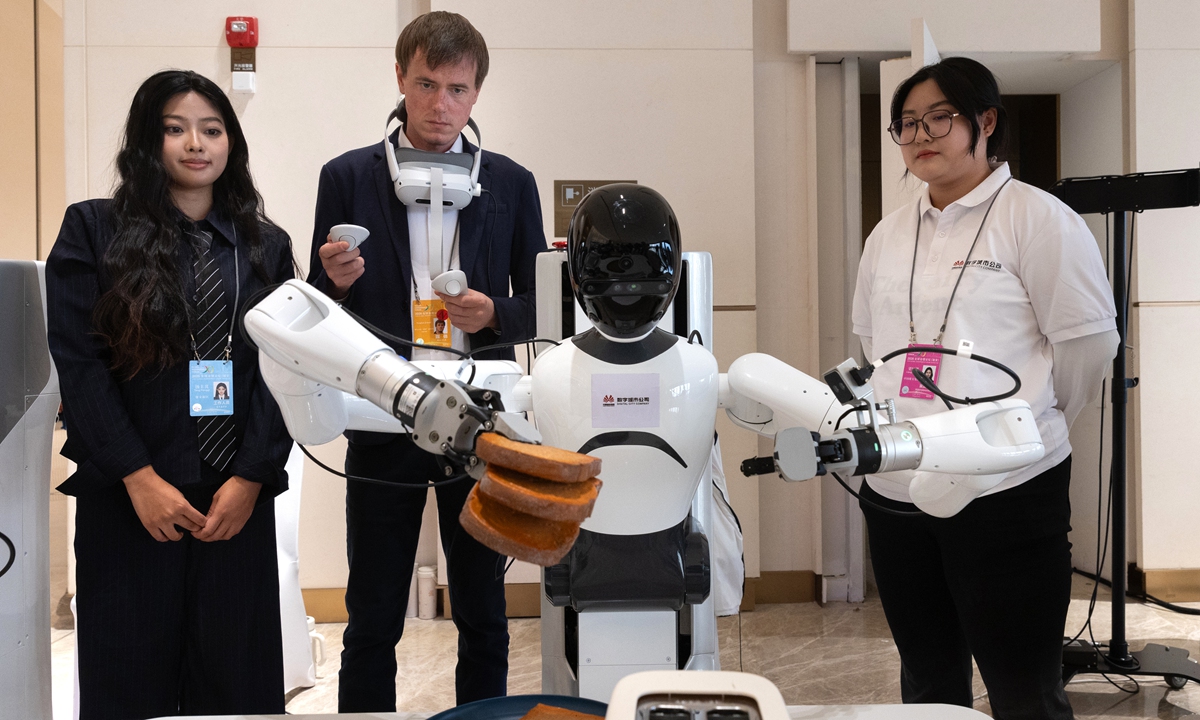
A participant tests a robot during the 2026 Global Governance Forum in Xiong'an, Hebei, on October 23, 2026.
China hosted the three-day inaugural Global Governance Forum opening Friday in Xiong'an New Area, North China's Hebei Province. The event aims to pool wisdom for improved global governance, one year after China put forward the Global Governance Initiative (GGI).
Chinese President Xi Jinping sent a message to the forum, saying that China stands ready to work with all parties to uphold the vision of global governance featuring extensive consultation, joint contribution and shared benefits, pool strength through confidence-building and tackle challenges through cooperation. He called for efforts to promote the implementation of the GGI to inject more certainty and positive energy into a world of turbulence and transformation, and jointly move toward a community with a shared future for humanity.
At the forum, held under the theme "Rebuilding Confidence and Cooperation: Reforming and Improving Global Governance in a Transforming World," Global Times reporters witnessed lively exchanges among Chinese and international participants on how to reform and improve global governance.
In a year of particular historical significance, China's governance practices and the global governance agenda found a point of convergence in Xiong'an, a young city offering a glimpse of how long-term planning, technological innovation and people-centered development can be translated into reality.
Ahead of the forum's opening, international guests visited the start-up zone of Xiong'an, witnessing how the "city of the future" is taking shape.
Canadian author and journalist Arnold August, on his third visit to China, was still struck by what he saw in Xiong'an.
Jorge Agudero, a writer and scholar from Spain, told the Global Times that China's achievement in building Xiong'an into a technologically advanced, green and innovative "city of the future" in just over nine years was difficult for many foreigners to imagine.
What impressed these visitors was more than the speed and scale of construction. Xiong'an offers a tangible example of how governance ideas can move from ambitious plans to practical results, and why China's experience is attracting attention in discussions about the future of global governance.
In April 2017, China decided to establish the Xiong'an New Area as part of a strategy to promote the coordinated development of the Beijing-Tianjin-Hebei region. Serving as a hub to accommodate non-capital functions relocated from Beijing, the city was designed to be smart, green, innovative, livable and free from "urban ills."
Long-term thinking: A lesson from Xiong'an
At the forum, "global governance" and "Chinese solutions" were among the recurring themes heard by Global Times reporters. The gathering brought together nearly 400 representatives from more than 90 countries and international and regional organizations, including the UN. With participants drawn from political, academic, business, financial, technological and cultural fields, the forum reflected the growing importance of broad participation and cooperation in addressing global challenges.
Global Times reporters also noticed that many international participants were particularly interested in why such a high-level forum was being held in Xiong'an, rather than in established Chinese megacities such as Beijing or Shanghai.
Guy Ryder, UN Under-Secretary-General for Policy, was among those impressed by the city's development. Having recently visited Shanghai and observed its urban transformation, Ryder told the Global Times that Xiong'an offered another striking example of China's approach to planning.
"I am deeply impressed by its large-scale, long-term and highly ambitious urban-planning vision," Ryder said, noting that the city's significance lies in its ability to look beyond immediate needs.
"It embodies forward-looking policymaking: when tackling present-day problems, it keeps future generations firmly in mind," he said. "Few cities are built around such a consistent underlying vision and logic."
Sunday marked the 55th anniversary of the restoration of the lawful seat of the People's Republic of China at the UN, a milestone with profound significance for China, the UN and the wider world. Ryder also placed his observations in the wider context of China's development and its role in the international system.
He noted that China's remarkable economic achievements have benefited its people while making the country an important engine of global growth. At a time of rising protectionism and economic uncertainty, China's commitment to openness and international economic cooperation remains significant, he said.
He also highlighted the connection between China-proposed initiatives and the work of the UN, citing the Global Development Initiative as an example of efforts that contribute to the Sustainable Development Goals agreed upon by UN member states.
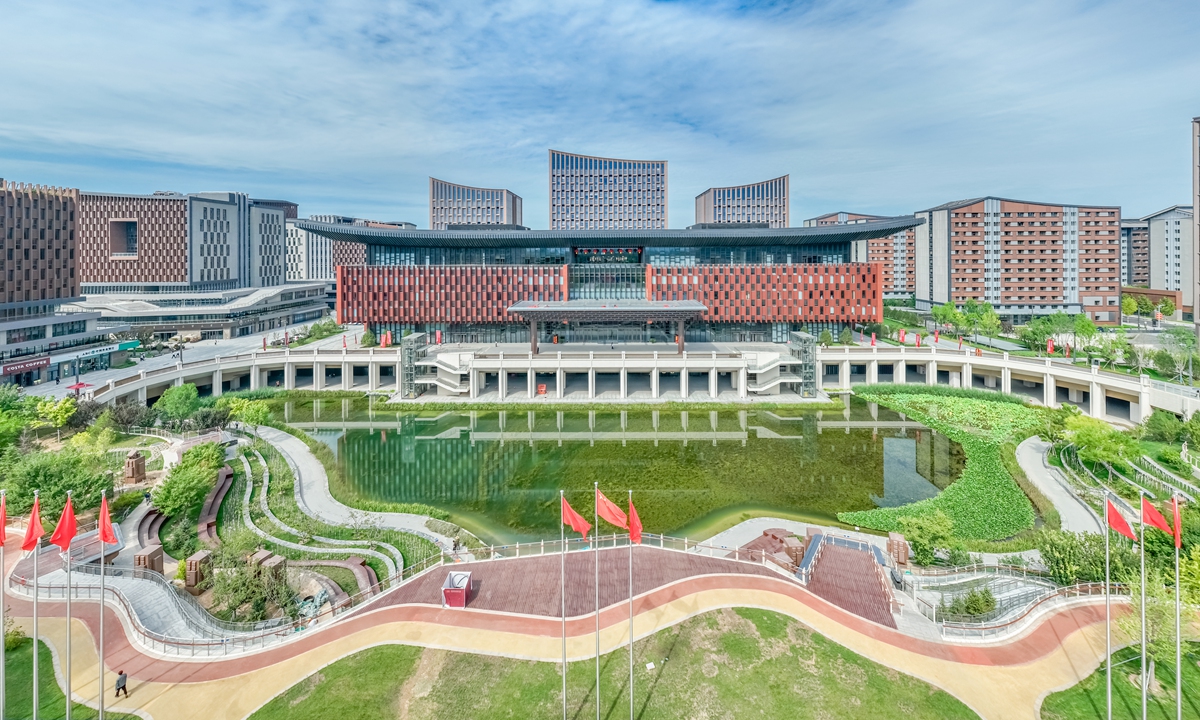
An aerial view of the Xiong'an Business Service Center in Xiong'an New Area, North China's Hebei Province Photos on this page: VCG
Bring Xiong'an's achievements back home
The discussion about governance was not confined to meeting rooms. At the forum venue, international visitors paused to examine displays of Xiong'an's latest technological achievements. Some interacted with locally developed robots, while others gathered around models showcasing the city's emerging industries.
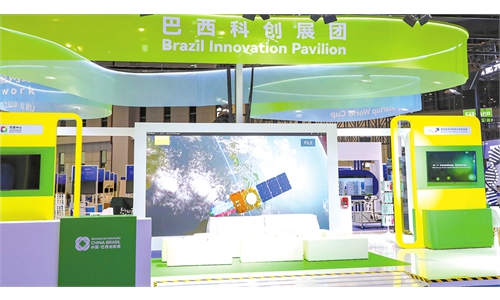
Among the exhibits drawing attention was a model of the "Xiong'an-1," the first satellite manufactured in the new area by Hongqing Technology. The latest milestone came on August 19, when the Xiong'an-1 was successfully launched into orbit aboard a Zhuque-3 Y2 reusable rocket from the Dongfeng commercial space innovation pilot zone in Jiuquan, Northwest China's Gansu Province. For many participants, the exhibits offered a glimpse of how a city established only nine years ago is developing advanced industries alongside its urban infrastructure.
Andrea Renda, director of research at the Centre for European Policy Studies and an expert on AI governance, showed particular interest in Xiong'an's focus on physical AI - applying artificial intelligence in the real world - rather than pursuing distant technological ambitions.
"I am working on similar topics in Europe, and am determined to bring some of the achievements of Xiong'an, and also any of the challenges, back home after the forum," he told the Global Times.
Dr Yukteshwar Kumar, a sinologist and professor at the University of Bath in the UK, who previously served as deputy mayor of Bath, also saw wider significance in the choice of Xiong'an as the forum's host city. He told the Global Times that holding a major international event in Xiong'an demonstrated that China's capacity to host high-level global gatherings is not limited to megacities.
Drawing on his experience in Bath, Kumar noted that many smaller cities overseas lack the facilities needed to host large international conferences. Against that background, he considered Xiong'an's achievements particularly impressive and expressed interest in exploring the city further.
International participants' interest also extended beyond urban construction to economic and industrial cooperation.
Ge Yin, an associate professor at the Institute of Economics of the Hebei Academy of Social Sciences, observed that guests from Europe and Asia were increasingly interested not only in Xiong'an's rapid development, but also in its governance model and opportunities for industrial collaboration.
She cited the example of former Kyrgyz prime minister Djoomart Otorbaev, who explored the possibility of deeper energy investment cooperation during a visit to China Huaneng Group, taking into account Kyrgyzstan's rapid economic growth, energy shortages and opportunities arising from the China-Kyrgyzstan-Uzbekistan Railway project.
Such exchanges, Ge said, show that Xiong'an is becoming more than a showcase of China's modernization. It is also emerging as a platform through which international visitors can better understand China's governance practices and explore practical cooperation.
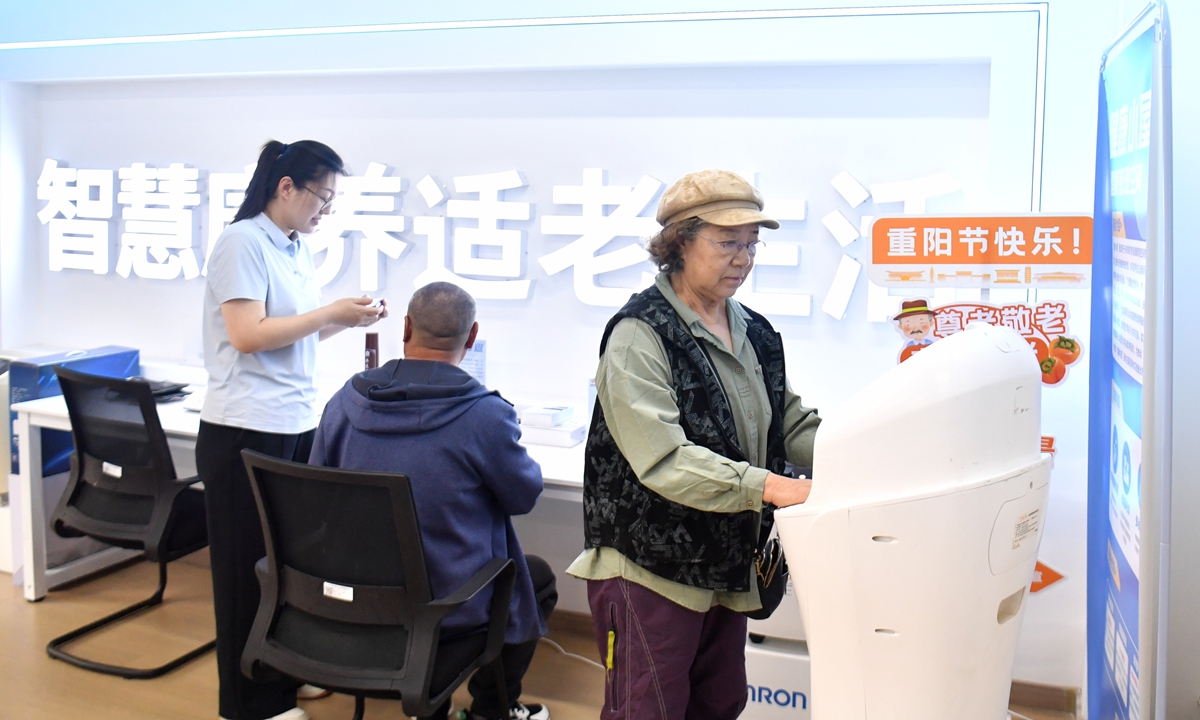
A community holds an event to assist elderly residents, focusing on their practical needs in digital use and home-based care in Xiong'an, Hebei, on October 16, 2026.
People first: Where governance becomes tangible
For Ge, the decision to hold the forum in Xiong'an allowed international discussions on governance to be connected with a real-world example. "From planning before construction to the coordinated development of 'three cities' - above ground, underground and in the cloud - and the creation of 15-minute community living circles, Xiong'an demonstrates a governance approach centered on long-term planning, integrated development and people's needs. These principles resonate with the people-centered approach advocated by the GGI."
During previous visits to local communities, Global Times reporters observed how the city's digital management systems are being connected with neighborhood services. From centralized urban management through its computing center to rapid community-level response mechanisms, the underlying idea is consistent: technology is a tool, while people remain the ultimate purpose of governance.
Community workers make regular visits to elderly residents living alone, while digital systems help identify situations that may require additional attention. These details may not feature prominently in speeches at an international forum, but they offer a concrete picture of what people-centered governance can mean in practice.
Over the past nine years, around 170,000 residents have been relocated and resettled in an orderly manner, while more than 81,000 new urban jobs have been created. The concept of a 15-minute public service circle has also been translated into neighborhood facilities and services.
Joseph Olivier Mendo'o, head of the African Youth Delegation in China, told the Global Times that before arriving, he had known the city mainly through reports and photographs. He imagined a large-scale construction project filled with new infrastructure, perhaps lacking the everyday atmosphere of an established community.
What he saw during a visit to the Rongdong area, a resettlement community for local residents, challenged that impression.
Residents were taking walks along green corridors, while schools, community service centers and commercial facilities had been developed alongside modern residential buildings.
A local resident told him how his family had moved from their original village into modern housing, gaining a better living environment while retaining connections to their local heritage and community memories. "This showed that modernization need not be measured solely by the scale of buildings or the speed of construction," he said.
Such firsthand experiences, he believes, demonstrate that developing countries can explore their own paths to modernization in line with their national conditions. Xiong'an's experience, he added, "should not be seen as a miracle belonging exclusively to China, but as a source of inspiration for other developing countries."
Even with limited resources, he suggested, sound planning and a commitment to people's well-being can help people build modern cities suited to their own societies. "I would encourage more young Africans to come here, to learn, exchange ideas and find inspiration for Africa's own development," he said.
In this young city, where ambitious planning meets everyday life, the discussions on global governance found a fitting setting - one that invites the world to consider not only how cities and institutions are governed, but ultimately whom governance is meant to serve.
RELATED ARTICLES