Swiss-Italian exhibition in Beijing explores how Italian culture shapes architecture
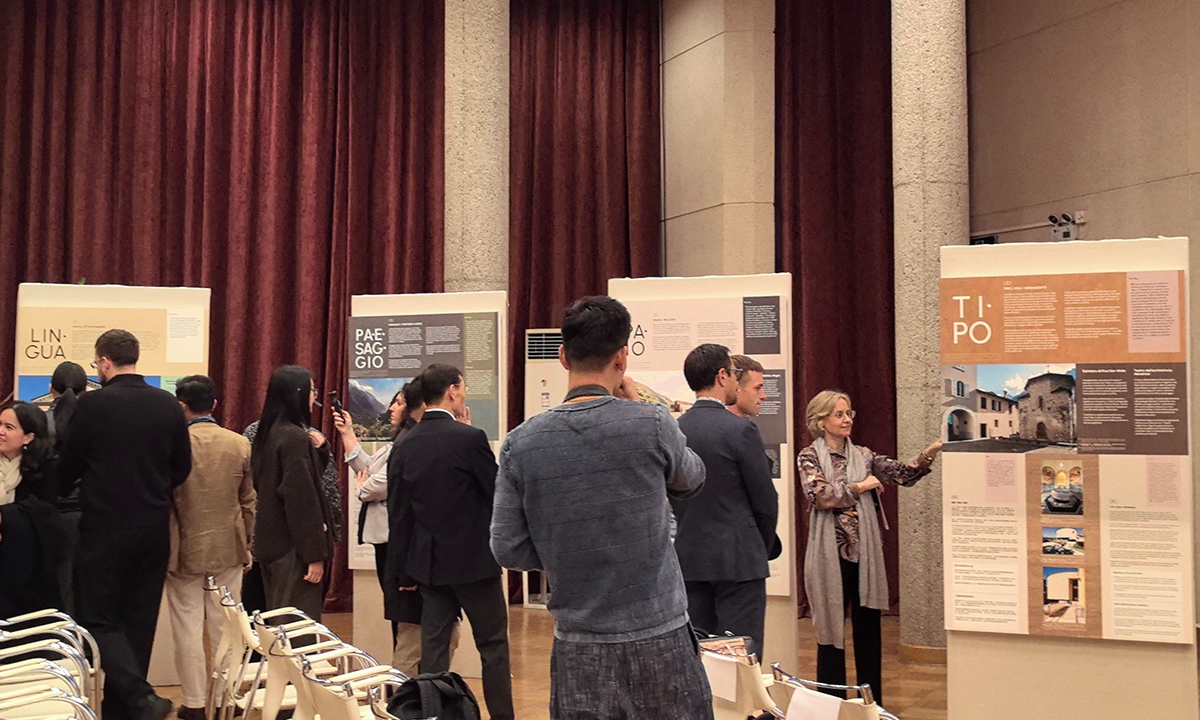
Visitors explore the exhibition at the Italian Cultural Institute in Beijing on October 22, 2026. Photos: Dong Feng/Global Times
The Embassy of Switzerland in China and the Embassy of the Republic of Italy in China jointly launched an exhibition titled Lingua, Paesaggio, Architettura (or Language, Landscape, Architecture) in Beijing on October 22. As part of the events marking the Week of the Italian Language in the World, the exhibition explores how Italian terms or wordings shape the perception and design of architecture. This exhibition explores how Italian-language terms influence both the understanding of architecture and the practice of architectural design.Through photographs, texts and interviews, the exhibition showcases a selection of architectural and landscape concepts from Italian-speaking communities who are based in Switzerland, including case studies of square, landscape and garden from the Ticino region, which is the southernmost, exclusively Italian-speaking canton of Switzerland.
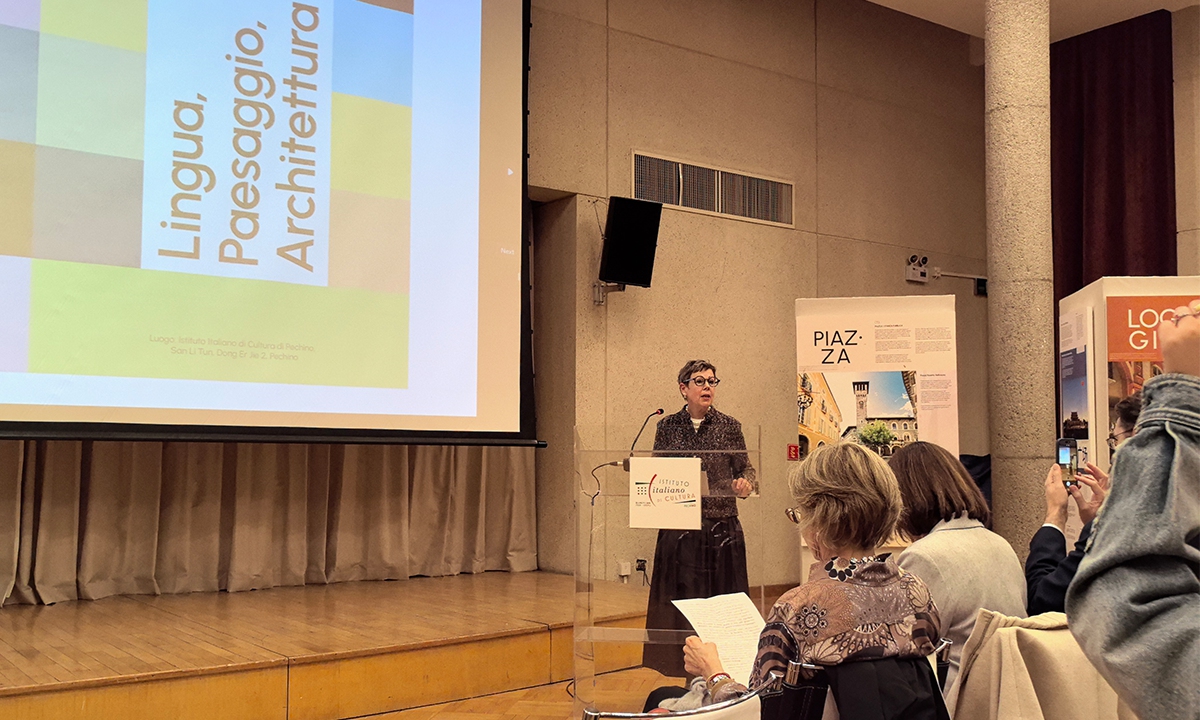
Krystyna Marty Lang, Ambassador of Switzerland to China, delivers a speech at the exhibition inauguration in Beijing on October 22, 2026.
Krystyna Marty Lang, Ambassador of Switzerland to China, said that Switzerland is characterized by its linguistic and cultural diversity; language serves not merely as a tool for communication, but also as a force that shapes cognition and modes of thought.This exhibition aims to establish a platform for dialogue among Switzerland, Italy, and China. Cultural exchange, in this context, centers around mutual listening, reciprocal learning, and stimulating creativity, rather than serving as a one-way presentation, noted Lang.
Ambassador Lang said it is expected that the exhibition will inspire audiences of diverse professional backgrounds and nationalities to engage in new forms of exchange and dialogue.
Felix Schwendimann, counselor and head of Culture and Media at the Embassy of Switzerland in China, told the Global Times that with its various working languages, Switzerland places great value on cultural diversity. Through the events, the embassy seeks to further highlight its unique cultural character and foster interaction among language enthusiasts.
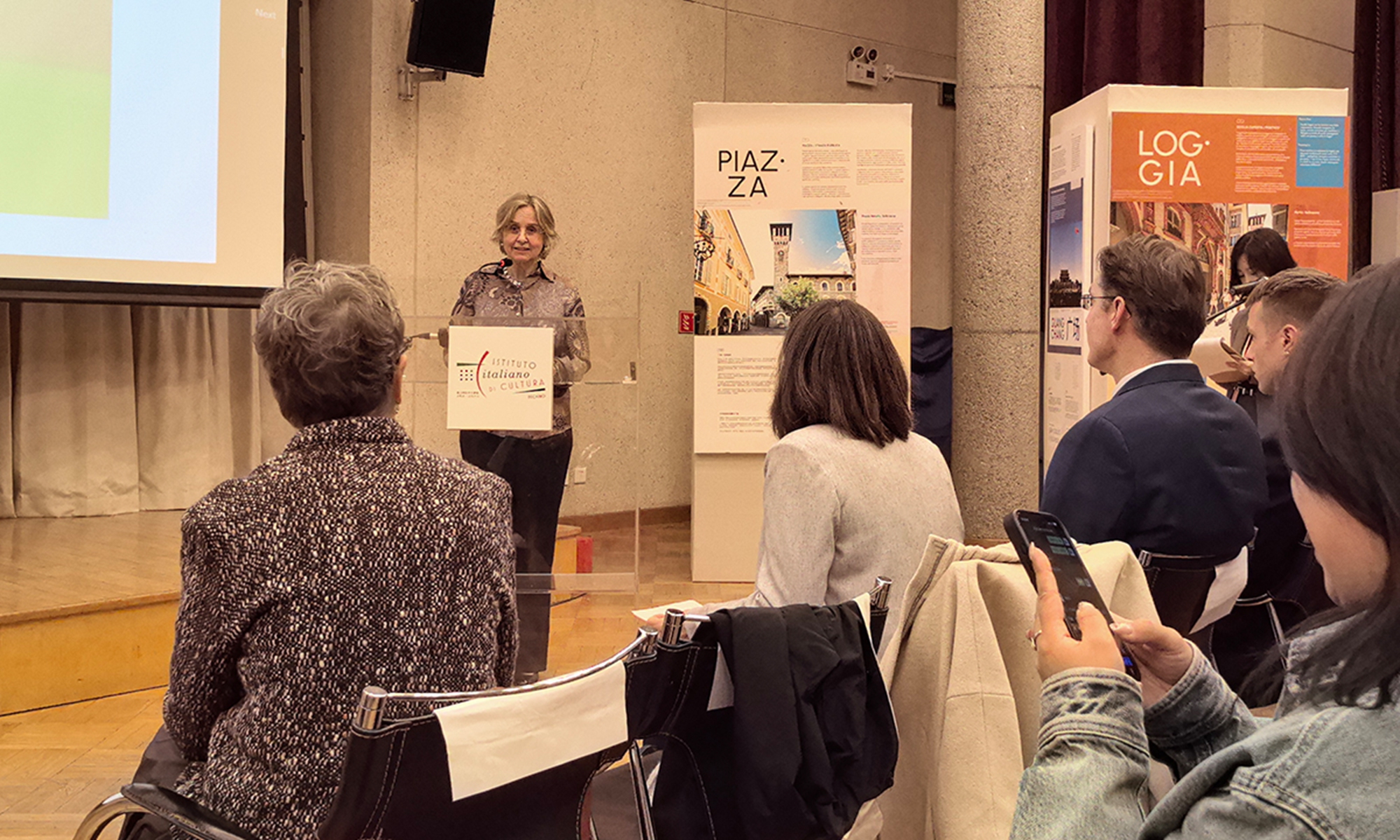
Minister Cristina Carenza, deputy head of mission of the Embassy of the Republic of Italy in China, delivers a speech at the inauguration ceremony on October 22, 2026.
Minister Cristina Carenza, deputy head of mission of the Embassy of the Republic of Italy in China, said that the exhibition allows visitors to interpret architecture from three distinct perspectives: Swiss, Italian, and Chinese.The exhibition enables mutual learning among different civilizations and cultures; through the specialized vocabulary of architecture, which embodies years of historical practice and accumulated knowledge, visitors can collectively conceive, design, and create spaces, said Carenza.
Swiss curator Christian Herren, said that while preparing for this exhibition he has interviewed Chinese architects who studied at the Accademia di architettura di Mendrisio, the architecture faculty of the Università della Svizzera italiana located in Mendrisio, Switzerland.
By examining the differing cultural connotations of everyday settings - such as hutongs (Beijing's traditional alleys, an enduring symbol of the capital's culture and history) and public squares - across various languages, the discussion highlights the variations in spatial cognition that underlie these terms.
Herren specifically mentioned that Chinese architect Li Yaoming had suggested translating hutong into Italian as vicolo. However, the Italian word does not fully capture the vibrant, lived-in atmosphere of hutongs.
Italian architect and designer Fabrizio Gurrado explored how language shapes the way people perceive and understand space, places, and man-made environments, while also examining Italian architectural styles and their contemporary manifestations.
In particular, Gurrado, who worked in China for 13 years, shared how the design style of Andrea Palladio, one of the most influential architects of the Italian Renaissance, influenced the Tsinghua University Art Museum.
The exhibition will continue at the Italian Cultural Institute in Beijing until November 22.
RELATED ARTICLES