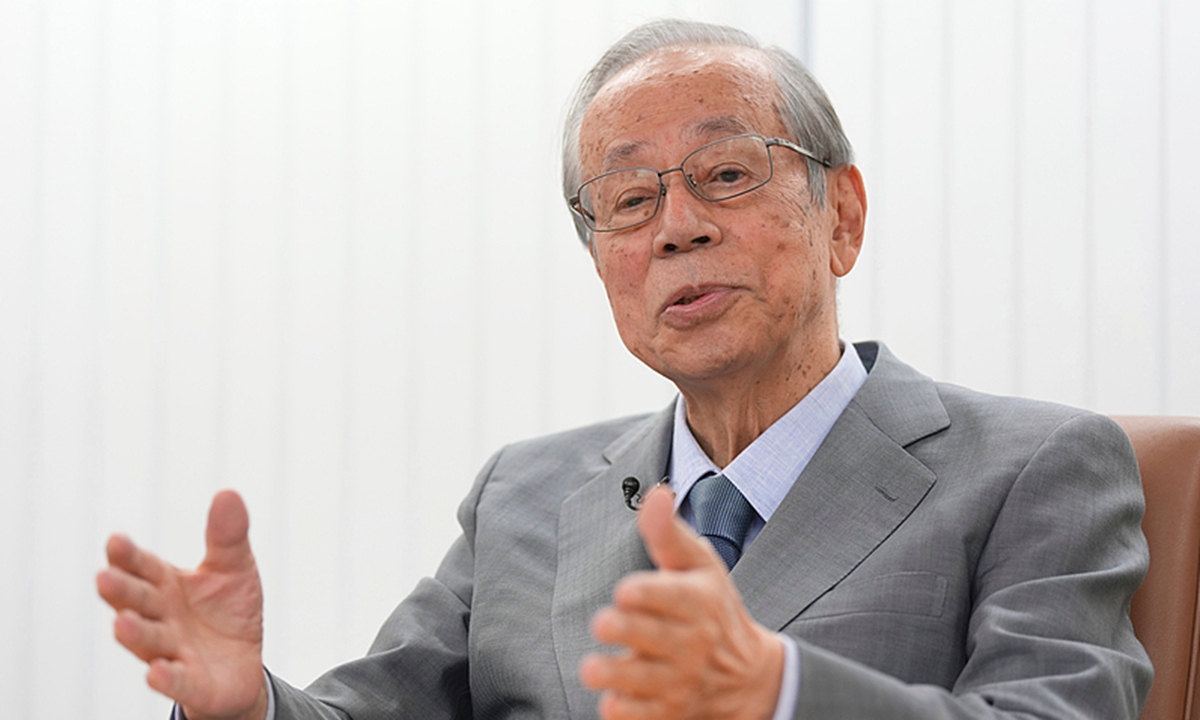
Former Japanese Prime Minister Yasuo Fukuda File photo: VCG
As Japanese media reported on Monday, former Japanese prime minister Yasuo Fukuda died of heart failure at a Tokyo hospital on October 22 at the age of 90. His death arrived a mere four months after former speaker of Japan's House of Representatives Yohei Kono died on June 8 at the age of 89. The consecutive departures of these two veteran "China Hands" in Japan within just a few months evoke a profound sense of sadness and reflection.Yasuo Fukuda was one of the rare politicians in Japanese political circles who possessed true strategic vision vis-à-vis relations with China. His philosophy on China policy was inherited from his father, Takeo Fukuda. While Takeo Fukuda concluded the Treaty of Peace and Friendship between China and Japan in 1978, Yasuo Fukuda carried forward his father's friendly line toward China when he assumed the premiership in 2007. He dedicated his whole life to the advancement of China-Japan relations.
However, with the passing of Yasuo Fukuda, practically almost all of the representative figures of Japan's older generation of the "pro-China" faction have left the political scene. The exit of these China-savvy leaders has virtually severed Japan's direct, high-level channels of communication with China.
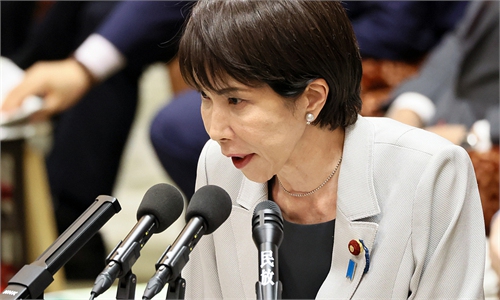
The decline of Japan's "China Hands" cannot be explained merely by a simple generational shift; its primary root lies in Japan's current political ecology. Since Japanese Prime Minister Sanae Takaichi made erroneous remarks regarding the island of Taiwan in November 2025, bilateral relations have deteriorated sharply. The space for rational discourse on China within the Japanese political arena has been progressively squeezed.
At the same time, Japanese society is shaped by a social culture of "reading the air" and maintaining peer alignment. When mainstream public opinion supports a certain view, individuals feel compelled to align horizontally with the group, even if they personally disagree. Amid such a social atmosphere, rational voices on China are drowned out by the "political correctness" of criticizing Beijing, making "China Hands" increasingly hesitant to publicly state their positions.
Nevertheless, the realistic need to improve China-Japan relations is compelling the Japanese political establishment to recalibrate. Against the backdrop of China and the US reaching a consensus on building a constructive relationship of strategic stability based on respect, fairness and reciprocity, Japan once again faces the haunting specter of "Japan passing," a term used to express the country's concern of being overlooked on the global stage.
Consequently, a number of insightful Japanese figures have begun reexamining Tokyo's policy toward Beijing. In August and September, two delegations, led by lawmaker Gaku Hashimoto and former foreign minister Takeshi Iwaya, respectively, visited Beijing to rebuild dialogue. Meanwhile, former foreign minister Yoshimasa Hayashi publicly insisted that maintaining effective diplomacy is impossible without China-savvy officials.
Even more noteworthy is the subtle shift occurring in Japanese public opinion. According to a poll conducted by Nikkei Inc and TV Tokyo from October 23 to 25, as many as 55 percent of respondents believe that Japan should "increase opportunities for dialogue with China." Even among voters who support the ruling LDP, the proportion advocating expanded dialogue with China reached 50 percent. These figures demonstrate that despite the visible rightward tilt of the Japanese political establishment, a social consensus is gradually taking shape that China-Japan relations cannot remain at a perpetual standstill.
Now that Yasuo Fukuda has passed away, revisiting his political philosophy holds unmistakable value in the current climate of China-Japan relations. The importance of cultivating a new generation of "China Hands" across Japanese society has become strikingly evident. Yet the fundamental challenge remains: Whether Japan's current political ecology can nurture sufficient soil for a new "pro-China" faction to take root and flourish.
The year 2027 will mark the 55th anniversary of the normalization of diplomatic relations between China and Japan. Although the departure of Yasuo Fukuda signifies the fading of a generation of statesmen dedicated to China-Japan friendship, others must step forward to carry on their cause.
How to cultivate rational, China-savvy forces under new historical conditions and return China-Japan relations to the right track of pragmatic cooperation will be imperative for both countries, especially for Japan.
The author is a lecturer at Shanghai University of International Business and Economics. opinion@globaltimes.com.cn
RELATED ARTICLES