GT on the spot: from screen to shore, how Jeju tourism fosters China-South Korea people-to-people exchanges
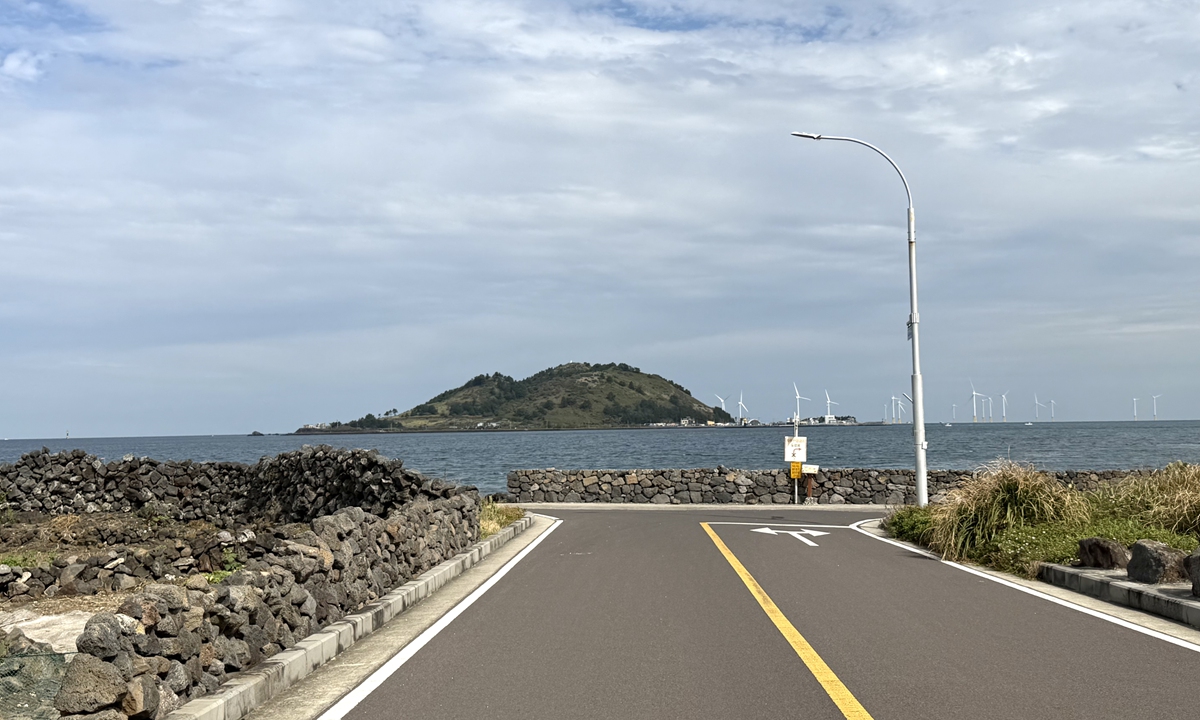
Geumneung Fishing Village. Photo: Zhang Wanshi/Global Times
Dark volcanic rock walls line the Geumneung Fishing Village along the coast of Jeju Island, South Korea, their crevices dotted with pale-purple succulents, together creating a landscape that embodies the island's distinctive character.
Here, generations of haenyeo, the local female divers, have braved the waters without oxygen tanks to harvest shellfish, sustaining a tradition that remains rooted in Jeju's coastal life.
This distinctive heritage is also drawing Chinese tourists to Jeju. As the island works to make itself more welcoming to Chinese tourists, such encounters offer a glimpse of how tourism can foster people-to-people exchanges between China and South Korea.
Shifts to local immersion
Many people in China came to know the word "haenyeo" through the hit Korean drama When Life Gives You Tangerines. The series, which follows a couple's life on Jeju Island, gained popularity on Chinese social media after its premiere in 2025.
The drama has also served as a channel for people-to-people exchange between China and South Korea beyond the screen. "Many Chinese visitors come here thanks to the drama, and students come as well," Hong Jun-hee, chairperson of Geumneung Fishing Village Association, told the Global Times.
During low tide, those who take part in the experience typically go down to the shore to remove seaweed, said Hong, who once visited China to promote the culture of the haenyeo. When the tide comes back in, they work on trimming away remnants of old, burnt nylon ropes.
The experiences also reflect a broader shift in how Chinese tourists travel to Jeju Island, a visa-free destination for Chinese nationals. The Jeju Tourism Organization told the Global Times that Chinese visitors are increasingly seeking out local experiences that allow them to immerse themselves in everyday life on the island.
The organization said it's promoting haenyeo cultural experiences while leveraging K-dramas and films set in Jeju, including When Life Gives You Tangerines and Our Blues, to showcase the island's cultural heritage and natural beauty.
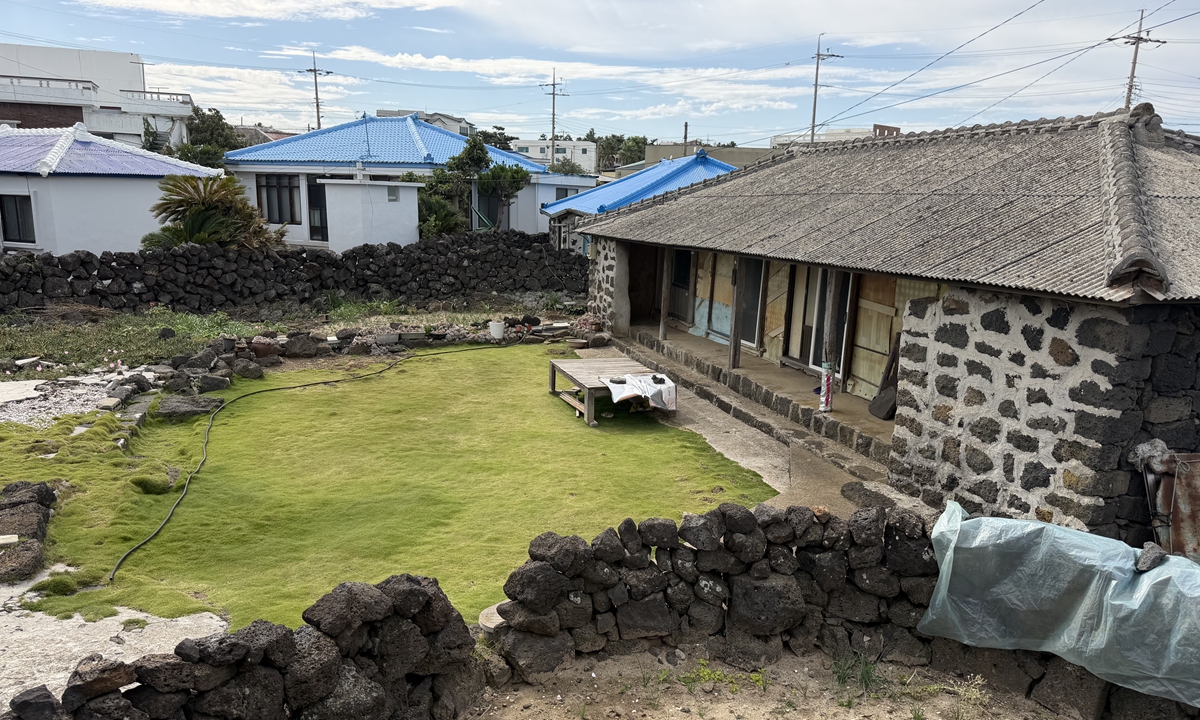
A scene at Geumneung Fishing Village. Photo: Zhang Wanshi/Global Times

Hong Jun-hee, chairperson of Geumneung Fishing Village Association. Photo: Zhang Wanshi/Global Times
While Korean dramas continue to attract Chinese visitors to South Korea, the country's media industry also sees value in strengthening exchanges with China.
Lee Sung-joo, the president of MBC, one of South Korea's leading television broadcasters, told the Global Times in an interview that China's cultural and economic ties are too important to be overlooked, not only in the region but around the world.
"Economic and cultural exchanges should continue and be further strengthened wherever possible," Lee continued.
Two-way bonds
Tourism has long been an important link between Jeju and China. Jeju began implementing a visa-free policy in 2002, which attracted Chinese tourists. In 2008, the visa-free policy was further expanded to individual travelers, marking the start of rapid growth in the Chinese market, the organization said.
The number of Chinese visitors to Jeju surpassed 1 million for the first time in 2012, reaching a record high of approximately 3.06 million to 3.11 million in 2016, the organization noted.
To make travel convenient for Chinese visitors, most businesses across Jeju, including shops and restaurants, as well as public transportation services, accept Alipay.
According to data from the Jeju Tourism Organization, visitors from the Chinese mainland accounted for approximately 68 percent of Jeju Island's foreign visitors, while those from the Taiwan region represented around 12 percent.
These figures indicate that the Chinese mainland remains the most important source market for foreign visitors to Jeju Island, the organization noted.
The close tourism links are also reflected in air connectivity. Chinese mainland and China's Taiwan region account for 88 percent of Jeju Island's international direct flights, with 219 flights operating weekly between Jeju and 13 cities.
Among them, there are 76 weekly flights to Shanghai, 25 to Beijing, and 38 to the Taiwan region.
Tourism flows between China and South Korea go both ways.
In When Life Gives You Tangerines, a line reads, "Let's go to Zhangjiajie to see the falling leaves next year," and the place in Central China is a favorite destination for South Korean tourists.
Nestled in the mountainous northwest of Central China's Hunan Province, Zhangjiajie is a renowned tourist city. Though landlocked and far from China's borders, it has risen as a popular gateway for international travelers, spurred by China's expanded visa-free entry and eased transit policies, according to the Xinhua News Agency.
South Korea remained Zhangjiajie's largest source of inbound tourists between January and August this year, with 204,600 South Korean visitors recorded, according to the government website of the city.
Since China implemented a visa-free entry policy for South Korean citizens in November 2024, the phrase "Going to China after work on Friday" once topped the trending lists on social media.
Jeju has maintained very close exchanges with China and is loved by Chinese tourists, Chinese Ambassador to South Korea Dai Bing said during his meeting with Governor of Jeju Special Self-Governing Province Wi Seong-gon in September. "Hopefully Jeju will continue to boost exchanges and cooperation with China and continue to provide a safe and healthy tourism environment for Chinese visitors."
China and South Korea are important neighbors and partners, the ambassador noted, adding that strengthening friendly cooperation best serves the fundamental interests of both countries.
RELATED ARTICLES