Mahjong Photo: VCG
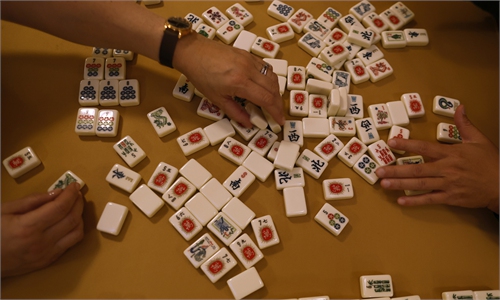
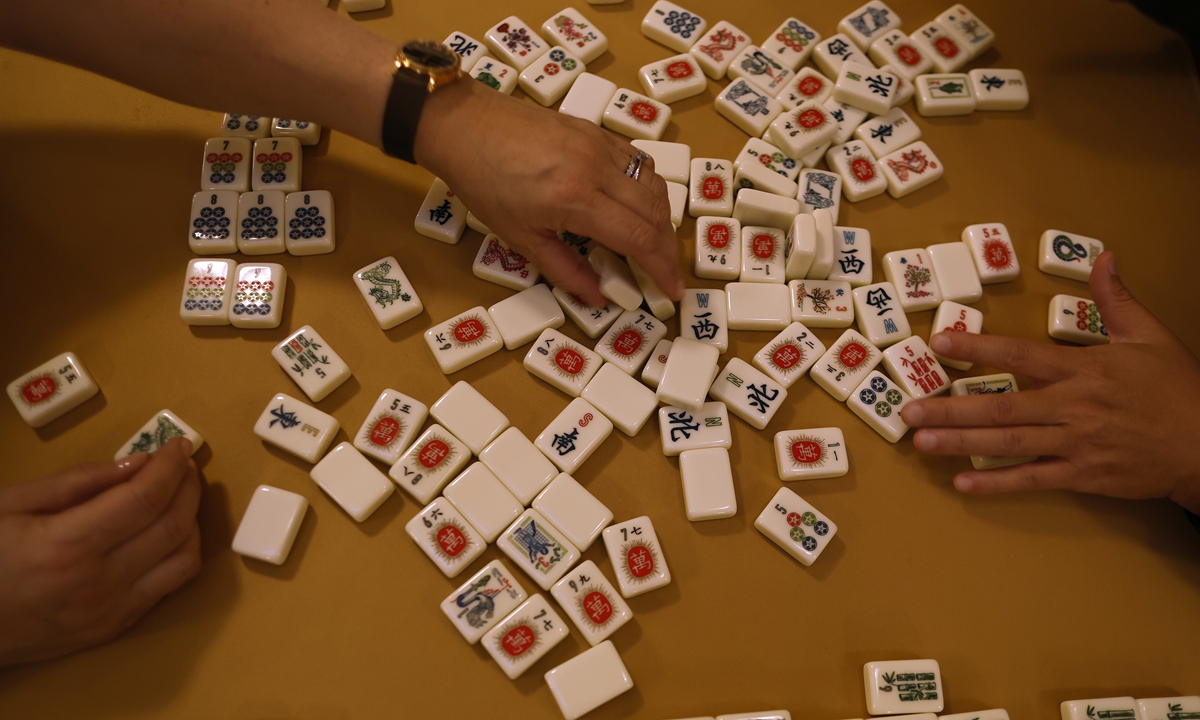
You have probably heard that mahjong is trending in America. Gen Z is gathering in bars, clacking tiles together, and this ancient Chinese game has suddenly appeared on social media. Seeing this feels almost surreal. While mahjong is popular in China, it is mainly a game for older people and family gatherings. Yet in America, young people have started playing it.
So what do young people in China play? Games like Werewolf are very popular. This game was first invented by a Soviet citizen, Dmitry Davidoff, in 1986, and was originally called Mafia. Later, someone changed the background to werewolves, and the name Werewolf became popular, spreading across Europe and America. However, the Chinese "Werewolf" is a localized variant. Chinese players and game companies have heavily modified the rules, creating the highly competitive version that people are familiar with today.
Werewolf in China has been "played to the extreme," and mahjong has been skillfully embraced by young Americans. This itself shows that the global gaming market has long been globalized. You are influencing me, and I am influencing you. This is a form of cultural interaction under globalization. Next, China plans to invite 100,000 young Americans to the country in the next five years. I believe that as they interact with young Chinese people, more Chinese-style games will attract them.
Take Weiqi, also called Go. This 4,000-year-old game is incredibly brain-bending, yet Chinese teenagers are learning it as a hobby, and parents often arrange for their kids to take Go classes during holidays. There is a certain energy to this era - young Chinese people seem proud to engage with games that have deep cultural roots.
Then there is Xiangqi, or Chinese chess. It has been around for over 2,000 years, but young people today play it with real passion. The boards are getting more and more beautiful - thanks to advanced manufacturing, high-quality wooden sets are now affordable. Online platforms allow you to play with someone from across the country anytime, anywhere.
Among young Chinese people, there is also a quiet cultural shift - a renewed interest in their own traditions. Game nights have become a way to maintain friendships, engage socially, and feel connected to something ancient and meaningful. Whether they are playing Dou Dizhu (a card game) on top-tier gaming phones or gathering around a Xiangqi board, young Chinese people are reclaiming their gaming traditions with modern enthusiasm.
But what is really interesting is the fact that this gaming revolution is not just about reviving old games. China's manufacturing strength is reshaping the entire ecosystem. Chinese tech companies are no longer just making phones; they are building devices specifically for gaming. Companies like Tencent, NetEase and miHoYo have become gaming giants, creating hits like Genshin Impact that attract hundreds of millions of players worldwide. More interestingly, Chinese hardware makers like OnePlus and OPPO are designing gaming phones with chips optimized at the core level for gameplay. These devices feature dedicated gaming buttons, screens with refresh rates reaching 185Hz and advanced cooling systems. It is a perfect marriage of software creativity and hardware manufacturing strength - a distinctly Chinese advantage in the global gaming landscape.
Just as Americans are discovering mahjong and finding it trendy and new, young Chinese people are already rediscovering their entire gaming heritage.
This is probably where gaming is most fascinating: It does not carry a mission to "export" anything but uses joy to pull everyone into the same conversation. When Gen Z in America cheers for a "hu" (winning hand) in a bar, and when young Chinese people team up with foreign netizens on their phones to play Werewolf and test their logic, ordinary people in China and the US are actually engaging in the most unburdened mutual observation - look, we play the same things; so what are we thinking about?
This kind of people-to-people exchange, built on everyday interests, often withstands the test of time better than games played at the negotiating table. Even if political winds change, the habit of friends getting together for a game is not so easily broken. Come and join the mahjong trend, and let's experience more ancient and modern games together. There are many more games waiting for you. What you have seen so far is just the tip of the iceberg.
The author is a senior editor with the People's Daily. dinggang@globaltimes.com.cn. Follow him on X @dinggangchina
RELATED ARTICLES