ARTS / CULTURE & LEISURE
Between territory and global development, Italian organic viticulture is growing
Heading to the east

In the heart of the rolling hills of the Marche region, in central Italy, between Offida, Acquaviva Picena, and Ripatransone, there is a winery that in recent years has managed to transform its peasant roots into an increasingly solid international vision. Ciù Ciù Tenimenti Bartolomei, founded in 1970 by Natalino and Anna Bartolomei, today represents one of the symbols of Italian organic viticulture, capable of bringing Piceno wines to the tables of Europe, North America, and the East Asia, without losing its authentic connection to the Marche region's territory.
Palazzo Mercolini Tinelli Photos on this page: Courtesy of MF/Milano Finanza
Expansion abroad represents one of the strategic pillars of the company. The Offida winery currently exports about 60 percent of its production internationally, reaching established markets such as Europe and North America, but especially strengthening its presence in the East Asia, an area where the demand for organic and biodynamic wines continues to grow significantly."We started distribution projects towards China and Japan as early as the late 1990s, supported by important promotional events. We have had the greatest success particularly with two red wines, Rosso Piceno Superiore Gotico and Offida Rosso Esperanto, which are still the wines we sell the most in China because, in terms of organoleptic qualities and taste, they particularly meet customer preferences," explained Walter Bartolomei, who leads the company with his brother Massimiliano.
"After COVID [pandemic], there have been significant changes in China; consumption has decreased, as statistics also indicate, but our group has maintained its standing, especially with red wines," Bartolomei continued, "and for the future, we also foresee an expansion of the market to other wines more in line with current consumption trends: lighter, less structured wines that better match the preferences of Chinese consumers, so there will certainly be an expansion of the offer towards more modern, smart and affordable wines. We'll certainly keep producing red wines as before, but also more white and sparkling wines."
Walter Bartolomei describes the direction taken by the group: "Today, the Ciù Ciù Tenimenti group aims to enhance the indigenous grape varieties of each territory, cultivating the land organically. In fact, to make an excellent wine, you first need excellent raw materials, the grapes, which can enhance the history, essence, and richness of the land from which they originate. Due to the commitments and efforts that have always guided us in this direction, we have expanded our range with biodynamic wines, further strengthening our positioning in terms of sustainability and innovation."
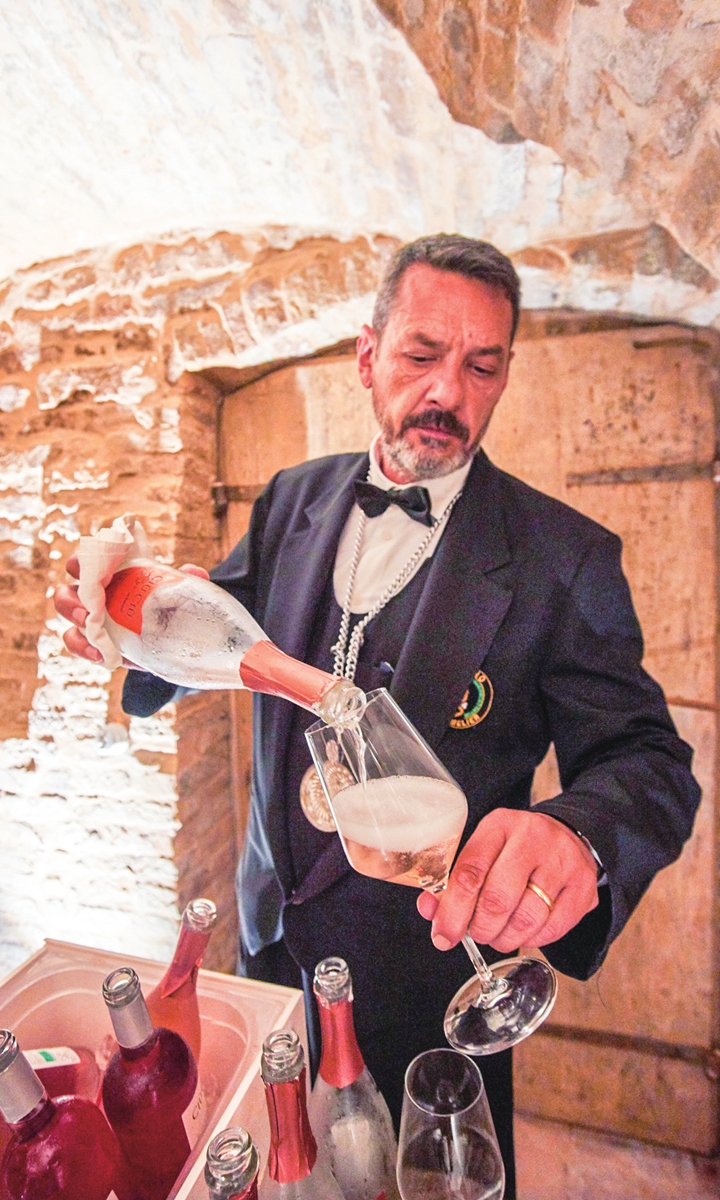
Mescita Photos on this page: Courtesy of MF/Milano Finanza
This philosophy is applied not only in the Marche region but also in the other estates of the group: Podere Poggiomasso in Lazio, Villa Barcaroli in Abruzzo, Il Chiurlo in Tuscany, and Feudo Luparello in Sicily. Five different territories united by a common strategy that focuses on enhancing indigenous grape varieties and directly controlling the entire production chain.The internationalization of the brand stems from a clear production identity. In an increasingly competitive global market, Ciù Ciù has chosen to differentiate itself by focusing on strongly territorial wines, capable of telling the story of the Piceno area and the Marche region through historic grape varieties such as Pecorino, Passerina, and Montepulciano. This choice has found great interest especially in Asian markets, where consumers seek authenticity, sustainability, and strong product recognition.
It is no coincidence that Walter and Massimiliano Bartolomei have always linked the history of their wine to that of the territory: "When we bring our wine to other countries and nations, before we display the product, we talk about the history of the territory, of the Marche region, paying particular attention to the history of the hills between Acquaviva, Offida, and Ripatransone, where the winery's vineyards are located, because it is only by savoring the authentic fragrance of these landscapes that consumers can fully understand the charm and quality of our wine."
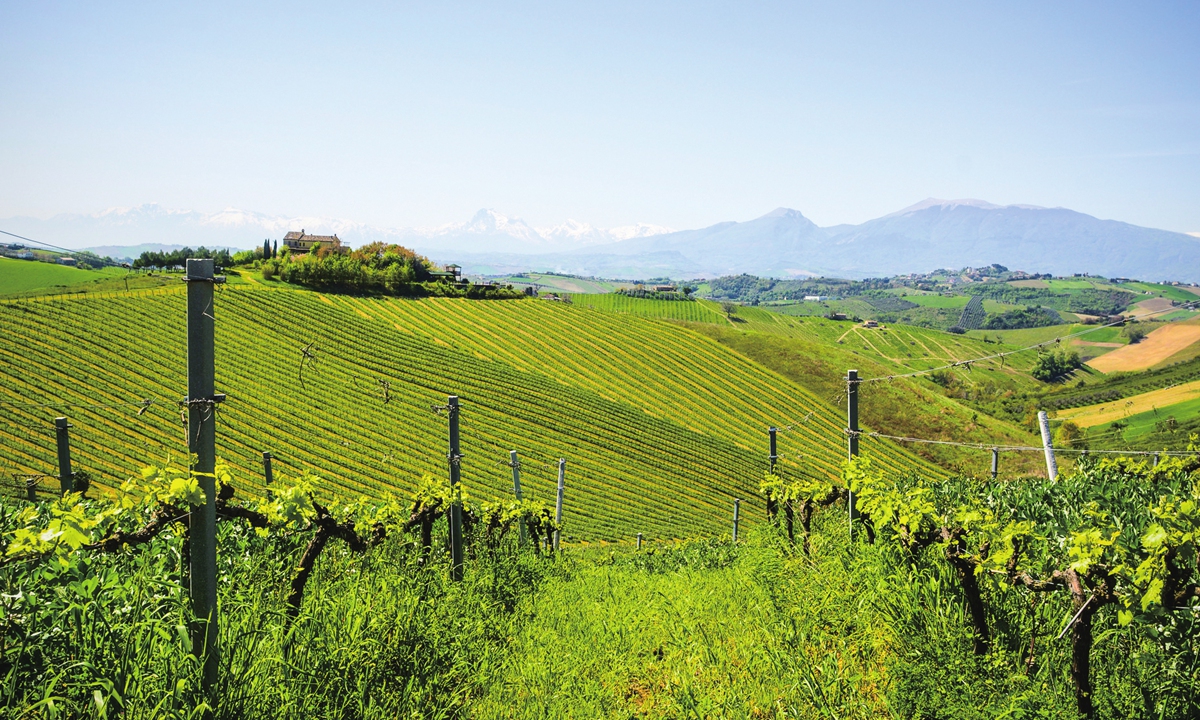
Le vigne di Tenimenti Photos on this page: Courtesy of MF/Milano Finanza
Attention to sustainability represents another distinctive element of the company's growth. Ciù Ciù was indeed one of the first Italian companies to obtain organic certification back in 1996, at a time when organic was still a niche production. In the vineyards, spontaneous biodiversity thrives, consisting of herbs, beneficial insects, and low environmental impact crops, while the technique of green manuring replaces the use of traditional chemical fertilizers."Our conception has always been to control the entire production process from cultivation to the sale of the bottle. We were one of the first companies to obtain organic certification almost 30 years ago, and today we are increasingly moving towards biodynamic agriculture. For us, sustainability also involves the choice and use of eco-sustainable and non-polluting materials throughout the various stages of the process," Bartolomei explained.
The transition to biodynamics represents a new phase of development today. Some labels from the winery, such as Offida DOCG Pecorino, Piceno DOP Superiore, and Spumante Pecorino Metodo Classico Dosaggio Zero, are already certified Bio Vegan Demeter, symbolizing a production increasingly oriented towards natural balance and the absolute quality of raw materials.
Alongside sustainability, the group continues to invest in commerce and distribution. In recent years, Ciù Ciù has strengthened its presence in the Horeca channel with new premium labels dedicated to quality dining, while simultaneously expanding distribution in international markets.
The strength of Ciù Ciù Tenimenti remains deeply anchored to its territory of origin. The hills of Offida, the microclimate influenced by the Adriatic Sea and the Sibillini mountains, the vineyards cultivated in the La Ferola estate, and the recovery of symbolic places like Palazzo Mercolini Tinelli tell a reality that has managed to evolve without losing authenticity. Fifty years after its founding, Natalino Bartolomei's dream continues to grow in the name of sustainability, quality, and the enhancement of Italian territorial identities. A journey that today looks to the world, from North America to the East Asia, bringing not just wine into the glass, but the story of a land, its traditions, and its agricultural heritage.
RELATED ARTICLES