Sanrio apologizes over Japanese drama’s historical distortion controversy as Chinese netizens demand overseas statement; backlash persists over national ‘red lines’
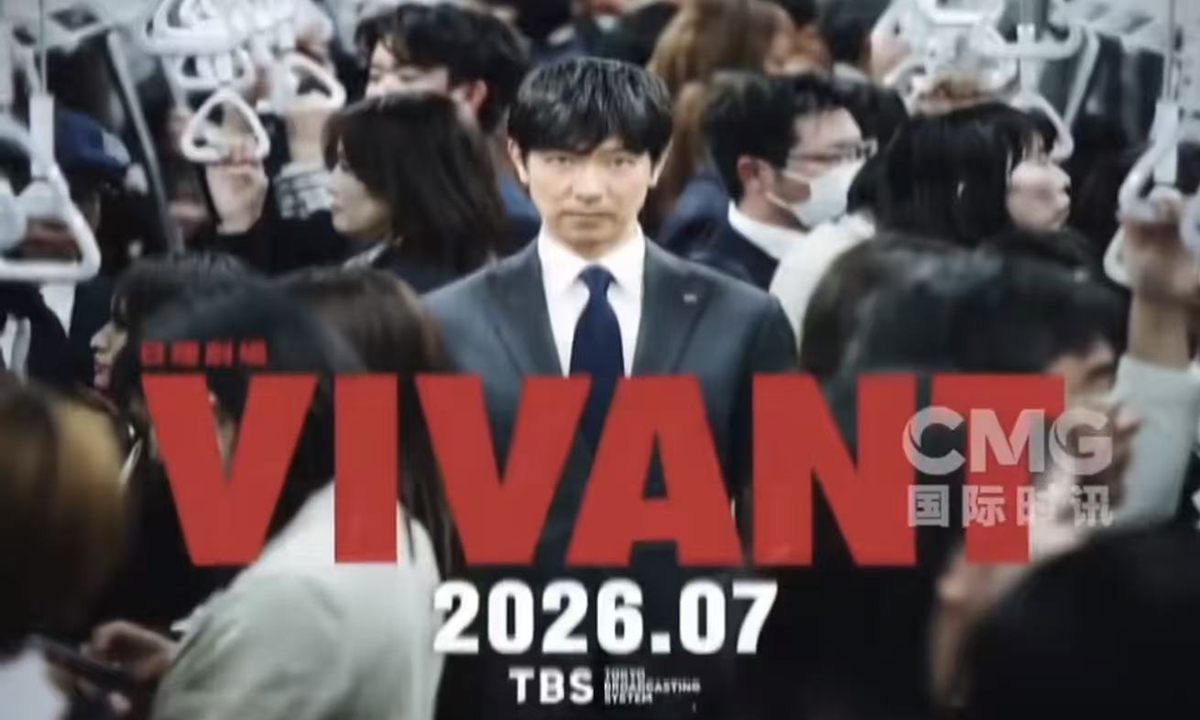
Season 2 of Japanese drama Vivant Photo: Screenshot from CCTV News
After many Chinese netizens criticized Sanrio for issuing an apology only on Chinese social media platforms for its collaboration with the China-smearing Japanese TV drama Vivant, and questioned whether the move was aimed specifically at the Chinese market, the company issued the Japanese-language apology on its official Japanese website on Thursday afternoon. Chinese netizens remained dissatisfied, saying "certain red lines must never be crossed."
Chinese Foreign Ministry spokesperson Guo Jiakun said on Thursday that this TV drama once again shows that there is a force in Japan continuously seeking to use cultural products to vilify and smear China and disseminate hatred against China. The international community and insightful people in Japan must be vigilant against this, Guo said.
Sanrio, the Japanese company behind Hello Kitty, Cinnamoroll and My Melody, previously apologized late Wednesday through its official Hello Kitty account on Sina Weibo for its collaboration with the Japanese TV drama Vivant, which sparked backlash over alleged distortion of history. The company said that it would end the collaboration and all related projects and promotional activities.
The collaboration sparked shock and fierce backlash on Chinese social media after the drama drew criticism from Chinese netizens for portraying Chinese characters as perpetrators of atrocities associated with Japan's wartime aggression.
In the statement, the company said it had recently received feedback from various parties regarding the co-branded products and apologized for the concerns caused by the partnership.
"Regarding the content associated with this collaboration, we believe it contains expressions inconsistent with the corporate philosophy of the Sanrio Group. Therefore, we have decided to terminate the collaboration and all subsequent projects and promotional activities," the statement said, adding that the company was actively handling the matter.
However, the apology failed to satisfy some Chinese netizens, who called on the company to publish the statement on its overseas platforms as well.
"Other countries have also seen the collaboration terminated, but you'd better issue an announcement overseas, too," netizens commented.
The Japanese-language apology statement posted on the company's website on Thursday afternoon was largely identical in content to the earlier statement issued on Chinese social media platforms. The Global Times learned from an informed source that beyond issuing apologies in Chinese and Japanese, the headquarters also pulled products launched under its 2023 Vivant collaboration.
Asked whether it had conducted a comprehensive review of the relevant episodes of the drama's second season before entering into the partnership, Sanrio's representatives told the Global Times that the collaboration involved planning and approving co-branded merchandise featuring characters from the first season of Vivant and Sanrio's own characters, rather than jointly creating the drama's content with its producers.
"We did not participate in the filming or production of the TV drama and were not aware of its plot in advance," the company said, adding that it could not comment on the details of its review procedures.
However, many Chinese netizens said the incident crossed a "red line" that should never be crossed. "Certain red lines must never be crossed, and those who cross them must pay the price. This cannot be resolved with a single apology," one comment read. Others said that failing to issue the apology simultaneously on its official platforms from the outset amounted to a "test of the waters," adding that the apology was "insincere and unacceptable."
Vivant, a spy thriller produced by Japanese broadcaster TBS, follows a fictional unofficial intelligence unit of Japan's Self-Defense Forces (SDF) operating around the world.
A commentary article published by Japanese media outlet Toyo Keizai noted the drama's portrayal of its antagonists, highlighting repeated scenes in which a Chinese organization subjects kidnapped SDF members to brutal torture.
Chinese media criticized the series for "packaging aggressive narratives through cognitive and information warfare." The drama distorts history by attributing such atrocities to contemporary Chinese characters, while implicitly glorifying Japan's overseas military operations and promoting an expansionist narrative, according to CCTV News.
The drama had previously drawn criticism from both Chinese and Japanese netizens. Some netizens pointed out that Japan's acts of distorting history are commonplace. "This is a familiar tactic of Japan, and vigilance must never be relaxed," one netizen wrote. "I'm quietly intrigued by the process of how content like this gets approved within the framework of commercial broadcasting," another Japanese netizen wrote.
According to official previews for Vivant, the first batch of plush toys featuring Hello Kitty, My Melody and other Sanrio characters dressed as the drama's "spy figures" was released in July. A second batch of products had also been approved for release, although details, including the launch date, product lineup and pricing, had yet to be announced.
After news of this collaboration broke, a huge number of social media users made it clear that they "cannot accept it."
The controversy has drawn particular attention given the values associated with Sanrio's characters. The company's name is derived from Spanish words meaning "Holy River," expressing the hope that, just as rivers nurture civilization, the company would foster understanding rather than division among people. Hello Kitty's lack of a mouth is also commonly associated with listening and emotional connection, while the character has long been linked to friendship. It is precisely for this reason that Sanrio's "lapse" is all the more regrettable, a Chinese netizen said.
China is an important overseas market for Sanrio. In the first half of 2026, the company's revenue from the Chinese market reached 781 million yuan ($117 million), up more than 40 percent year-on-year. The group has previously expressed its ambition to develop its next breakout IP, comparable to Cinnamoroll, in the Chinese market.
RELATED ARTICLES