Japanese fashion brand's dual apologies over collaboration with insulting anime spark fresh backlash in China

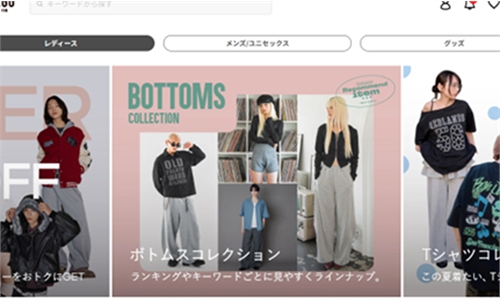
Screenshot from WEGO official website
Japanese streetwear brand WEGO has triggered a new wave of controversy in China after releasing markedly different "apology" statements in Chinese and Japanese over its collaboration with the anime My Hero Academia, which had previously been removed from major Chinese video platforms for using names from the history of Japan's militarist invasion of China, as well as its release date.
The fashion brand jointly launched apparel and merchandise with the series and scheduled the release on September 18 - the anniversary of the September 18 Incident in 1931, which marked Japan's invasion of China. The timing and the collaboration quickly pushed the topic "Japanese company collabs with insulting-China IP and chooses 918 for sale" onto trending lists across Chinese social media platforms and aroused mounting criticism from netizens.
WEGO's China subsidiary issued an apology on late Friday, saying that the Japanese parent company had "failed to conduct sufficient careful confirmation" when planning the Japan-market collaboration. It expressed deep regret, and announced that the parent company had formally terminated the partnership and deleted all related promotional materials.
The company has always placed great importance on the feelings of Chinese consumers and respects the common consensus of Chinese society as well as the sentiments of the people. Regarding this matter, the company has fully consulted with its Japanese parent company WEGO and the brand would improve its review mechanisms, said the statement.
On its Japanese website, however, WEGO posted only a brief "notice," saying the company "regrettably announces" that sales of the collaboration products with My Hero Academia would be suspended "due to various reasons" and offered a general apology for any inconvenience caused.
Chinese netizens quickly pointed out the discrepancies. The Japanese version neither explained the real reason for the suspension nor addressed Chinese public sentiment. Many argued that the softer wording showed the company was unwilling to confront the core issue.
Many Chinese users stressed that their boycott is not against anime culture itself, but against crossing historical red lines. "September 18 is a day of national humiliation that cannot be erased," one widely shared comment read. "We will not consume, dilute, or commercialize the suffering of the war of aggression."
On September 18, 1931, Japanese troops blew up a section of railway under their control near Shenyang in Northeast China and accused Chinese troops of sabotage as a pretext for their attack later that night against barracks near Shenyang, starting the premeditated invasion of China.
Apart from the release date, the collaboration anime My Hero Academia has long been regarded in China as a problematic IP. In 2020, the manga introduced a villain named "Maruta Shiga," a character involved in human experimentation. "Maruta" was the dehumanizing term used by Japan's Unit 731 for victims of its biological experiments in China, while "Shiga" references Japanese bacteriologist Kiyoshi Shiga. Unit 731 carried out inhumane bacterial warfare and human experimentation during Japan's invasion of China, killing more than 3,000 Chinese, Korean, Soviet and Western prisoners of war.
Critics say any commercial use of such references trivializes one of the darkest chapters of wartime history.
Founded in 1994 in Japan, WEGO has been expanding overseas and is scheduled to open its first flagship store in Shanghai on September 29.
Netizens noted the contradiction: The brand is actively courting young Chinese consumers while choosing a historically sensitive date to promote a controversial collaboration.
Some netizens criticized the dual apologies that "the brand didn't admit it was wrong; it was just panicked because it realized it wouldn't make any money in China."
As of press time, WEGO had not issued a further unified statement addressing the difference between its Chinese and Japanese versions.
Global Times
RELATED ARTICLES