Pakistan closes airspace to Taiwan island's airlines, sending ‘Taiwan independence’ separatist forces into a frenzy
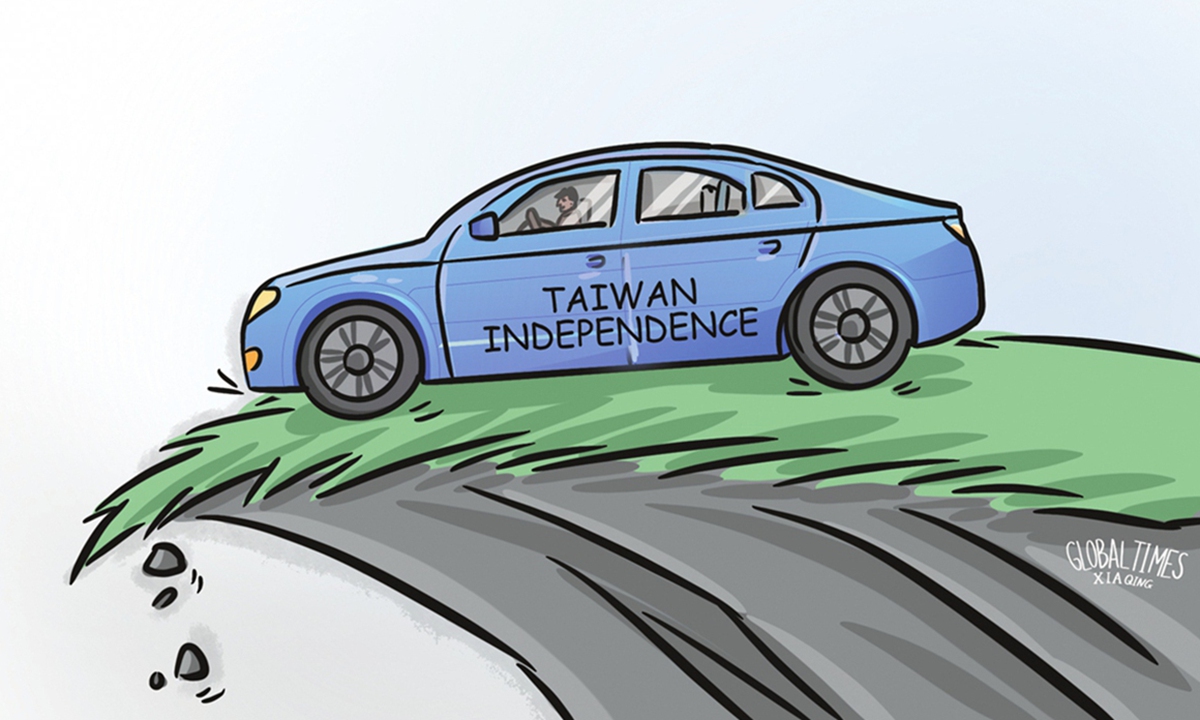
Illustration: Xia Qing/GT
According to foreign media reports, Pakistani Defense Minister Khawaja Asif announced on Wednesday evening, local time, that Pakistan's aviation division strictly follows the one-China principle and has permitted only Chinese airlines to fly over Pakistan, barring Taiwan island's airlines from using its airspace. The latest reports indicate that Taiwan's airlines China Airlines Ltd and Eva Airways Corp have been granted limited permission to operate flights from October 28, 2026, to March 27, 2027.
The news sent Taiwan's Democratic Progressive Party (DPP) authorities and the pro-independence camp into a frenzy. The "external affairs" authority of Taiwan island rushed to accuse Pakistan of "disregarding reality" and denigrating Taiwan's "sovereignty." It even accused Islamabad of "politicizing and weaponizing" its airspace. But what truly frightens the DPP authorities is not just Pakistan's latest announcement. They fear that more countries may follow suit, further isolating the "Taiwan independence" separatist forces from all directions until they ultimately meet their demise.
The "Taiwan independence" separatist forces are increasingly feeling the squeeze. Over the past two years, countries including Seychelles, Mauritius and Madagascar have reportedly revoked flight permits for Taiwan leader Lai Ching-te's aircraft to cross airspace they manage. Meanwhile, many countries have continued to reject attempts by "Taiwan independence" forces to gain a foothold in international organizations.
All these developments point to one trend: The "international space" for "Taiwan independence" separatist forces is steadily shrinking. More countries are recognizing that allowing them to disguise their political agenda as aviation, trade or people-to-people exchanges would undermine the postwar international order and run counter to the consensus established by UN General Assembly Resolution 2758. The room for maneuver that "Taiwan independence" separatist forces once relied on is closing, piece by piece.
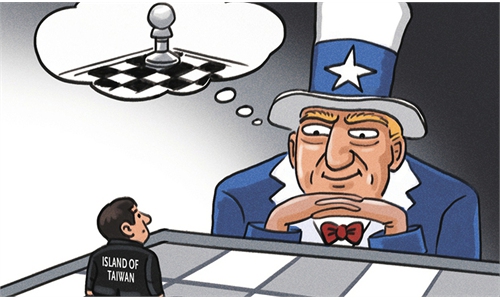
US President Donald Trump recently remarked that "nobody would care" about the Taiwan question, once again fueling fears on the island that Washington could abandon Taiwan. From restrictions on airspace transit to exclusion from international organizations and setbacks on "representative offices," these developments paint a clear picture: Every provocation by "Taiwan independence" separatist forces is met with an even firmer expression of support for the one-China principle from the international community. Any attempt to split a country cannot escape the judgment of history and international law, and is ultimately doomed to fail.
RELATED ARTICLES