ARTS / CULTURE & LEISURE
How a spectacular aerial show by China-US team brought Chinese drone tech to the fore
How a spectacular aerial show brought Chinese drone tech to the fore
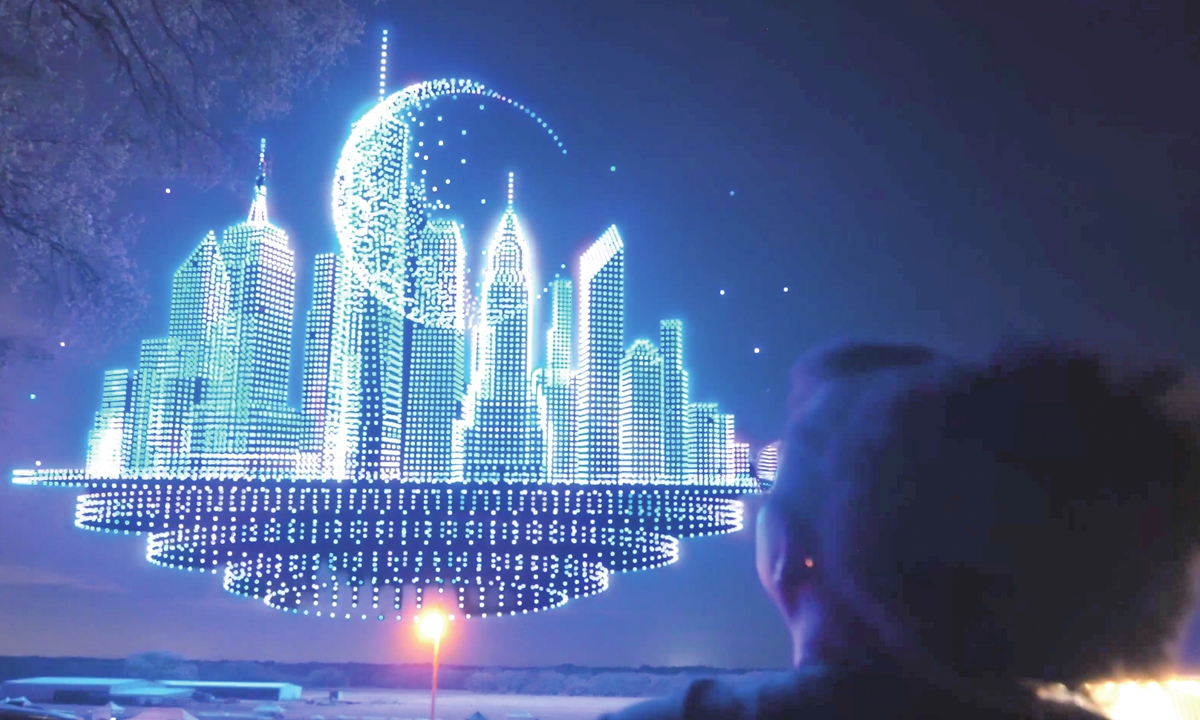
Drones form a city skyline and a lion head (above) during a show in Texas. Photos: Courtesy of DAMODA
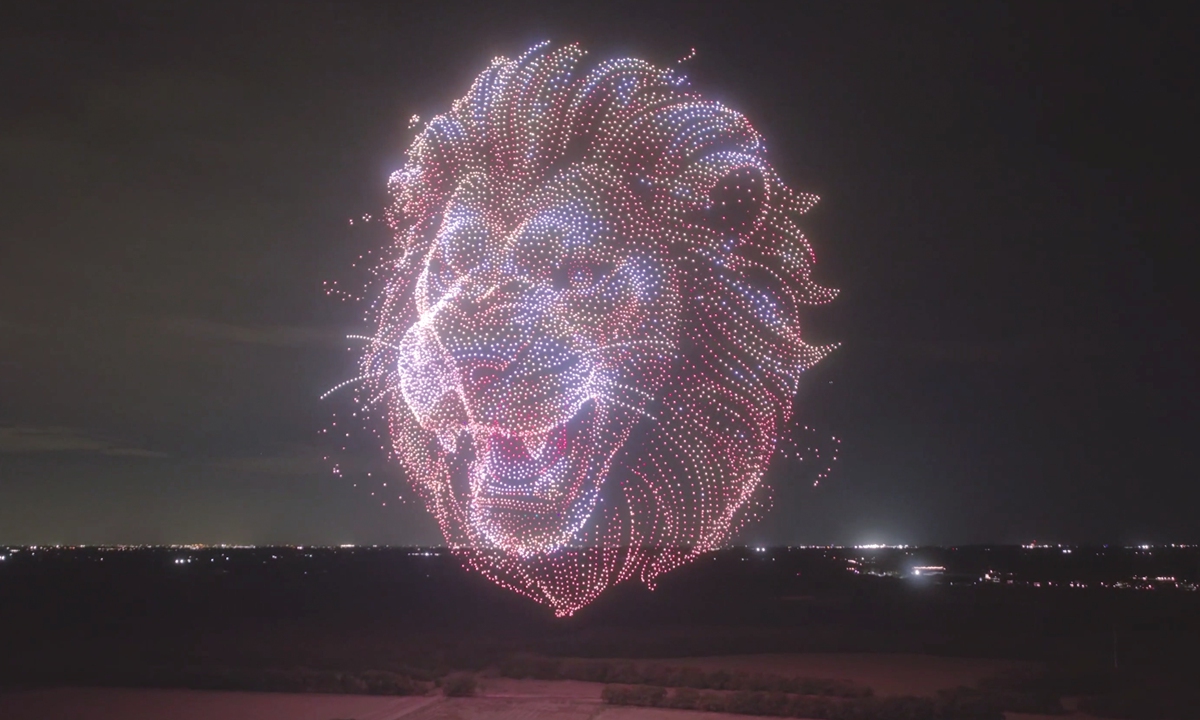
Drones form a city skyline and a lion head (above) during a show in Texas. Photos: Courtesy of DAMODA
A giant blue dragon appears to draw lightning into its mouth before unleashing bolts of electricity across the Texas night sky. The scene then shifts to enormous flying saucers hovering overhead as extraterrestrial visitors appear to descend from them. Next, thousands of points of light come together to form a lion's head.A drone show has gone viral in China and overseas, with viewers marveling at the precision of the formations. Some have even joked that the footage looks so extraordinary it could have been generated by AI.
Created by Chinese drone company DAMODA and US drone show company Sky Elements, the performance in Texas set two Guinness World Records. Over three days, the teams recorded 71,207 drone flights, setting a record for the most drones launched in one week. They also used 10,183 drones to form a mythical creature in the sky, setting a record for the largest aerial display of a mythical creature formed by drones.
The achievement demonstrated how drone technology can bring ambitious visual concepts to life on an unprecedented scale. Shenzhen-based DAMODA provided the drones, core technology and technical support, while Sky Elements contributed local expertise and handled on-site execution. Preparations for the show took more than a month.
Against the backdrop of growing US restrictions on Chinese drones, the record-breaking show offered a striking example of how Chinese and US companies can work together, earning widespread praise from overseas viewers. In a statement on the company's website, Sky Elements CEO Rick Boss described DAMODA America as "a true partner at every step," adding that repeatedly flying more than 10,000 drones night after night required an extraordinary team. The collaboration also reflected the rapid development of China's drone show industry and the growing experience Chinese teams have gained in staging large-scale performances overseas.
From formations to storytelling
Drone shows bring together technology and art, turning complex engineering into visual spectacles in the sky. The Texas show put this combination on display through a series of original formations, including an eagle, lion, dragon, winged horse, turning gears and scenes inspired by outer space. The program also featured a recreation of Noah's Ark, a black hole and a closing UFO sequence, according to Sky Elements.
Other formations drew on a mix of cultural references and visual motifs. An astronaut handshake referencing the Apollo and Artemis programs connected the history of space exploration with its future, while the flying saucers reflected the designer's longstanding fascination with UFOs.
"Previously, drone shows were more about drawing pictures in the night sky," design team spokesperson Guo Yihang told the Global Times. "This time, we wanted to turn it into an event happening in the night sky."
That meant designing sequences with a sense of movement and suspense rather than simply arranging drones into recognizable shapes. The dragon's lightning effect, for example, was difficult to reproduce through continuous drone movement alone. The team instead programmed a sequence of positions to create the illusion of lightning being released.
With 10,000 drones, the team could create scenes large enough to make audiences feel as if they were stepping into the action rather than watching from a distance. But denser formations and dynamic movements also increased the risk of collisions. The designers repeatedly simulated the animations to ensure that the drones maintained safe distances from one another.
According to Qin Haiqun, deputy general manager of DAMODA, the project relied on high-precision positioning, swarm control, intelligent flight-path planning and automated flight control. Designers first translated three-dimensional models and their movements into flight paths, which were then assigned to individual drones and coordinated through a control system.
The challenge was to maintain the accuracy and continuity of complex formations while keeping the flights safe. The sheer number of drones also made efficient ground operations essential. DAMODA's V4 drones use automated charging technology, reducing the need for manual intervention between flights and helping the teams turn around equipment more efficiently, he noted.
Combining strengths
Behind the visual spectacle was a joint effort, with each side contributing different capabilities.
The two teams worked together throughout the project, from preparation and technical coordination to on-site execution. DAMODA supplied the drone show system, core technology and technical support for large-scale operations, sending engineers from Shenzhen to work on the project. Sky Elements brought its experience in the US market and local execution expertise.
"For a project of this scale, success depended on more than just either side's individual strengths. A clear division of responsibilities and close coordination between the two teams were essential to bringing the show to life," Qin said.
The collaboration also highlights the broader development of China's drone show industry. "It reflects continued advances in China's aircraft development, control algorithms, system integration and on-site execution," said Qin.
Guo said that, looking ahead, the next stage of drone shows will be defined not by more drones or larger images, but by stronger storytelling and greater interactivity. "Immersive shows built around a coherent narrative will allow audiences to do more than simply watch images take shape in the sky; they will be able to feel immersed in a story as it unfolds."
RELATED ARTICLES