IN-DEPTH / IN-DEPTH
Room to Roar: Tiger quintuplets and a rescued male’s life in the wild reveal conservation gains in NE China’s national park
By in Heilongjiang and Chen Tao in Jilin Published: Nov 03, 2026 09:10 PM

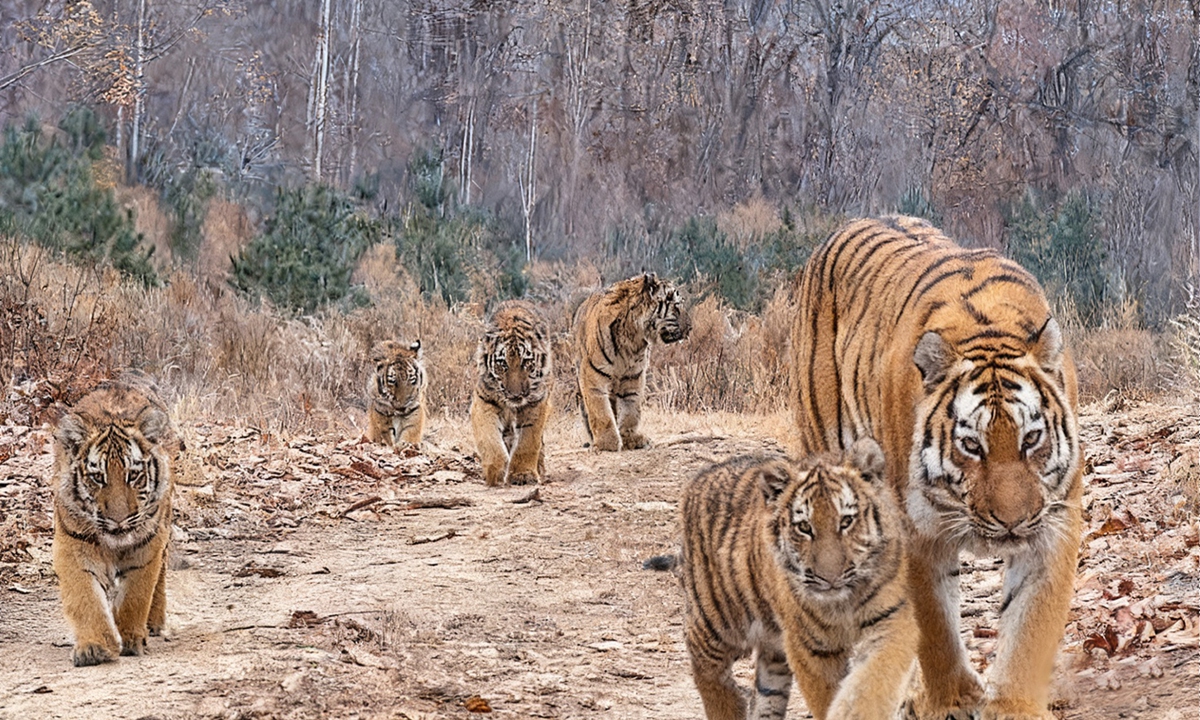
A female Siberian tiger and her five cubs walk in the forest in Hunchun, Jilin Province, in November 2025. Photo: Courtesy of Northeast China Tiger and Leopard National Park administration
In November 2025, an infrared camera in Northeast China Tiger and Leopard National Park recorded a rare sight: a wild Siberian tigress leading five cubs through the forest in Hunchun, Northeast China's Jilin Province.
Almost a year later, the young tigers were beginning to go their separate ways. Three had started becoming independent in August, while two remained with their mother, Chen Xiaocai, head of the park administration's general operations division, told the Global Times. The family's development marks a new chapter in China's first documented case of wild tiger quintuplets.
"All beings flourish when they live in harmony and receive nourishment from nature," Chinese President Xi Jinping said in an address to a key United Nations (UN) conference on biodiversity protection via video link in October 2021.
Spanning about 14,100 square kilometers across Jilin and Heilongjiang provinces, the park marks the fifth anniversary of its establishment this year. Its wild Siberian tiger population has grown from 27 in 2017, when the national park pilot began, to 72, while the number of wild Amur leopards has risen from 42 to 115, according to the National Forestry and Grassland Administration.
Another closely watched tiger, Wandashan No. 1, has settled in the park after being rescued and released in 2021. Monitoring shows that two females' activity areas overlap extensively with his territory, suggesting that the once-wandering male may have found a mate.
Behind these animals' journeys are years of work to restore forests, protect prey and make room for wildlife alongside human communities.
During a recent reporting trip through the two provinces, Global Times reporters spoke with rangers, researchers and rescue workers, tracing how daily patrols, intelligent monitoring and cooperation with Russia are helping safeguard the forests where tiger and leopard families grow.
Growing families
As her cubs become more independent, the tigress may be preparing for a move of her own: leaving her established territory to her weakest daughter.
Recent monitoring suggests the possibility of "territory gifting," Chen said. The mother would have a better chance of establishing herself farther afield, while her daughter might struggle to claim unfamiliar ground. He stressed that this interpretation of their movements remains tentative.
The tigress, identified as GH005F in the park's database, has a history of finding new ground herself. Park records show that she crossed from Russia into Hunchun in 2018. Since then, she has produced four litters totaling 13 cubs, earning her the nickname "hero mother."
Other large families are appearing in the forests, too. "We have already recorded at least three families with four cubs," Chen told the Global Times.
Supporting these families requires a plentiful supply of prey. Sika deer, roe deer and wild boar form the food base for the park's large predators, and their recovery helps tigresses feed themselves and support their growing young.
Chen said wild sika deer, once difficult to spot, had more than tripled in number compared with earlier levels and become increasingly common in the park. Roe deer and wild boar populations have also been growing.
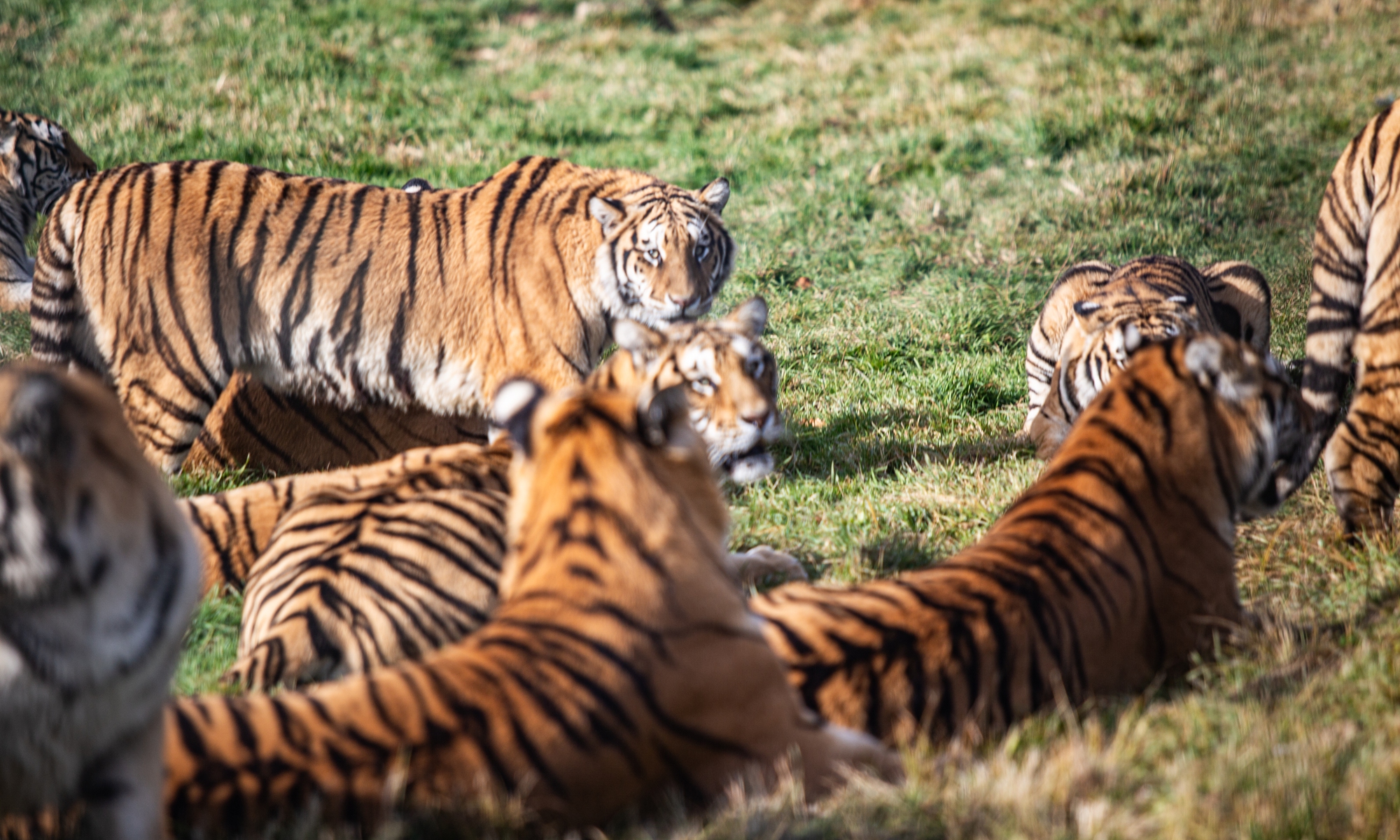
Siberian tigers are seen at the Hengdaohezi Siberian Tiger Park in Hailin, Northeast China's Heilongjiang Province, in October 2026. Photo: Shan Jie/Global Times
With more prey available, mothers can obtain food more readily during the demanding months of nursing and raising cubs, he explained. Reduced human disturbance has also made breeding habitats safer.
These changes have involved years of work across the landscape. The park administration has overseen the closure and withdrawal of 156 mining concessions and the clearance of 276 contracted gully-use projects, alongside forest restoration and efforts to reconnect fragmented habitats.
For Xu Weihua, a researcher at the Research Center for Eco-Environmental Sciences under the Chinese Academy of Sciences, the tiger families illustrate why ecological integrity matters in national park protection.
A tiger needs a territory extending over a large area, Xu explained. Protecting its habitat, therefore, requires sufficient space to sustain its movements and reproduction, together with a food chain that can support a large predator. The forests, vegetation and prey animals all form part of that system.
The young tigers leaving GH005F are beginning that next stage of life. Chen said they were still moving around Hunchun, occasionally crossing into Russia. Their journeys remain under observation as they seek territories of their own.
Leave them undisturbed
In footage shown to reporters in Dongning, Heilongjiang Province, Wandashan No. 1 appeared strong and healthy as he moved through the forest.
The young male whose unexpected arrival in a village drew nationwide attention in 2021 has since found a stable home in the park.
There may be another development in his life. Wang Zhigang, director of Dongning's forestry and grassland bureau, said two female tigers' activity areas overlap extensively with his territory, suggesting that he may have found a mate. In April 2021, the tiger strayed into a village in Mishan, Heilongjiang, prompting an emergency rescue. Veterinarians sedated him and transported him to a rescue facility, where preparations began for his eventual return to the forest.
A veterinarian involved in the rescue recalled that staff restricted contact with people, examined blood and fecal samples for disease and parasites, and fed the tiger deer and wild boar meat. His physical condition and ability to hunt were central considerations in assessing whether he could return to the wild.
Gong Ming, a veterinarian who participated in the rescue, explained that the release site in Muling offered sufficient prey, suitable habitat and room for the tiger to move.
On May 18, 2021, Wandashan No. 1 was released at Dongxing Forest Farm in Muling. During his first year back in the wild, monitoring recorded a cumulative travel distance of more than 3,300 kilometers across several forest areas.
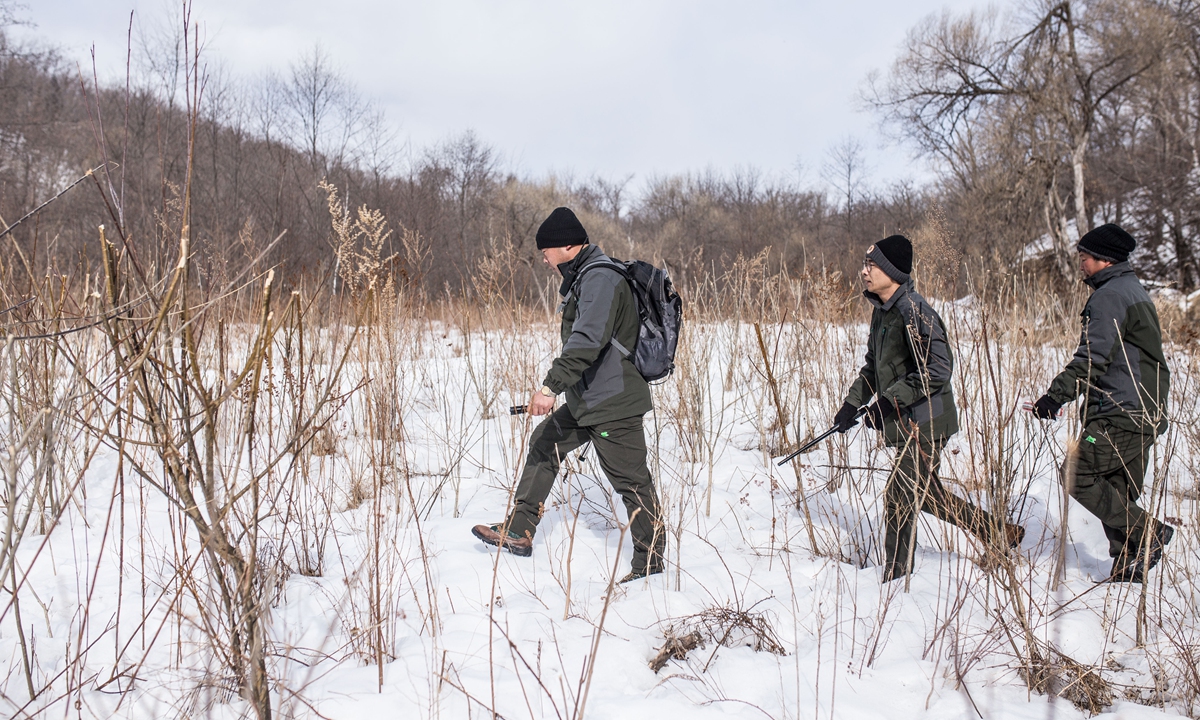
Rangers patrol an area of Northeast China Tiger and Leopard National Park in Hunchun, Northeast China's Jilin Province. Photo: Shan Jie/Global Times
His movements also became part of the daily work of people protecting those forests. Sun Shanhai, head of the park's Dongjingcheng conservation center, described how staff followed his activities while he was in their area, monitoring his whereabouts and taking precautions to reduce the risk of encounters near human settlements.For communities living near wildlife habitats, coexistence also requires practical safeguards against losses. According to the park administration, its wildlife-damage insurance arrangements have paid out more than 35 million yuan ($5.26 million) in recent years, covering losses including damaged crops and livestock.
Local residents also participate in protection. Through the park's "one household, one post" program, more than 8,000 village residents undertake ecological protection duties and receive annual subsidies, linking household incomes with the work of safeguarding the forests.
When tigers approach villages, staff share warnings through local WeChat groups and assess whether measures are needed to guide the animals away without harming them.
Before entering the forest, rangers consult recent monitoring records and plan routes around areas where tigers and leopards have been active, giving the animals space while continuing to watch over their habitat.
Tracking across borders
On the park's monitoring platform, an identification number links a tiger to images recorded at different locations.
Hu Xinyu, a senior manager at Jishi Media, which provides technical support for the park's monitoring system, told the Global Times that footage from connected cameras can now reach monitoring centers within about a minute of capture.
The cameras transmit images through a communications network operating in the 700 MHz frequency band. Satellite observations and drones provide additional information about the landscape, forming an integrated space-air-ground monitoring system.
Identifying the animal in each image presents another challenge. "It may show you its side, its rear or just its head," Hu said. The small populations of rare animals and limited image samples made developing recognition tools difficult, he explained.
AI helps identify species and distinguish individual tigers and leopards, while researchers review their markings and other features to confirm the identity of each animal. Repeated sightings then help staff follow dispersing youngsters, recognize breeding families and assess where animals are settling.
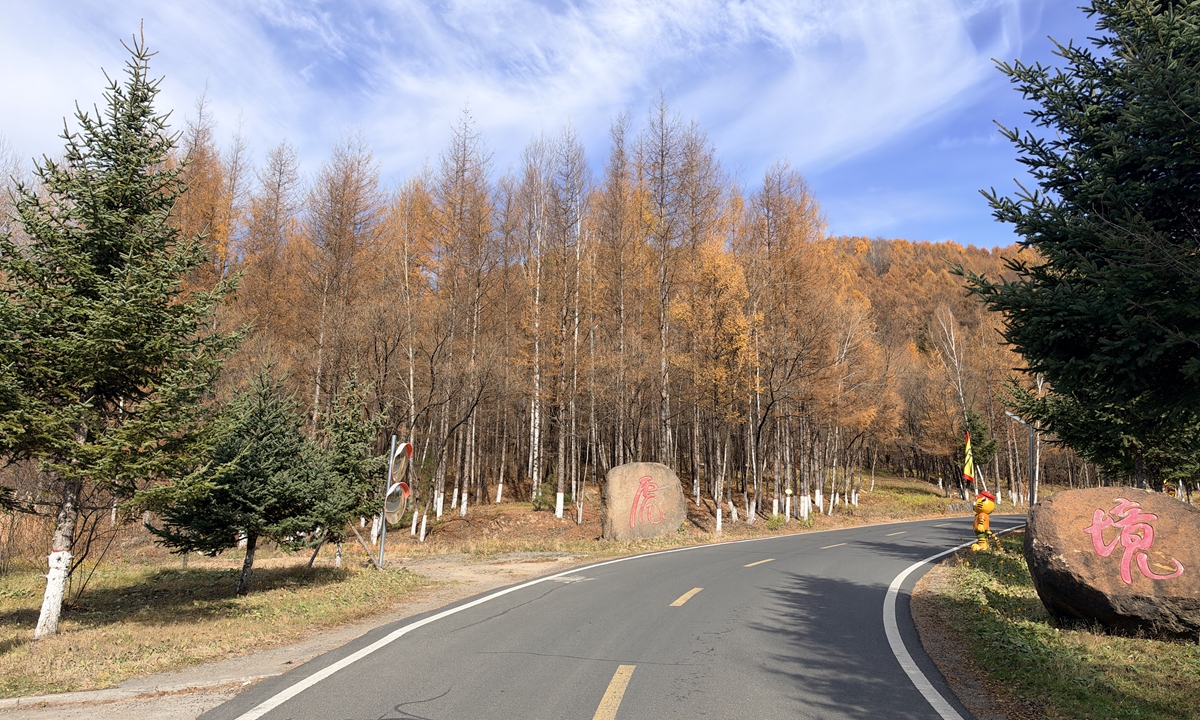
Hengdaohezi Siberian Tiger Park in Hailin, Northeast China's Heilongjiang Province Photo: Shan Jie/Global Times
Some of the animals recorded by these cameras also appear in monitoring records across the Russian border. Following their journeys requires cooperation between the two countries.In 2024, China and Russia signed an intergovernmental agreement on establishing a transboundary protected area for large cats, strengthening cooperation on population protection, anti-poaching and unobstructed wildlife movement.
Northeast China Tiger and Leopard National Park and Russia's Land of the Leopard National Park together form a protected landscape covering nearly 17,000 square kilometers.
Chen said the two sides exchange monitoring records and compare individual animals using common identification standards. "We bring the monitoring data together and use common identification standards to recognize individual tigers and leopards," he said.
Joint monitoring has identified 21 tigers and 27 leopards that regularly move between China and Russia.
The cooperation also extends to the routes that the animals travel. Since 2023, the two sides have opened wildlife passages through border barriers, with openings established at 290 locations. Cameras have recorded tigers, leopards, deer, wild boar and other animals using these routes.
For the researchers following GH005F, the next chapter remains close to the mother tiger. At the time of the October visit, two cubs were still accompanying her.
"They will also gradually become independent, and their mother will enter a new breeding cycle," Chen said.
RELATED ARTICLES