ARTS / CULTURE & LEISURE
AI-generated pet videos win over young Chinese viewers
Popularity raises questions about potential impact
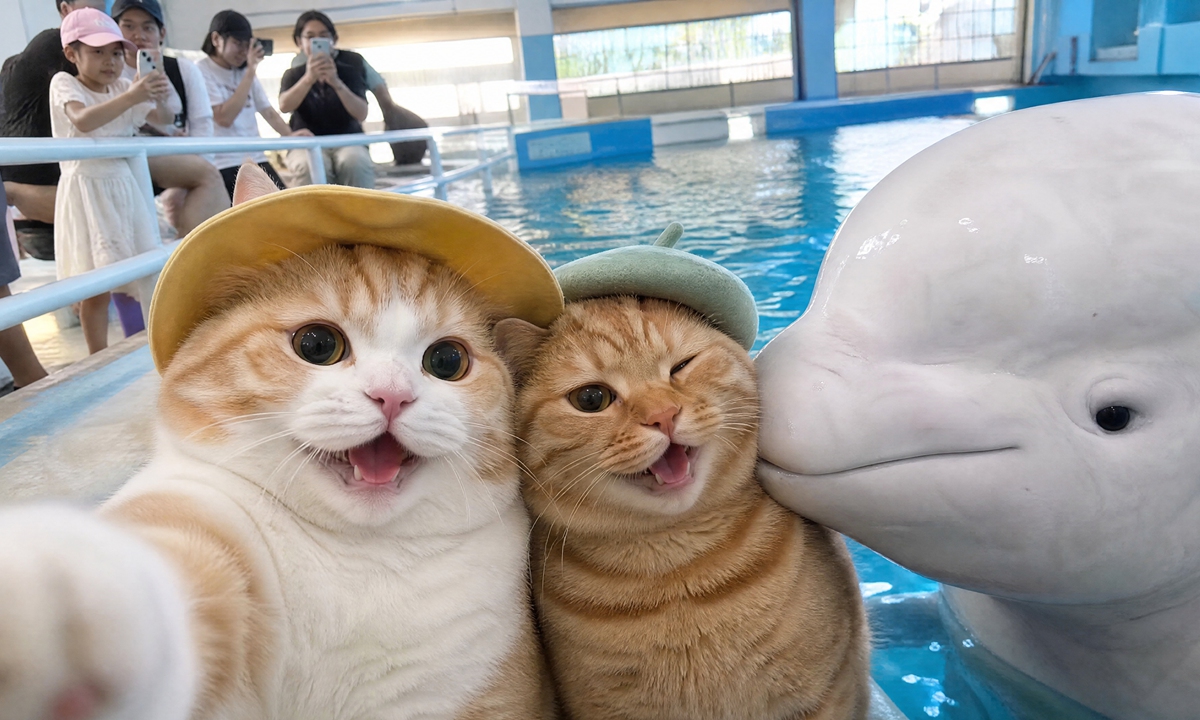
AI-generated cats Photo: Courtesy of Orange Cat Pang Dundun
Cats are running street stalls, cooking meals, traveling with friends and even going to work. In the world of AI-generated pet videos, these furry characters seem capable of just about anything, living out imaginative lives that blend the cuteness of animals with the routines of human life.Such videos have been gaining popularity on Chinese social media platforms, including Douyin, Xiaohongshu and Bilibili. On short video platform Douyin, some pet-themed videos have attracted hundreds of thousands of likes.
Beyond their cute appearances, the videos appeal to viewers through relatable storylines and human-like characters. Their everyday adventures offer a lighthearted escape from reality, while allowing viewers to find familiar experiences and emotional connections in the lives of virtual pets.
For one creator on Douyin known as "Orange Cat Pang Dundun," the idea was to bring the everyday experiences of friendship and leisure into the lives of virtual cats.
The 29-year-old creator, based in East China's Shandong Province, began making AI cat videos in June 2025. Her Douyin account has since attracted around 154,000 followers, with her videos receiving more than 60 million likes in total.
"I started watching AI cat videos because I liked them myself. At first, many featured cartoon-style orange cats, and I joined the trend," she told the Global Times.
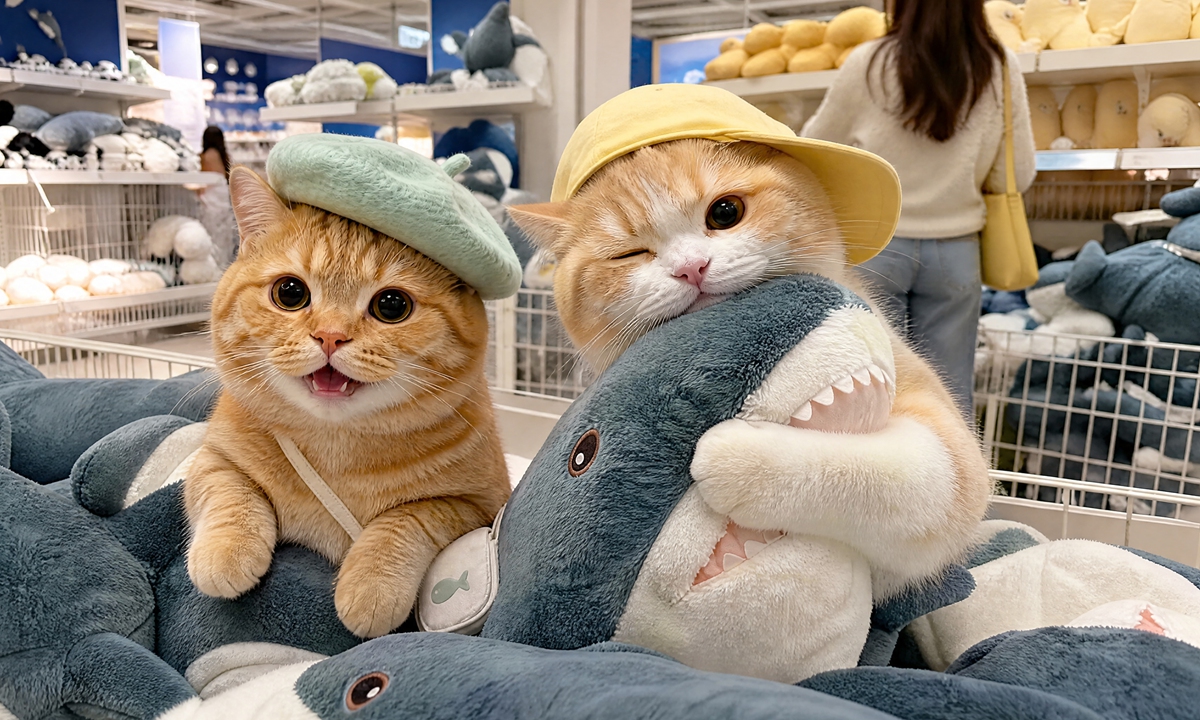
AI-generated cats Photo: Courtesy of Orange Cat Pang Dundun
She initially made cartoon-style videos but later shifted to a more realistic vlog format, believing that stories depicting everyday life could resonate more strongly with viewers and offer more opportunities for commercial collaborations. She chose orange cats for their broad appeal and chubby, endearing appearance, which suited the food, travel and leisure themes of her videos. She also owns a cat herself.Her account follows the cats as they travel, eat, work and spend time together, with recurring characters and storylines giving viewers a reason to return.
"The theme of my videos revolves around friendship and the interactions between close friends. Viewers can enjoy the cute and healing aspects of cats while also seeing something of themselves in the characters," she said.
Some viewers have even submitted pictures of their own cats, hoping to see them enjoy similarly happy lives in the virtual world, she said.
For the creator, AI pets also offer emotional comfort beyond entertainment. In one episode, she depicted cats living happily in a fictional afterlife, offering comfort to viewers who had lost their pets.
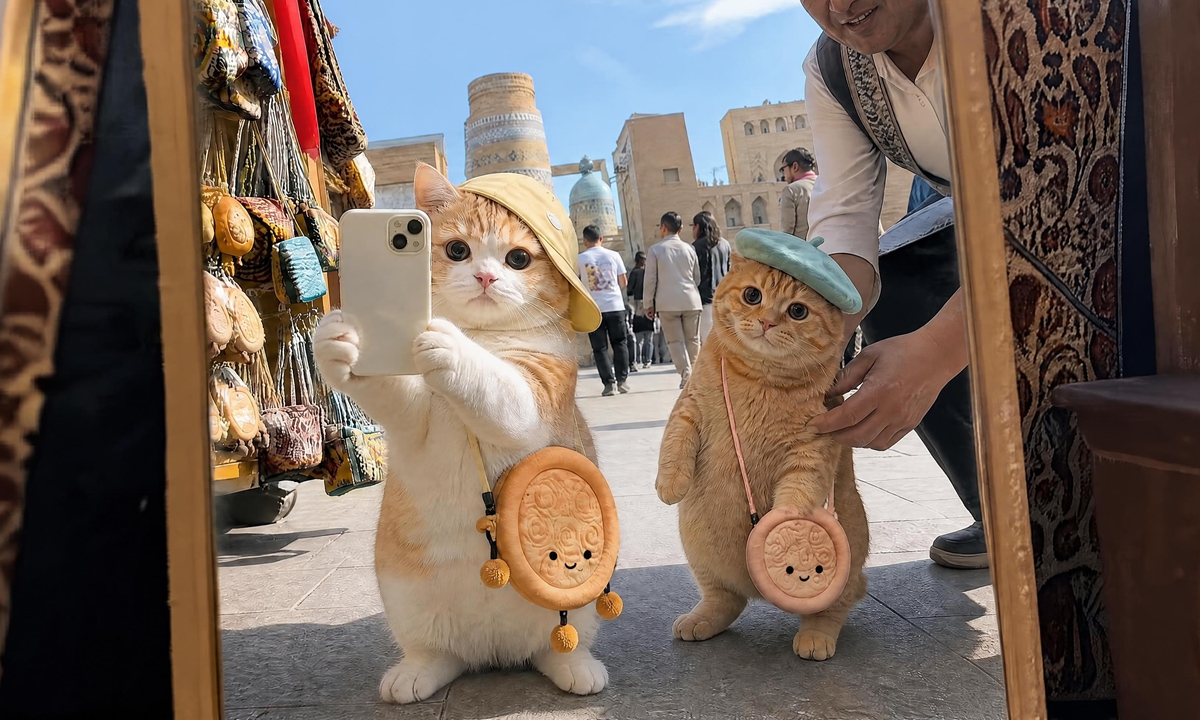
AI-generated cats Photo: Courtesy of Orange Cat Pang Dundun
She described this as a kind of "cyber immortality," through which owners can imagine their beloved animals continuing to live happily even after they are gone.Although the characters are fictional, the feelings viewers experience while watching them are real, said Wang Tong of Beijing, who also has cats and has a strong personal affinity for pets.
"I know these AI pets are fake, but they're cute, so I still watch them every day now," she told the Global Times.
For people who cannot keep pets in real life because of living conditions, time constraints or other practical reasons, watching AI-generated animals can offer a sense of companionship and emotional comfort without the responsibilities of pet ownership.
However, the growing popularity of AI companionship also raises questions about its potential impact, particularly on younger audiences, Bu Xiting, an associate research fellow at the School of Cultural Industries Management at the Communication University of China, told the Global Times.
Bu said the use of AI products for emotional companionship is likely to become increasingly common as the technology develops. While virtual pets can provide comfort and entertainment, excessive reliance on them could make it harder for people to cope with the complexities of real-world relationships or develop a sense of responsibility, he said.
Unlike AI-generated animals, real pets do not always behave as their owners wish. They may become ill, get lost or eventually die, requiring owners to take on long-term responsibilities and cope with uncertainty and loss. These experiences are also part of the emotional bonds people develop with real animals.
"AI should supplement human emotions, not replace them," Bu said.
He also called on AI content creators to pay particular attention to the potential influence of their work on younger audiences. Rather than simply catering to users' expectations, creators could introduce elements of imperfection into virtual characters, allowing them to display behaviors and emotions that are not always predictable or pleasing.
Such content could help young viewers better understand that real-life relationships, unlike interactions with virtual companions, involve differences, responsibilities and unexpected challenges.
The creator also said that the future of AI pet content will depend on more than improvements in technology.
"Tools are just a medium. What matters most is building an IP and distinctive characters, designing stories and coming up with creative ideas. These are things AI cannot replace, at least for now," she said.
RELATED ARTICLES