9-year CIIE: An open China responds to surge of protectionism with tangible dividends
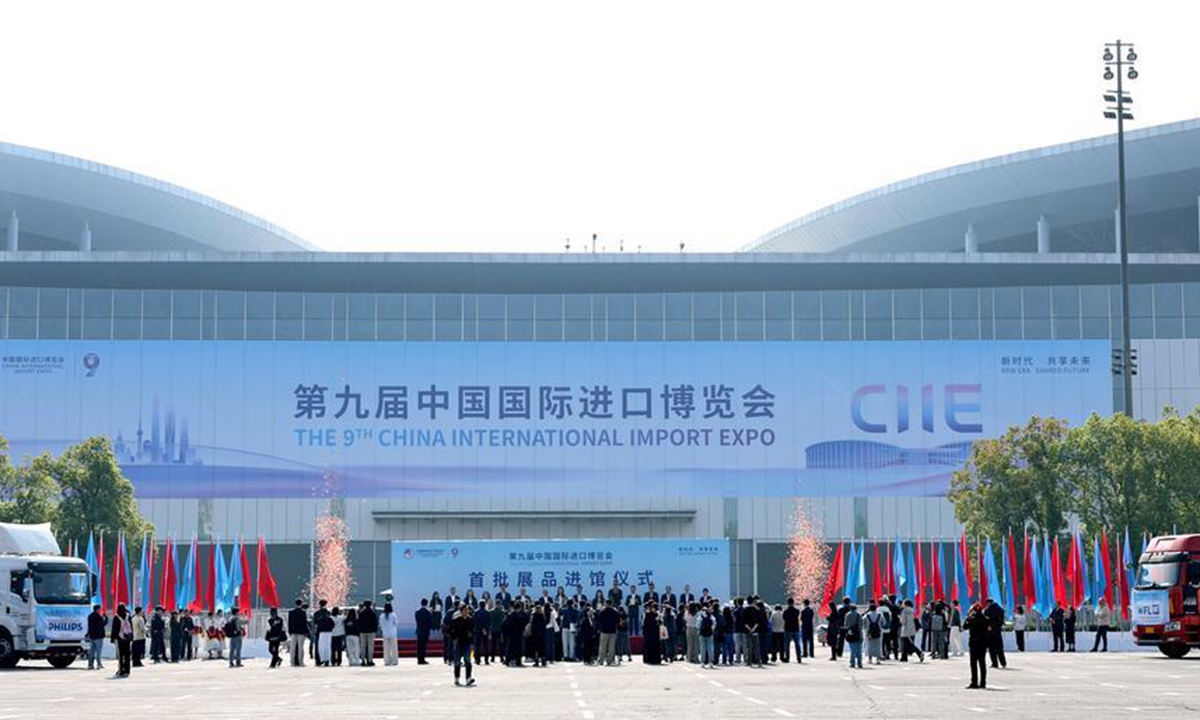
A ceremony marking the arrival of the first batch of exhibits for the upcoming 9th China International Import Expo (CIIE) is held at the National Exhibition and Convention Center (Shanghai), the main venue for the CIIE, in east China's Shanghai on October 26, 2026. Photo: Xinhua
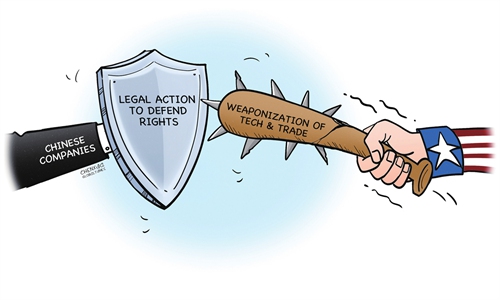
On November 5, the 9th China International Import Expo (CIIE) will kick off in Shanghai. The fact that the event has been held as scheduled for nine consecutive years is, in itself, a powerful declaration of openness. This year's expo brings together 162 countries, regions, and international organizations, with 4,142 overseas companies participating. For the first time, the number of Fortune 500 companies and industry leaders among the exhibitors has exceeded 300, and nearly 200 companies and institutions have participated in all nine editions of the expo.One of the most intriguing highlights of this year's CIIE comes from the US delegation. For the eighth consecutive year, US companies have occupied the largest exhibition space among all participating countries, with their exhibition area increasing by another 1,500 square meters compared to the previous edition. Even as Washington's policy toolkit is filled with tariff barriers and "small yards, high fences" approach, US companies continue to showcase cutting-edge innovations on this platform, aiming to foster a mutually beneficial relationship with the Chinese market.
"The power of the market is robust," said Zhou Mi, a senior researcher at the Chinese Academy of International Trade and Economic Cooperation under the Ministry of Commerce. "US companies are not just chasing short-term gains by participating in the expo; they are also exploring opportunities for deeper cooperation. Amid global market volatility and supply chain pressures, China boasts both growth potential and supply chain resilience. That explains the core reason behind this contrast - "policymakers build walls, yet businesses show up."
World premieres and first-time exhibitions are the most distinctive hallmarks of the CIIE. During the first eight sessions of the CIIE, more than 3,400 new products, technologies, and services made their global or regional debuts. This year, there are over 480 representative exhibits making their global, Asian, or China debuts - a record high - which reflects this mutual engagement in innovation.
Zhou Mi told the Global Times that innovation is key for companies to generate profits and capture market share. The decision to launch a large number of new products in China stems from the potential of the Chinese market and its advantages in industrial support systems.
Tu Xinquan, Dean of the China Institute for WTO Studies at the University of International Business and Economics, believes that as one of the world's largest consumer markets, China ranks among the global leaders in domestic consumer acceptance of new technologies and products. Making China the launchpad, testing ground, and promotion hub for their innovations is a highly strategic choice for innovative enterprises.
The appeal of the CIIE also stems from tangible orders and growth dividends. The cumulative intended transaction value from the first eight editions exceeded $580 billion, with the eighth edition alone recording $83.49 billion in intended transactions - a 4.4 percent year-over-year increase.
Take Takeda Pharmaceutical as an example. From a mid-sized company at its first exhibition, it has grown into one of the top 10 multinational pharmaceutical companies in China, with cumulative investment in the country exceeding 3 billion yuan. Turning exhibits into products and exhibitors into investors represents the tangible, concrete, and graspable opportunities in China for the global business community.
Tu believes that China is committed to independent, high-level opening-up, and the CIIE serves as a key window through which China proactively embraces the world.
"At a time when anti-globalization sentiments are on the rise and global trade and the economy are fraught with uncertainty, China has continued to host the expo year after year, injecting stability into turbulent global trade and serving as a stabilizer for the world economy," Tu said.
He added that the CIIE also builds a bridge connecting high-quality international supply with domestic consumption upgrades, driving the optimization of domestic supply and unleashing the potential of domestic consumption. "It is hoped that China's practice of opening up will inspire more countries to safeguard the multilateral free trade system."
The CIIE's cooperative philosophy is based on equality and mutual benefit, without distinction by nationality or alignment with any bloc: Developed countries showcase cutting-edge technologies, emerging markets demonstrate their vibrant dynamism, and least-developed economies receive support here.
This year's event continues to support least developed countries, with the amount of free exhibition space allocated to them increasing by 17 percent year-on-year; distinctive agricultural products from African nations such as Tanzania and Benin have found stable sales channels here. Rwanda is a prime example. The country went from bringing samples in a suitcase to now shipping a steady stream of local agricultural products to China by container. Developed economies, emerging markets, and least developed countries are all participating on an equal footing, standing in stark contrast to exclusive, "closed-circle" economic and trade arrangements.
Zhou said the CIIE provides a platform for countries to exchange ideas and learn from one another, where different stakeholders can engage in dialogue and inspire each other. This diverse and inclusive framework is a concrete demonstration of China's commitment to treating all trading partners equally, upholding the principle of most-favored-nation treatment.
Over the past five years, China's contribution to global economic growth has remained stable at around 30 percent, exceeding the combined contribution of the G7 nations. Today's "China Opportunities 2.0" places greater emphasis on innovation and collaboration, institutional openness, and full-chain co-construction. The continuously expanding scale of the US delegation at the expo confirms a simple truth: Businesses vote with their feet, and market forces are difficult to completely block with geopolitical barriers.
The value of the CIIE's 9-year commitment lies in its steadfastness. While tariffs can artificially inflate transaction costs, they cannot stem the drive of global capital, innovation, and goods to find markets. The message the CIIE continues to send is clear and resolute: The doors to the Chinese market will remain open to all partners willing to cooperate on an equal footing.
RELATED ARTICLES