IN-DEPTH / IN-DEPTH
How China’s accessible cloud tech and AI are revolutionizing crop monitoring worldwide to build food security in developing countries
Making satellites work for all
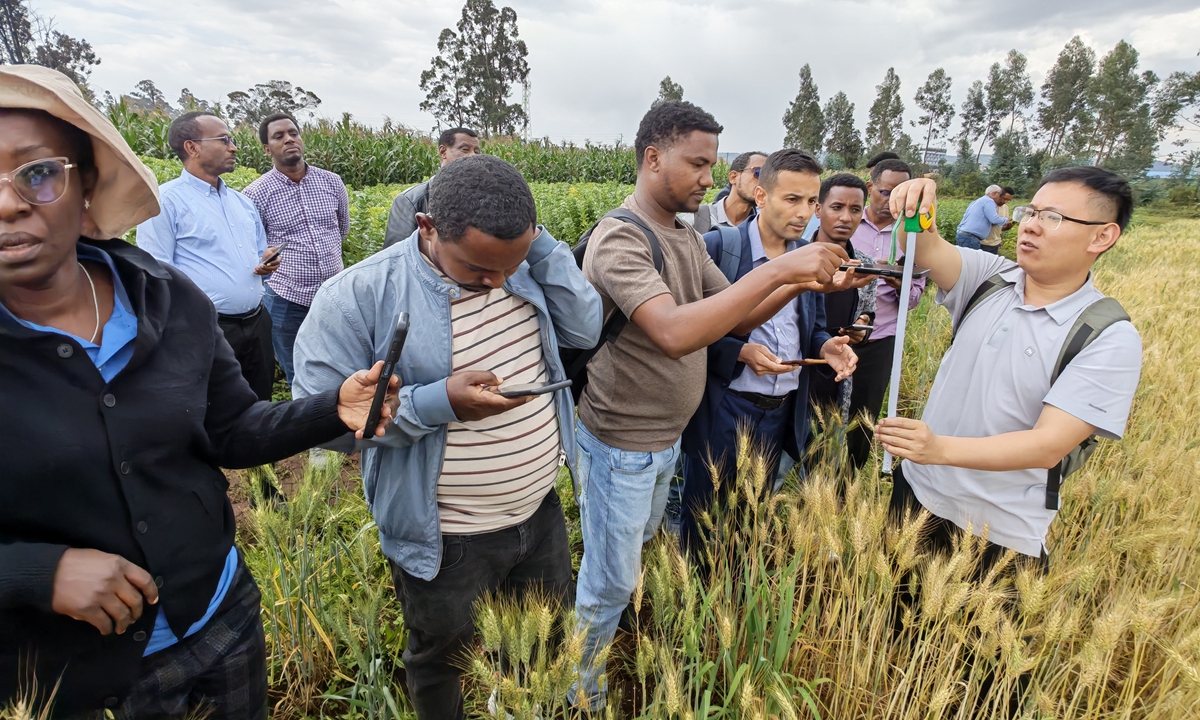
A CropWatch team member trains Ethiopian agricultural technicians on field measurement data collection standards in Ethiopia in April 2026. Photo: Courtesy of Wu Bingfang
Editor's Note:
As global challenges grow increasingly interconnected, technological solutions are rarely confined to a single country. Through research collaboration, open sharing of expertise and partnerships with international institutions, Chinese scientists, engineers and enterprises are engaging more deeply with the world, contributing tools and experience to problems that demand collective answers.
The Global Times launches the "Tech Seeds, Global Bloom" series, spotlighting China's achievements in advancing tech for good both domestically and internationally. By following these trajectories, the series invites readers to consider a different measure of progress: Not how advanced technology becomes, but whom it ultimately serves, and how widely its benefits can spread.
This is the ninth installment. China's CropWatch system is helping developing countries build their own crop-monitoring capabilities, supporting more timely and informed food security decisions. The technology is being adapted to local needs, while international cooperation is also driving new research and bringing advanced remote sensing tools within reach of more users.
Zhang Miao, an associate professor at the Aerospace Information Research Institute of the Chinese Academy of Sciences (AIRCAS), opens the crop-monitoring interface of CropWatch, a remote sensing-based global crop monitoring cloud platform, on his computer. With a few clicks, a graph showing the growth of rice in a central province of Cambodia appears on the screen. Soil moisture, rainfall anomalies and vegetation indices unfold along a timeline, offering a detailed picture of how crops have developed over time.
Earth observation and crop monitoring on a massive scale are neither easy nor inexpensive exercises, but both hold immense potential for better food security planning and progress toward the Sustainable Development Goals. Yet, many developing countries simply do not have access to the required tools, either due to technology deficits or costs, said the UN Trade and Development.
CropWatch is helping to bridge that gap. Developed by AIRCAS, formerly known as IRSA, in 1998, the system combines satellite remote sensing with ground-based observations to independently assess crop area, crop growth, yield and production, as well as agricultural disaster at national and global scales. Originally designed for domestic use, its application has since been extended to countries and regions around the world.
Moreover, the system has continued to evolve as new remote sensing data emerge, monitoring methods improve and artificial intelligence becomes increasingly integrated into the system.
On October 16, AIRCAS received the 2026 Achievement Award from the United Nations Food and Agriculture Organization (FAO) for its development of CropWatch. Wu Bingfang, a professor at the AIRCAS who leads the CropWatch team, traveled to Rome to accept the award.
"Turning a complex crop-monitoring process into one that anyone can use represents a major technological advance," Wu told the Global Times. "It is also highly consistent with China's Global Development Initiative, which identifies food security as a key area of cooperation."
"Our goal has always been to put crop-monitoring capabilities directly into the hands of more countries, so they can see for themselves what is happening in their own breadbaskets," he said.
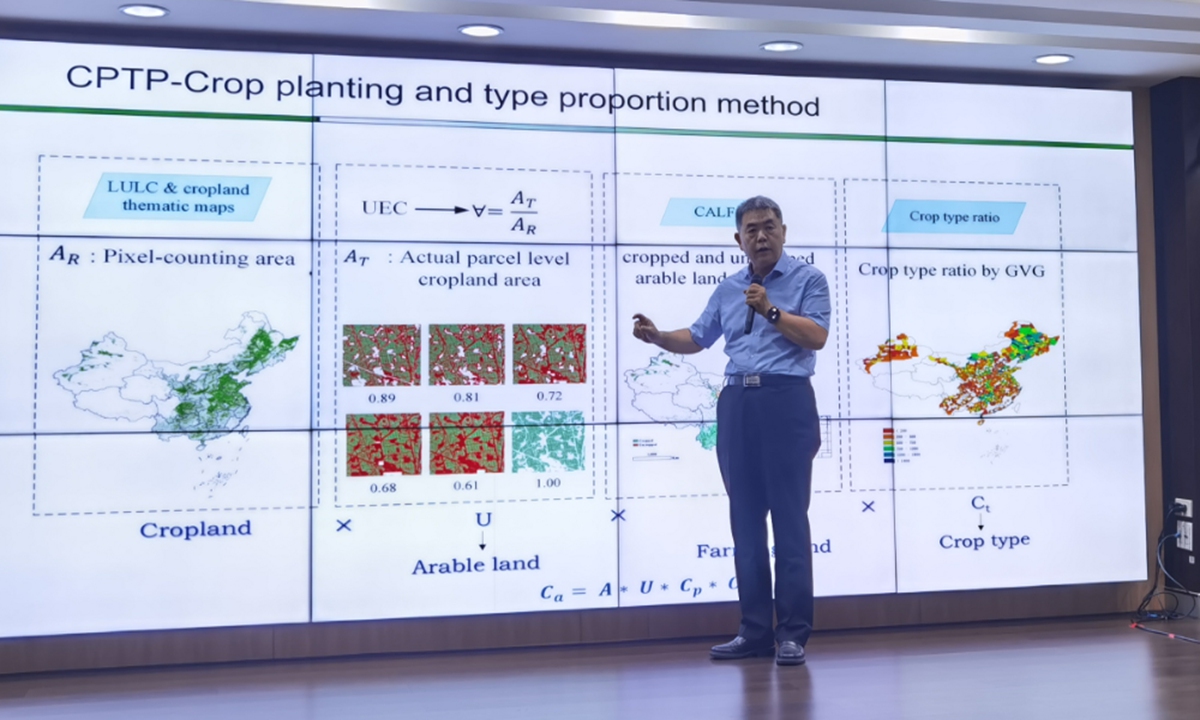
Wu Bingfang, a professor at the AIRCAS who leads the CropWatch team, trains staff from the Office of Agricultural Economics under Thailand's Ministry of Agriculture and Cooperatives on rice area monitoring technology in Thailand in February 2025. Photo: Courtesy of Zhang Miao
From receiving information to producing it
In 2015, Wu made his first visit to Mozambique. During a visit to the World Bank's country office, he came across a booklet outlining the country's food security situation. What he read brought home the practical consequences of a country lacking the ability to monitor its own agricultural production.
"The challenge was immense," Wu recalled. "Mozambique stretches long and narrow from north to south, with weak transport and communications infrastructure. As a result, the central government struggles to keep timely track of crop conditions across the country, especially in remote areas. When harvests fail, relief cannot arrive in time; when harvests are good, agricultural produce cannot be shipped out in time. The lack of timely crop information compounds these constraints."
The experience reminded him of the challenges the team had faced when developing China's own crop monitoring capabilities. At that time, the country lacked an independent operational system and relied heavily on monitoring reports from other countries with established systems to understand agricultural conditions.
"Having experienced that ourselves, and understanding the realities these countries face, I felt our crop-monitoring technology could be extremely useful to Mozambique and other countries in similar circumstances," Wu said. "That was why we decided to share it."
Wu introduced that CropWatch's core technologies operate on two levels: innovative monitoring methods and an integrated operational system. Its unique methods include six proprietary indicators such as CROp Production Index (CroPI) and a crop-area estimation technique particularly designed for smallholder farming and complex agricultural landscapes, with an accuracy of around 97 percent.
Meanwhile, its automated system can process global agricultural data in a single day with a core team of just six researchers and several students, making it highly efficient and well suited for deployment in developing countries.
In 2017, with support from international organizations, the CropWatch cloud platform was made available to Mozambique, followed by a training program.
Over the following three years, Mozambican technicians learned to operate the system independently, analyze crop conditions and incorporate their findings into national agro-meteorological bulletins in Portuguese. Previously, they had largely relied on scattered information gathered from the internet. Now, the analytical capability was increasingly in their own hands.
The platform was customized to reflect differences in cropping patterns and monitoring priorities across Mozambique. It offered tailored indicators and functions covering agro-climatic and agronomic conditions, as well as early warning, allowing users to quantitatively assess weather conditions, crop growth and production prospects across cultivated areas.
Training extended beyond software operation to include knowledge and skills in remote sensing for agriculture and field-based observation. Officials and technical personnel from Mozambique's Ministry of Agriculture, Environment and Fisheries, as well as provincial agricultural departments, received training courses. Users could select their own indicators and conduct online monitoring and analysis for specific areas, laying the groundwork for independent assessments at different administrative levels.
The results were tangible. Since June 2018, Mozambique's Ministry of Agriculture, Environment and Fisheries had independently issued more than 20 crop-monitoring and food security early warning reports using the platform by 2022, according to its website.
Mozambique was only the beginning. By October, CropWatch-related capacity-building activities had reached more than 40 countries, including Cambodia, Ethiopia, Laos, Mongolia, Nigeria, Mauritius, Thailand, Vietnam and Myanmar. More than 600 technical personnel had received training, and the system had been locally deployed in seven countries.
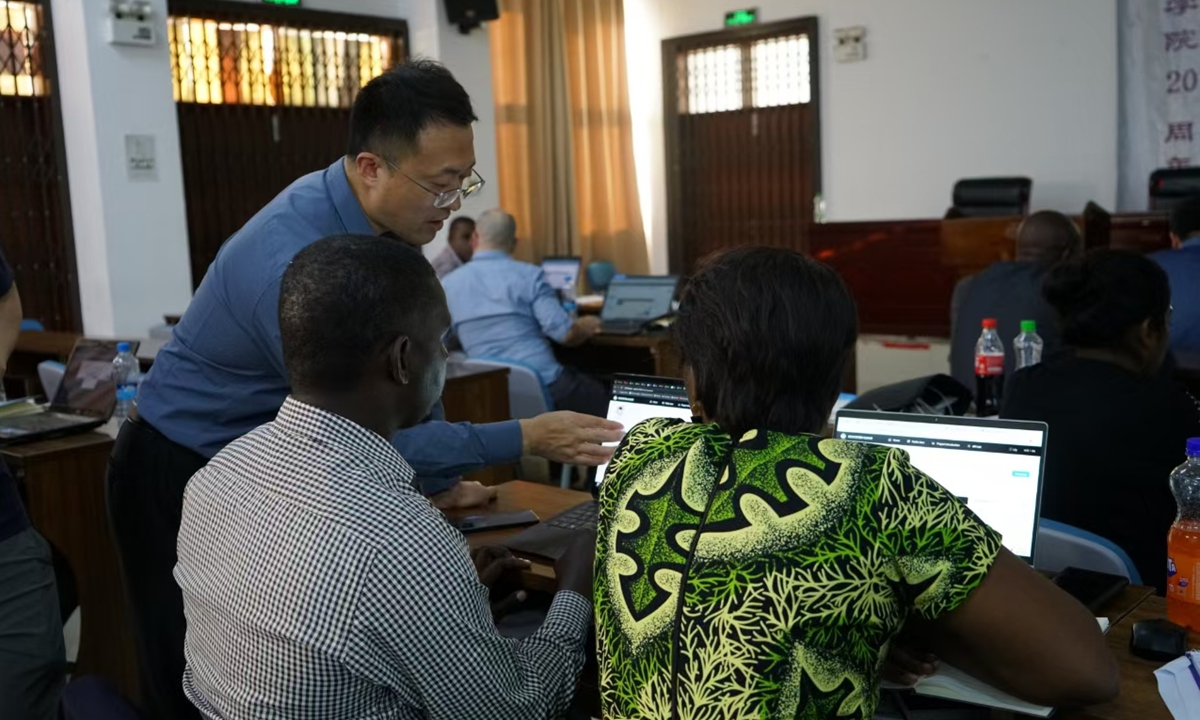
Zhang Miao, an associate professor at the AIRCAS, trains Southern African trainees on using the CropWatch cloud platform at the University of Zambia in June 2026. Photo: Courtesy of Zhang Miao
Local deployment, global innovation
Making CropWatch work in different countries has not always been straightforward. Agricultural landscapes, crop varieties, farming practices and local environmental conditions can differ significantly from those in China. Wu said the answer lies in making users active participants in the development process.
"CropWatch is an open system. If our partners have a good method, they can incorporate it into the platform and make use of the infrastructure we have built," he said.
In Mongolia, the Chinese team and local partners jointly conducted in-situ measurements over five years to improve drought-monitoring models. After calibration, Mongolian technicians were trained to develop their own national monitoring approaches and incorporate them into the platform.
As the platform evolves, AI is beginning to shorten the path from raw data to usable analysis.
Zhang, who has participated in deployment and training projects in roughly two-thirds of the countries involved, told the Global Times that the team has integrated large language models into CropWatch, allowing users to generate draft analytical reports with a single command after country-specific monitoring products have been produced. But automation does not eliminate the need for human expertise. AI-generated reports still require professional review, and users must learn how to refine the results rather than submit them directly to decision-makers, Zhang said.
For Zhang, however, the most important outcome of international training is not simply that partner countries learn to use an existing technology. It is that the experience exposes weaknesses in existing models and creates new directions for research.
Zhang recalled the team's first visit to farmland in Mozambique. The plots were so overgrown that he initially struggled to recognize them as cultivated fields. In some areas, grass was as abundant as, or even more abundant than, the crops themselves.
That creates a major challenge for satellite-based monitoring. The signals recorded by remote sensing instruments may come from weeds rather than the crops being monitored. If a model interprets dense vegetation as healthy crop growth, it could overestimate yields.
Separating the signals of weeds from those of cultivated crops has therefore become an important research problem for the team led by Wu.
The result therefore is a two-way process, Zhang said. "Chinese researchers help other countries build their monitoring capabilities, while local experience helps advance the underlying science."
A global public good
For Wu, the significance of CropWatch ultimately extends beyond remote sensing.
"By making crop information more transparent, we hope to contribute to better global food security governance," he said.
That ambition aligns with the Global Development Initiative, which identifies food security as one of its eight priority areas for international cooperation.
Thanks to its own efforts, China, once a recipient of FAO technology, has turned to a core contributor to the organization. China has carried out agricultural cooperation with more than 140 countries and regions, provided more than 1,000 agricultural technologies to other developing countries and trained over 14,000 technicians on hybrid rice technology, China's Foreign Ministry Spokesperson Lin Jian said on October 16, 2025.
CropWatch is part of a broader effort to make Chinese agricultural science and technology more accessible internationally. Other examples include the MAZU agricultural application, which provides tailored frost forecasts for apple cultivation in Uzbekistan and services for wheat production and drought prevention in Tajikistan. Released to international users in 2025, the system has begun extending its services into Central Asia.
The next stage of CropWatch development is already taking shape and could make this approach more accessible.
Wu said his team has been developing a redesigned architecture built around open foundation data and an application programming interface (API) library. Beta versions are already being tested in countries such as Cambodia, Nigeria and Thailand, with promising results. As the new framework is further rolled out, users ranging from national agencies to individual farmers will be able to build their own monitoring systems using the underlying data and tools.
With the development of AI agents, he envisions a future in which a farmer could simply ask a question on a smartphone - "What will my production be this year?" - and receive an accurate answer immediately.
"Making remote sensing accessible to everyone, rather than leaving it as something confined to an ivory tower, is what I have pursued throughout my career," Wu said.
RELATED ARTICLES