China’s Ministry of Water Resources to plan flood and drought prevention in advance in response to the strongest El Nino event on record
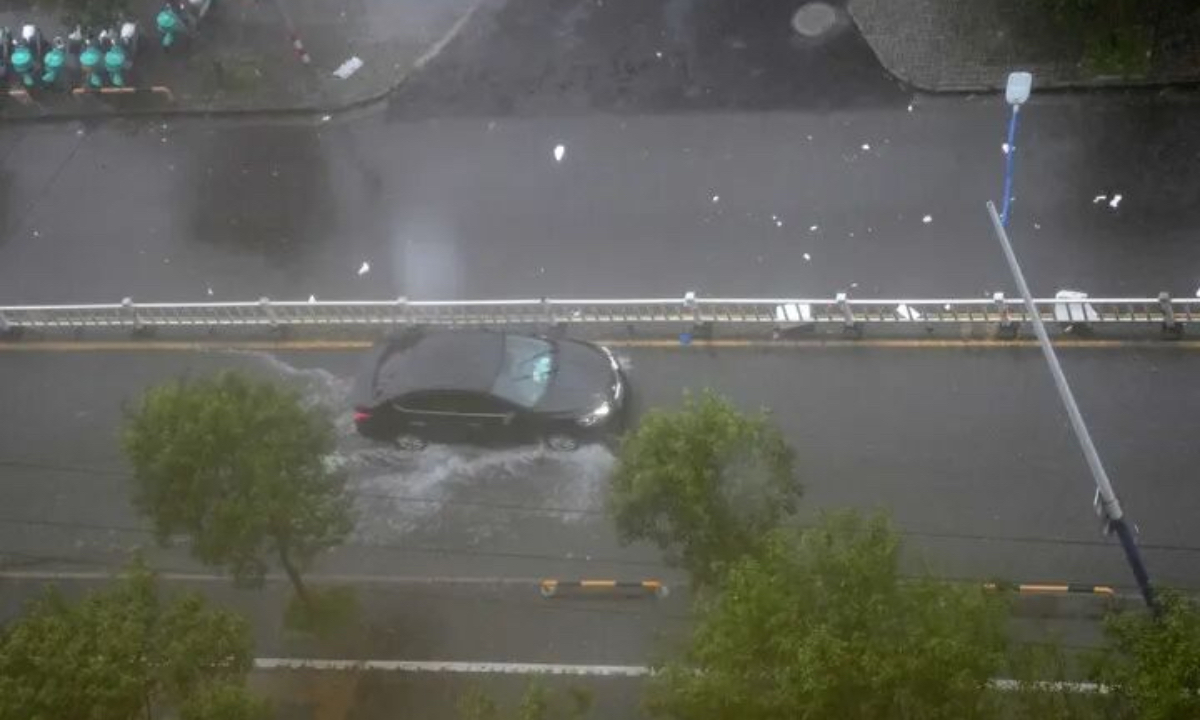
Vehicles travel through a flooded road in Longwan district, Wenzhou, East China's Zhejiang Province, on August 28. Photo: Screenshot from Xinhua News Agency
China's Ministry of Water Resources said on Thursday that it would begin planning flood and drought prevention efforts for 2027 ahead of time, building on its regular prevention and response measures, amid the continued development of the strongest El Nino event on record and the delayed effects of the exceptionally strong climate phenomenon, thepaper.cn reported.
China's National Climate Center confirmed that an exceptionally strong El Nino event emerged in the equatorial central and eastern Pacific in September 2026, developed into the strongest El Nino event on record in October, and is expected to peak in late autumn or early winter.
Compared with the three previous exceptionally strong El Nino events on record, the current event stands out for its rapid development and potentially record-breaking intensity. It took just five months to reach exceptionally strong levels, and its peak could exceed 3.2 C.
Forecasts from the World Meteorological Organization's Global Producing Centres indicate an "exceptionally high likelihood of nearly 100 percent" that the El Nino will persist through to February 2027.
During a press briefing on Thursday, Yao Wenguang, director general of the department of flood and drought disaster prevention of the Ministry of Water Resources, highlighted the delayed effects of El Nino and their potential impact on China.
The likelihood of extreme weather and climate events is expected to increase in 2027, Yao said, warning that the extreme and destructive nature of flood disasters, as well as their compound and cascading effects, could become more pronounced, placing higher demands on flood prevention and defense systems, infrastructure resilience, and operational coordination and command.
The ministry will take a systematic approach to flood prevention, repairing flood-damaged infrastructure, strengthening flood-control systems and accelerating the deployment and networking of rainfall-monitoring radars in high-risk areas and key river basins.
Meanwhile, the ministry will strengthen proactive risk management by closely tracking the exceptionally strong El Nino and continuously assessing its potential impacts on China's rainfall, temperatures and flood and drought risks. It will thoroughly identify and address potential risks in areas at risk of extreme rainstorms, river basin floods, flash floods, droughts and rapid shifts between drought and flooding, and take preventive measures well in advance.
Besides, the ministry will accelerate the digitalization and intelligent upgrading of water management, improving integrated monitoring systems, high-fidelity digital models and flood-management applications. It will also promote the development and deployment of new technologies and equipment, and upgrade China's digital twin system for water management to strengthen flood and drought disaster response capabilities.
China experienced pronounced climate anomalies in 2026, with concentrated typhoon landfalls, frequent intense rainfall, simultaneous river flooding and severe localized droughts, thepaper.cn reported.
A total of 31 typhoons formed over the western North Pacific and the South China Sea this year, seven of which made landfall in China. Both figures were higher than their respective long-term averages, according to thepaper.cn.
Global Times
RELATED ARTICLES