One year on, Takaichi’s erroneous remark remains uncorrected, and Japan’s fangs are growing back
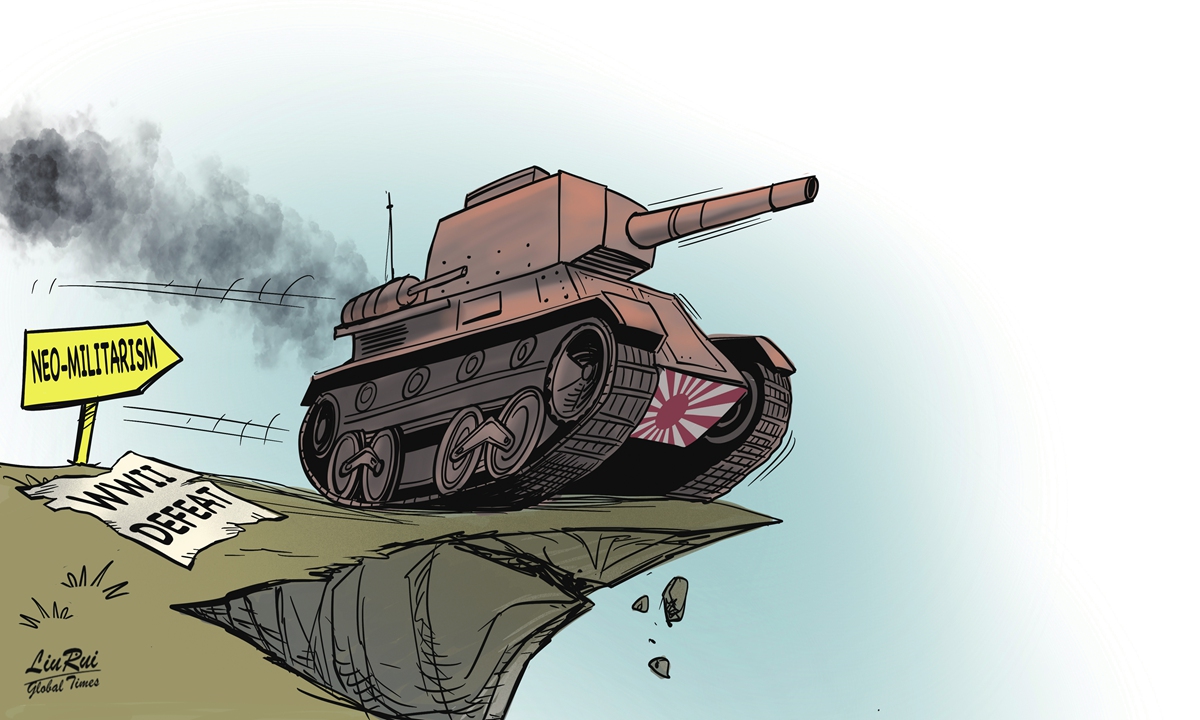
Japan Illustration: Liu Rui/GT
A year ago, on November 7, 2025, Japanese Prime Minister Sanae Takaichi made an erroneous remark on the Taiwan question in the Diet, planting a political time bomb in China-Japan relations that has yet to be defused.
She claimed that a so-called "Taiwan contingency" could constitute a "survival-threatening situation" for Japan. The implication was unmistakable: Tokyo no longer regards the Taiwan question as a matter of Chinese sovereignty. Tokyo was signaling that it might use force to intervene under the guise of defending its own national security. Three days later, she went on to say, "I gave a somewhat concrete answer while considering the worst-case scenario," declining to backtrack on her remarks.
A year on, the erroneous words still stand - as does the refusal to correct them.
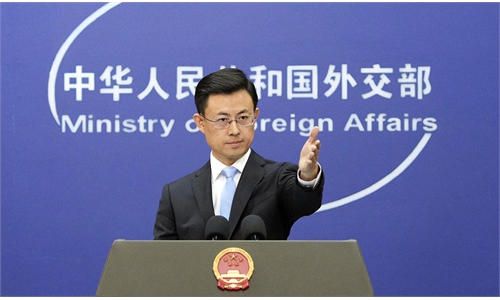
On Friday, a Japanese journalist asked at a regular press conference held by China's Foreign Ministry what China's position was on the current and future China-Japan relations, noting that Saturday marked one year since Takaichi's remarks on Taiwan. The question itself is almost absurd. Having refused to correct a remark that strikes at the foundations of bilateral ties, Japan now wonders when China will be willing to resume normal relations.
There is a fundamental principle that Tokyo seems unwilling to grasp: A country cannot provoke its neighbor and then expect to carry on as if nothing has happened.
Chinese Foreign Ministry spokesperson Guo Jiakun left little room for ambiguity. He said the current serious difficulties in China-Japan relations are entirely the responsibility of the Japanese side. It stems from the erroneous remarks made by the Japanese leader a year ago regarding Taiwan, which blatantly signaled a potential military intervention in the Taiwan question, challenged China's national sovereignty, and undermined the political foundation of China-Japan relations. Regrettably, one year on, the Japanese authorities have not moved at all. They've been evading the issue and yet to demonstrate any sincerity or take any action to reflect upon and correct the wrongdoings.
Guo added that "our position on China-Japan relations has been consistent. We wish to reiterate that for the Japanese side, the pressing priority is to correct the erroneous words and deeds on the Taiwan question, adopt a correct attitude on historical issues, and form an objective and rational perception on China."
However, in the past year, Japan has not only failed to correct that erroneous remark but has also pressed ahead on other fronts. While describing China as its so-called "greatest strategic challenge," it has rapidly increased military spending, pursued long-range strike capabilities, and accelerated programs involving unmanned systems, cyber, and space. A nation that once brought deep suffering to Asia through its war of aggression is now, in the name of a so-called changing security environment, expanding the reach of its military activities once more. For China, this is not a theoretical debate about security. It is a reopening of painful historical memory.
The legacy of WWII across Asia is too painful to be brushed aside: war, massacres, human experimentation, systematic plunder and brutal abuse. Yet the former aggressor is now rearming while flipping the narrative, portraying the past victim as today's threat. Its prime minister has gone further, tying the Taiwan Straits to Japan's national survival.
The recent discussion of possible exceptions to Japan' s Three Non-Nuclear Principles has exposed the country's ambition more plainly. The principles stipulate that the country will not possess or produce nuclear weapons, or permit their introduction into the country. Yet the Takaichi government aims to revise the National Security Strategy by year's end to allow nuclear weapons to be brought into the country in an emergency. Japan is steadily testing how far it can move beyond the constraints that have defined its postwar role.
The series of words and deeds have already cracked the shell of Japan's "exclusively defense-oriented" posture. A country that repeatedly proclaims its commitment to peace is now demonstrating, through its own actions, precisely why the postwar order imposed constraints on Japanese militarism in the first place.
There is no such bargain. Japan cannot strike at China's core interests and still expect normal relations. It cannot discard postwar military limits and demand that its neighbors believe its peaceful intent. Nor can it evade its history of aggression while expecting those it once harmed to accept its remilitarization.
What Japan is making increasingly clear to the rest of Asia is that the return of the fangs begins with the return of the camouflage. The language is carefully chosen: "defense," "worst-case scenario," "survival-threatening situation." These are the excuses Japan is using to beef up its military muscle in ways that would once have been politically unthinkable. Step by step, it is building a rationale - for itself and for others - for why it should once again be able to bare its fangs and strike.
A year ago, Takaichi tested China's red line. Today, Japan is testing the postwar order itself. The political time bomb planted then remains undetonated. Those responsible have made no effort to defuse it. Instead, Japan's military machinery is gathering speed. The postwar restraints are being tested. The fangs are growing back.
RELATED ARTICLES