New BCI and neuromodulation technologies help military pilots combat mental fatigue, enhance performance
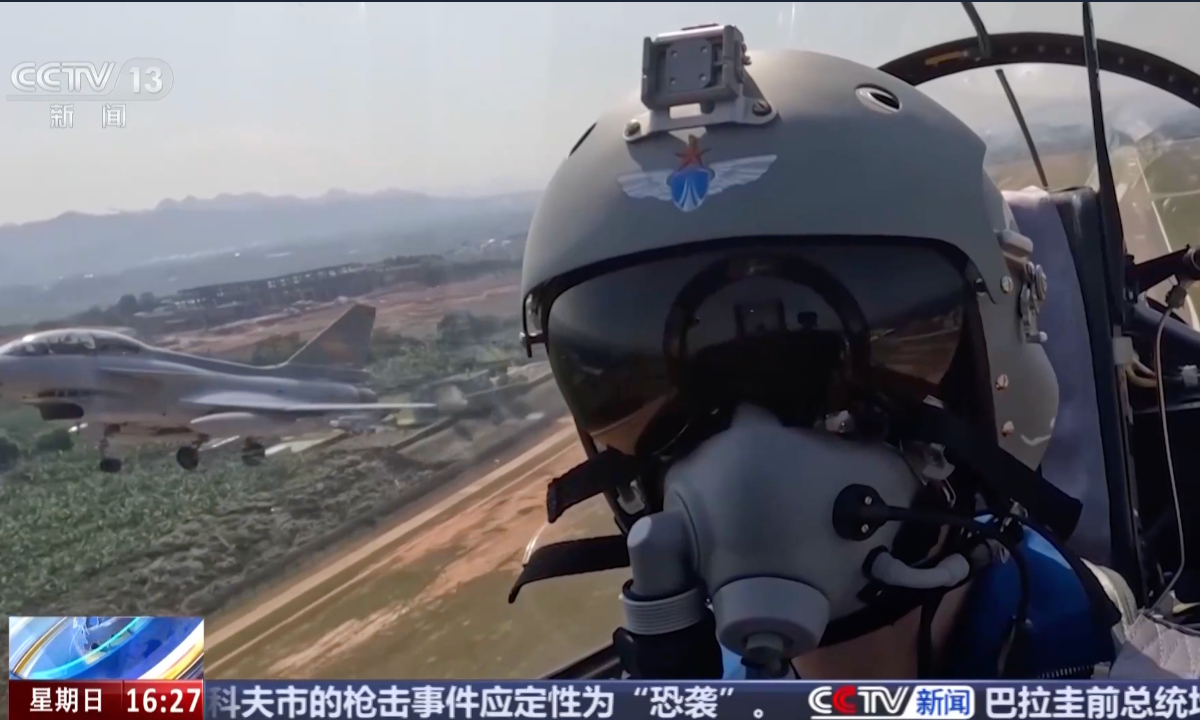
Photo: Screenshot from CCTV
From brain-computer interfaces (BCI) and neuromodulation to advanced flight training technologies, an aerospace medicine summit hosted by the Air Force Medical University over the weekend in Xi’an, Northwest China’s Shaanxi Province, showcased the latest advances in aerospace medicine, flight training, and aeromedical rescue, China Central Television (CCTV) reported on Sunday.
More than 1,000 experts and scholars from across China, including the military, gathered to discuss key challenges and cutting-edge developments with the aim of advancing high-quality scientific and technological innovation in aerospace medicine, according to CCTV.
At this year's forum, a key topic of discussion was the application of BCI and neuromodulation technologies to strengthen aircrew members' physical and psychological resilience and sustained combat effectiveness under high-intensity missions. Experts discussed ways to protect aircrew from extreme physical and psychological stress, improve personnel selection and training, and leverage digital intelligence to enhance aviation capabilities.
Yang Liu of the Air Force Medical University said pilots undergo training using breathing exercises and biofeedback before missions. Between missions or afterward, brief and safe transcranial microcurrent stimulation can be used to modulate brain regions associated with cognitive functions, helping pilots quickly alleviate mental fatigue.
In addition, efficient personnel selection and training, as well as the integration of digital intelligence technologies, were among the key topics discussed at the forum. The forum also highlighted advanced flight training technologies, including a spatial disorientation simulator that recreates illusions encountered during night flights and when flying through clouds. The immersive system helps pilots maintain spatial awareness and better control their aircraft, enhancing flight safety.
For example, when some pilots conduct training exercises in the deserts of northwest China, both the night sky and the ground can be completely dark due to the absence of artificial lighting. Pilots may experience spatial disorientation, mistaking the ground for the sky and vice versa, posing serious safety risks. Specialized ground-based simulators recreate realistic flying environments to help pilots recognize and respond to such illusions effectively.
The forum also featured innovations in cognitive computing and non-invasive BCI aimed at enhancing aircrew operational capabilities, including an attention assessment and training system.
The system uses real-time eye-tracking and physiological data to monitor pilots' attention distribution, cognitive workload and stress levels in complex environments. Models based on expert knowledge automatically score performance, helping trainees identify weaknesses and undertake targeted training, driving a shift in cognitive skills training from experience-based instruction to data-driven training supported by digital technologies.
In addition, emerging forms of information-driven, intelligent and unmanned warfare are changing combat injury patterns and casualty evacuation conditions, creating new challenges for aeromedical rescue and rapid treatment. Wang Jianqi of the Air Force Medical University said researchers had developed the Chinese military's first casualty-search drone. They had also made advances in using drones to inject emergency medication into injured personnel at distant locations, buying time for treatment.
Advances in unmanned technologies are making unmanned equipment an increasingly important part of aeromedical rescue, helping overcome the limitations of traditional rescue operations.
Global Times
RELATED ARTICLES