ARTS / CULTURE & LEISURE
An 800-year-old tea tree embodies both Hani heritage and China’s centuries-old tea culture
Roots and connections
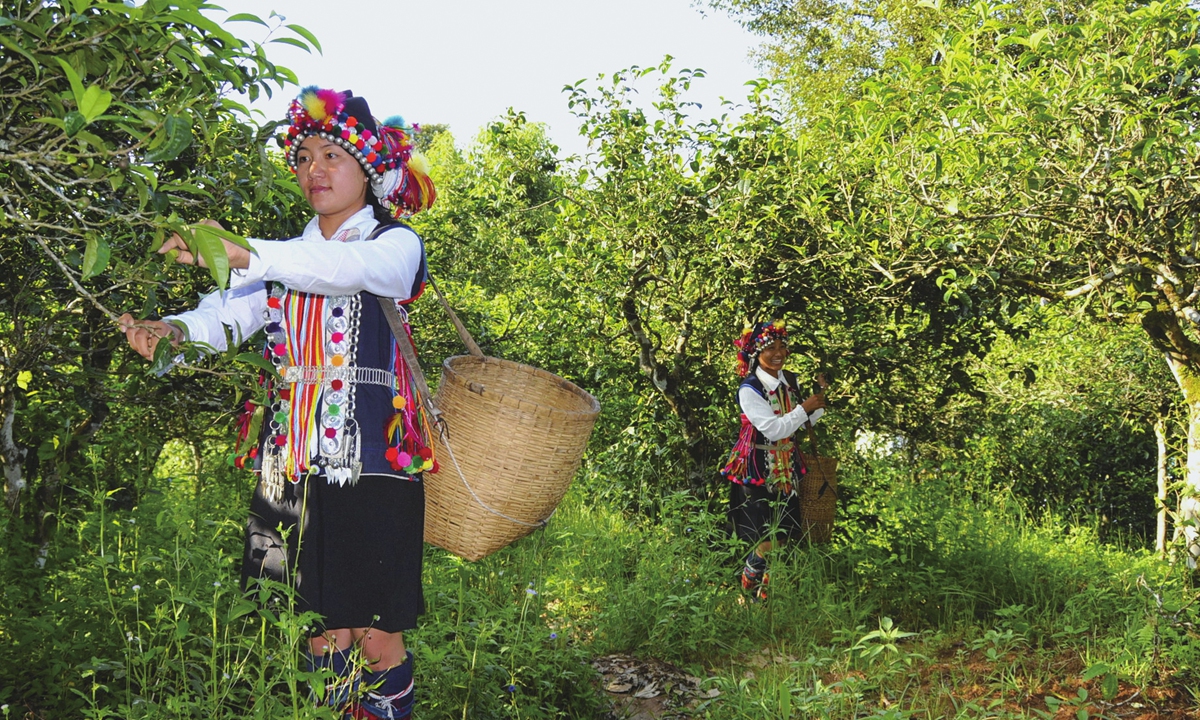
Hani villagers pick tea leaves at a tea garden on Nannuo Mountain in Xishuangbanna, Southwest China's Yunnan Province. Photos on this page: Courtesy of Xishuangbanna Converged Media Center
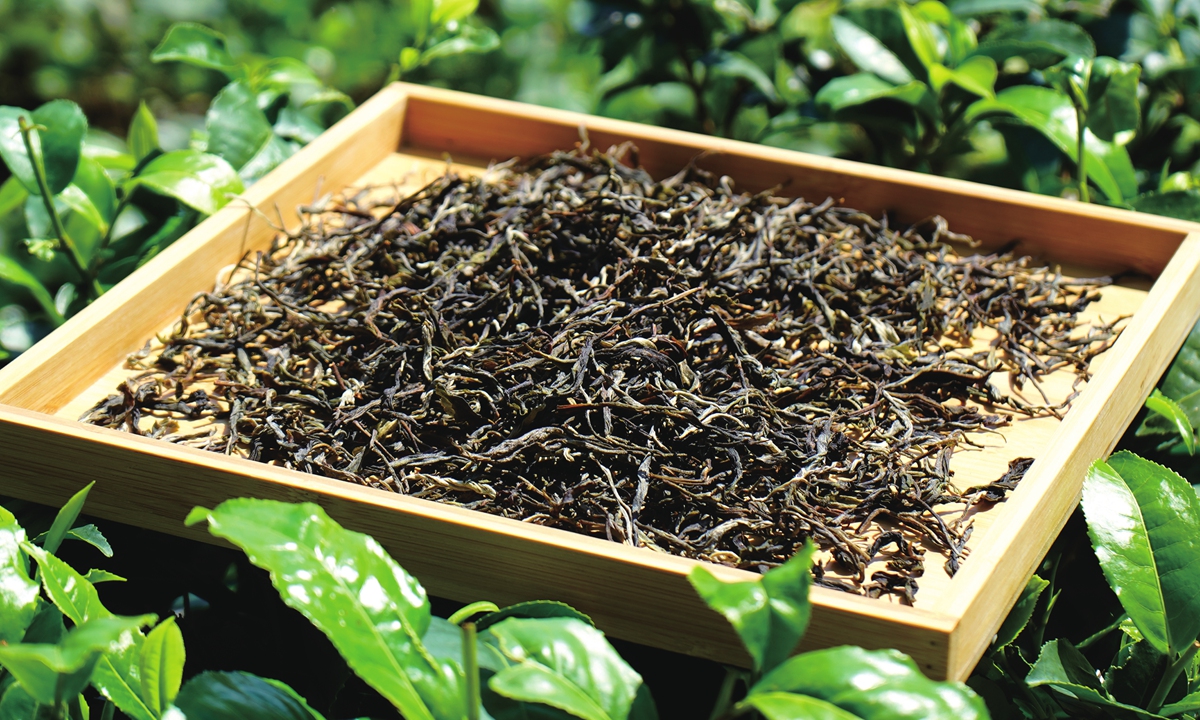
The tea tree leaves Photos on this page: Courtesy of Xishuangbanna Converged Media Center
Home to numerous centuries-old tea gardens, Xishuangbanna in Southwest China's Yunnan Province is one of the country's best-known regions for Pu'er tea. On the province's Nannuo Mountain, there is one 800-year-old tea tree that produces only about 1 to 1.5 kilograms of tea leaves each year. So precious is its harvest that the local village that is home to the tree auctions off the right to pick its leaves during an annual tea-tree harvesting ceremony. According to local villagers, in recent years, the auction price has reached around 500,000 yuan ($70,000).The tree's value goes far beyond the tea it produces. For generations, the Hani people of the region, one of China's 56 ethnic groups, have seen it as a symbol of a tea-centered way of life and as a living link to the village's traditions.
Today, the centuries-old tree and the surrounding tea forests are also drawing visitors from different countries, offering them a chance to understand Chinese tea culture through the local people and the landscape that have sustained it.
A living tea heritage
Each year, villagers hold ceremonies beneath the ancient tea tree, praying for favorable weather and a good year ahead.
To protect the tree, picking is restricted to a specific day, while it remains enclosed by a protective fence during the rest of the year. Forestry authorities at different levels also oversee its protection.
"We Hani people have lived alongside tea trees here for generations. Our daily lives and ethnic customs are closely connected with tea," Ma Junyu, secretary of the Party Committee and public affairs center of Nannuo Mountain village in Gelanghe township, told the Global Times.
According to Ma, tea cultivation on Nannuo Mountain dates back more than 1,400 years. The name "Nannuo" comes from the local ethnic language and means "bamboo shoot sauce." In the past, local bamboo shoots were made into sauce and presented as tribute to the king. After the Bulang people moved away from the mountain, the Hani people settled there and began cultivating tea, a tradition that has continued for centuries.
For local residents, tea has long been more than a crop. "Our ancestors made their living from tea trees. In the past, we mainly grew rice, corn and other food crops. As the tea industry developed, tea gradually became our main source of income," Du Juan, a villager from Nannuo Mountain village, told the Global Times.
Tea is also woven into everyday routines. "We have a deep affection for tea trees and tea. We drink tea from morning till night. Everyone, young and old, knows how to drink it, and we even carry tea leaves with us when we travel," Du said.
Tea's relationship with local environment has also shaped the village's development. Ma said the mountain's forest-and-tea ecosystem developed naturally, supported by its soil and climate that foster rich biodiversity.
"Building on these natural advantages, the village has been exploring ways to integrate agriculture, culture and tourism, while businesses such as homestays and tea-themed cafes have emerged alongside traditional tea production," Ma noted.
The ancient tea tree, meanwhile, illustrates how the village balances the value of its tea heritage with the need to protect it. Its limited harvest and tightly controlled picking arrangements have made it a symbol not only of the village's long relationship with tea, but also of the efforts to preserve that relationship for future generations.
Shared experiences
The appeal of Nannuo Mountain's tea culture is reaching beyond China. During the spring tea-picking season, visitors from countries including South Korea and European nations come to the mountain to try their hand at picking tea leaves, learning how tea is made and tasting local varieties.
"Some may not know much about different tea varieties or production techniques, but many are eager to learn about the role tea plays in Chinese life," Du said.
For some visitors, that curiosity begins with a simple question: What does tea mean in another culture?
Gisela, a tea enthusiast from Mexico, said her trip gave her an opportunity to explore a different understanding of tea. "In Mexico, all plants that can be brewed are considered tea," she told the Global Times. "Here, I wish to learn more about the varieties of Chinese tea, how local conditions shape their flavor and how generations of Hani tea growers have developed their cultivation and processing techniques."
Lidia, from Spain, found a meaning in tea that went beyond its role as a drink. "For me, tea is not just a beverage. It is also a way to cultivate and purify the mind and body," she told the Global Times. "I hope more young people will explore traditional tea culture and experience its appeal firsthand."
Visitors' interests highlight two dimensions of tea culture: the knowledge and skills behind growing and making tea, and the cultural meanings people attach to drinking it. In Nannuo Mountain village, the two are closely connected.
Visitors can see how the local environment shapes tea cultivation, learn about traditional growing and processing practices from Hani villagers, and observe how tea remains part of everyday life and local customs. It is this combination of agricultural knowledge and living tradition that gives the mountain's tea culture its distinctive character.
For overseas visitors, strolling through the tea gardens and conversing with local residents offers a window into the history and customs behind Chinese tea.
When they take these experiences home, they carry with them personal stories of a tradition that has linked people to the land and to one another for generations.
RELATED ARTICLES