ARTS / CULTURE & LEISURE
Young inheritors breathe new life into traditional crafting skills
Modern expressions
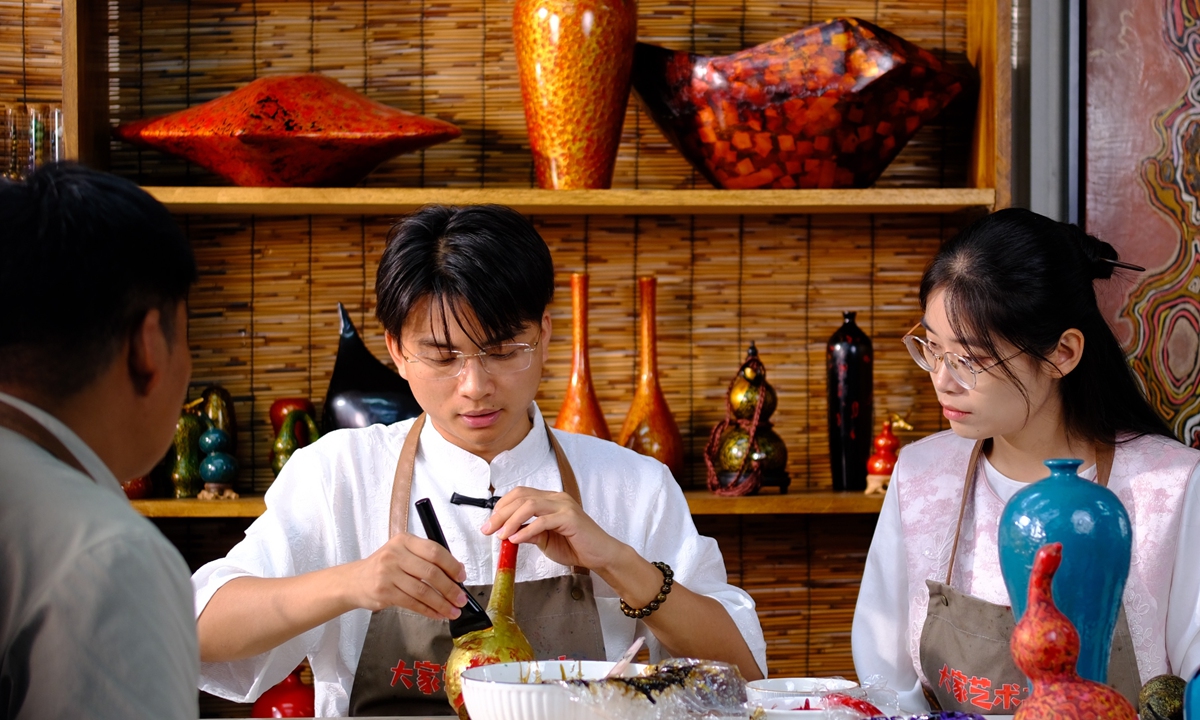
Peng Yuxiang makes a lacquerware vase. Photo: Courtesy of Peng Yuxiang
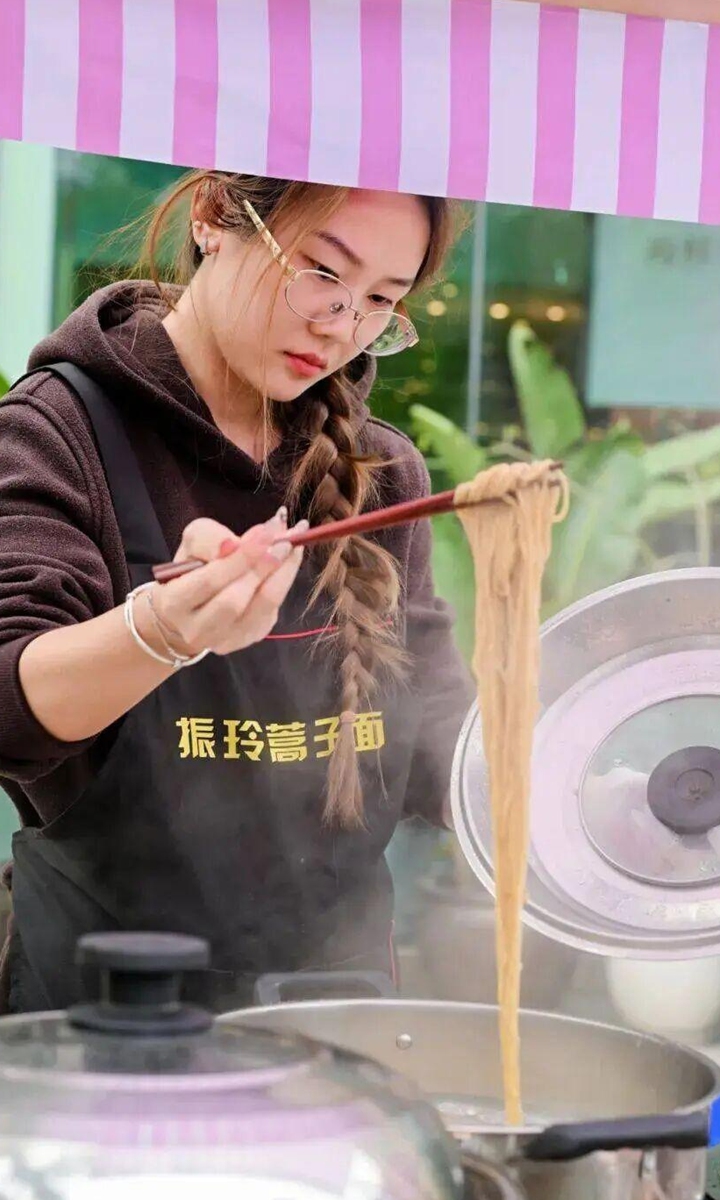
Tong Xianshu makes Zhongning haozi noodle. Photo: Courtesy of Tong Xianshu
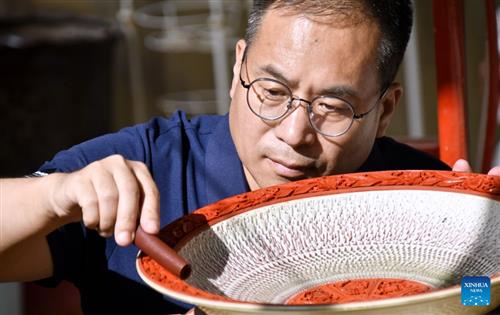
At the 9th China Intangible Cultural Heritage (ICH) Expo, held in Southwest China's Chongqing Municipality from Friday to Tuesday, young 20-something inheritors are exploring ways to bring traditional craftsmanship closer to contemporary life, blending time-honored techniques with digital technology, visual design and new media to breathe new life into ancient skills.Peng Yuxiang, a fourth-generation inheritor of the regional-level ICH known as the Peng-style lacquerware decoration technique from Tianjin city, is among those embracing this approach. By incorporating 3D modeling, 3D-printed molds and augmented reality (AR) previews into traditional lacquerware creation, he is exploring new artistic possibilities for the ancient craft, while experimenting with materials such as paper-based lacquer to expand its use beyond conventional decorative objects.
Peng told the Global Times on Monday that he hopes to challenge the stereotype and present a new image of lacquerware that is youthful, vibrant and in tune with contemporary aesthetics through the exhibition.
Many people associate lacquerware and traditional lacquer art with something ancient and heavy, imagining antique ornaments that seem far removed from everyday life, he noted. "It is not simply a relic to be displayed quietly in a museum, nor is it an art form that feels lofty and inaccessible. It can be minimalist and lightweight, fit naturally into the modern landscape, and reflect the ideas and perspectives of younger generations," Peng said.
Tong Xianshu, another young inheritor of national-level ICH Zhongning Haozi Noodles Making from Zhongning County, Northwest China's Ningxia Hui Autonomous Region, has developed a comprehensive visual identity system for the noodles and even created a character called the "Kung Fu Noodle Heroine," paying tribute to the inheritors who have carried forward this craft with their skilled hands.
Tong told the Global Times on Monday that she wants to introduce people to a different side of wormwood noodles.
"They are more than a traditional noodle dish from Zhongning. They represent an ICH rooted in tradition but full of youthful energy. While preserving the authentic flavor passed down through generations, we are also bringing our own forms of expression as young people, making the craft more vibrant," Tong said.
More than a delicacy
Organized by China's Ministry of Culture and Tourism, the five-day expo brought together more than 890 ICH projects and over 930 inheritors from across the country, showcasing efforts to preserve traditional craftsmanship while exploring new ways to integrate it into contemporary life. At the culinary section of the expo, 24-year-old Tong bent over to knead and roll dough, making haozi noodles, a tradition that stretches back more than 300 years.
Zhongning Haozi noodles are known for their refreshing taste and distinctive preparation techniques. One of the key ingredients in this local delicacy of Ningxia are black wormwood seeds or haozi in Chinese. Making the noodles involves 18 traditional steps, from selecting ingredients and determining proportions to mixing and kneading the dough. It was inscribed on the national ICH list in 2021.
The greatest charm of haozi noodles lies in the sense of ritual they bring to everyday life, Tong said. They are traditionally served on special occasions, such as celebrations, family reunions and when welcoming guests, with each bowl carrying a sense of local belonging and heartfelt blessings.
The art of making these noodles has traditionally been passed down through generations, often from mother to daughter or mother-in-law to daughter-in-law. Tong said the inspiration for her "Kung Fu Noodle Heroine" character came from her mother and the generations of women inheritors who quietly persevered in keeping this craft alive.
"Rolling haozi noodles with a long rolling pin requires considerable physical strength and effort, almost like practicing martial arts. The word 'heroine' is not meant to suggest a flamboyant or forceful character, but rather to pay tribute to the resilience and dedication of the women who have carried the tradition forward," she added.
Accessible art
In a similar vein, Peng is exploring how modern technology and new materials can expand the creative possibilities of the ancient craft of lacquerware.
Lacquerware is a traditional art dating back thousands of years. Creating a piece of ceramic-based lacquerware involves eight major stages: shaping the body, baking the lacquer, applying fabric and a layer of putty, filling and smoothing imperfections, applying decorative lacquer techniques, sanding, polishing, and final shaping.]
The appeal of Peng-style lacquerware lies in its commitment to traditional craftsmanship and meticulous attention to detail, as well as its openness to new ideas and contemporary expression, Peng said.
By using digital technologies and new materials to create a lacquerware base, Peng hopes to make the craft more accessible. "For example, digital modeling and AR previews allow us to test the shape and color of a piece in advance, reducing the costs associated with repeated experimentation. I'm also experimenting with paper-based and 3D-printed bases to make lacquerware lighter and more suitable for a wider range of applications," he said.
Peng has also developed hands-on workshops, allowing people not only to appreciate finished pieces but also to experience the appeal of lacquer art firsthand. "We can create lightweight, more affordable lacquerware for everyday use, making it accessible and practical for ordinary consumers, rather than something people can only admire in display cases," he added.
Yu Jinlong, a Beijing-based cultural scholar, told the Global Times that Gen-Z inheritors have found a way to strike a balance between preserving tradition and embracing innovation.
While remaining committed to traditional craftsmanship, they are making effective use of digital tools such as 3D technology, mascot characters and new media to give traditional skills contemporary forms of expression and make intangible cultural heritage more accessible and appealing to younger people.
This not only expands the creative possibilities and communication channels for ICH, but also opens up new paths for brand development and industrial growth, helping address the challenge of generational continuity, Yu said.
RELATED ARTICLES