IN-DEPTH / IN-DEPTH
Rare disease communities in China help shape AI and open-source tools around everyday needs that standard products overlook
By Published: Nov 11, 2026 10:55 PM

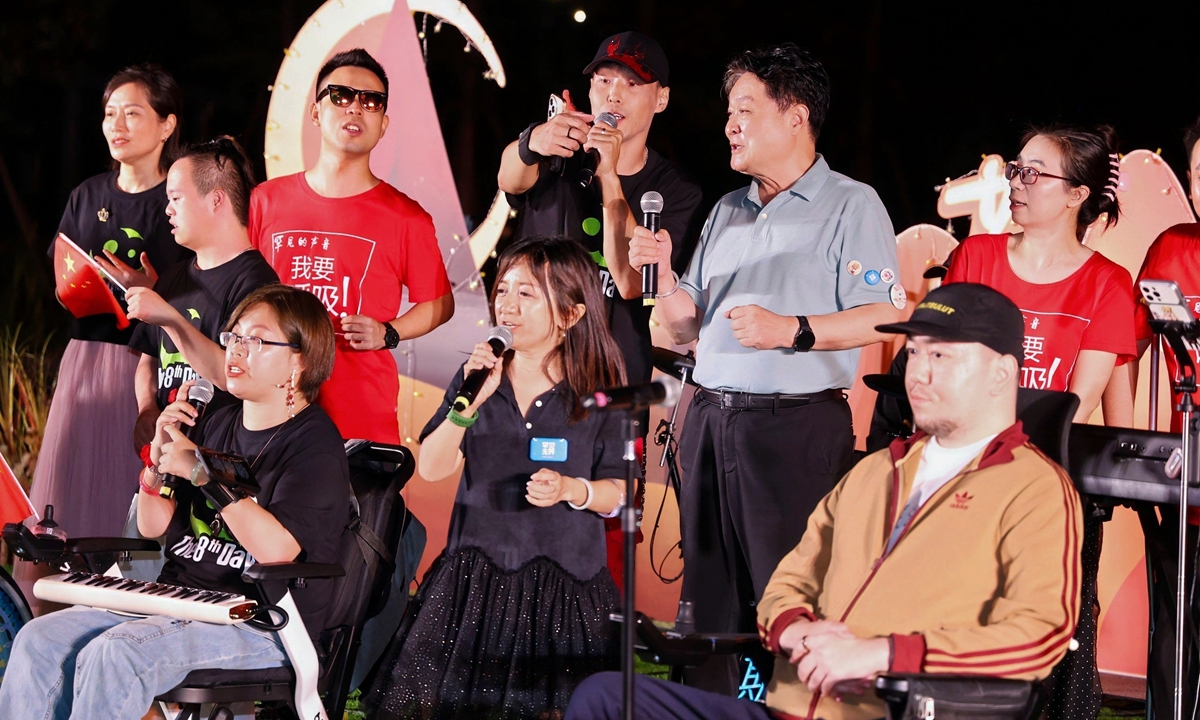
Participants enjoy music together at the "Rare Beyond Bounds" open-source innovation carnival in Hangzhou, East China's Zhejiang Province, in October 2026. Photo: Courtesy of Beijing Illness Challenge Foundation
For Aili, the starting point for innovation was a cup, a pair of chopsticks and a computer keyboard - everyday objects that had become difficult to use as his muscles weakened.
Living with facioscapulohumeral muscular dystrophy (FSHD), Aili wanted assistance with movements that other people take for granted. When he brought those difficulties to science and technology educator Sun Dawei and his students, the discussions gradually became a design brief.
An early prototype combined a work glove, 3D-printed components, hot glue and elastic bands. Aili tried it and reported that it offered some assistance. He also identified problems that the team would need to fix.
Over several versions, the developers reconsidered the glove's support, ventilation, appearance and fit. Patients' experiences helped determine which features mattered and which designs needed changing, according to accounts shared at a recent rare disease innovation event in Hangzhou, East China's Zhejiang Province.
These efforts are unfolding alongside broader progress in China's support for people with rare diseases and disabilities.
National rare disease catalogs and a nationwide collaborative diagnosis and treatment network have strengthened the framework for medical support. Meanwhile, the country's Law on Building Accessible Environments, effective since September 2023, covers information, communications and social services alongside physical facilities.
National rare disease catalogs and a nationwide collaborative diagnosis and treatment network have strengthened the framework for medical support. Meanwhile, the country's Law on Building Accessible Environments, effective since September 2023, covers information, communications and social services alongside physical facilities.
It encourages accessible design in websites and mobile applications, providing a legal foundation for making education, employment and everyday services more inclusive.
Across projects involving AI, open-source software and digital manufacturing, patients helped define the problems, assess proposed solutions and identify what needed further work.
Patients treated as knowledge partners
Sun had spent more than a decade guiding students through science and technology projects before working with Aili. Some earlier projects had addressed the needs of people with disabilities, but finding more users to test a design and support its continued development had often proved difficult, he recalled.
Working with a patient community changed that process. Aili, founder of the Khub rare disease open-source community, could discuss his own requirements and connect the team with others whose experiences might differ.
The first question was what the glove needed to accomplish. The team considered complex electrically powered devices, then returned to the activities that patients wanted help with: holding cups, handling a bowl and chopsticks, and using a keyboard.
One idea came from a commercially available climbing training glove. Its elastic mechanism pulled the fingers inward. The team bought one to investigate whether it could work in reverse, Sun said. It could not simply be worn backward, but examining it helped them explore the principle behind their own design.
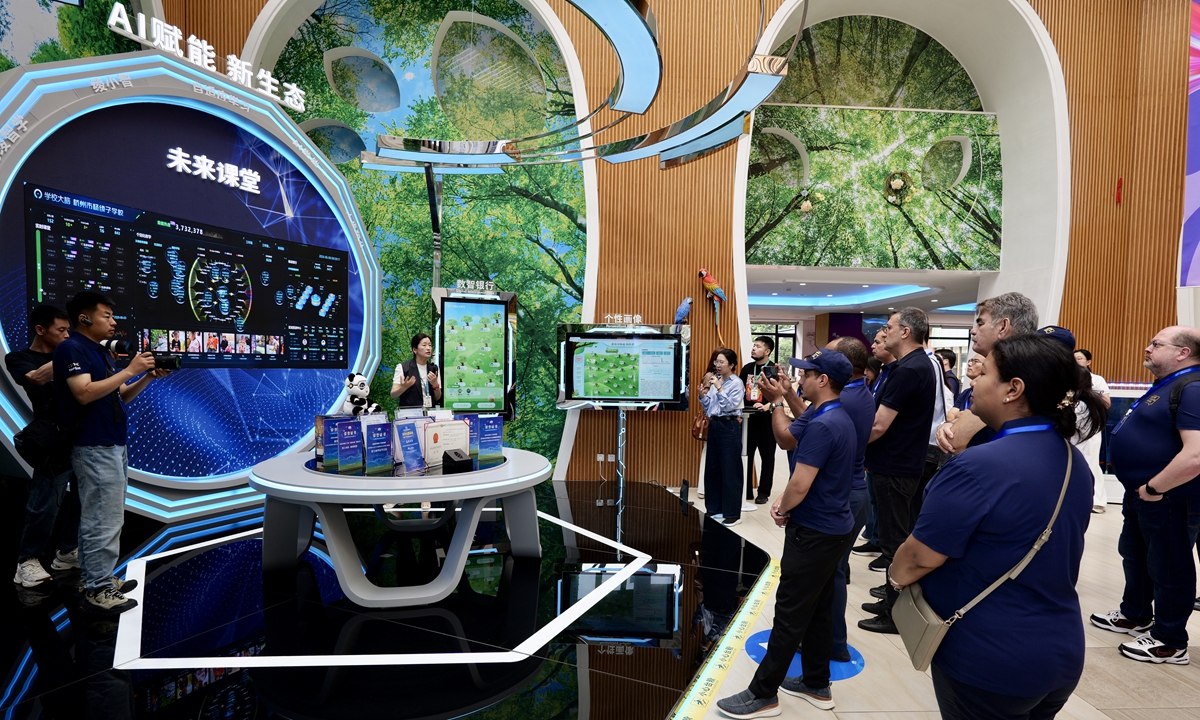
Guests visit a school in Hangzhou, East China's Zhejiang Province, to learn about the use of AI in special education on June 7, 2026. Photo: VCG
Further development brought less conspicuous requirements into focus. A glove intended for extended wear needed ventilation. It had to accommodate different finger lengths and hand sizes. Its appearance also mattered to people who would wear it every day.Attempts to make individually fitted finger components created another problem: each part required adjustment, and some designs were difficult to print. The team continued modifying the structure, eventually combining a flexible palm support with adjustable components.
According to Sun, the design allowed users to change the level of assistance. Samples were sent to patients in different places, bringing further feedback about daily tasks and possible improvements.
Sun said patients' experience of daily use should guide evaluation of the project, rather than competition criteria alone.
He recalled hearing a surprised response from some hackathon participants: "You're doing this for real?"
The glove was among the projects discussed at the "Rare Beyond Bounds" open-source innovation carnival, held from October 15 to 18. Organized by the Beijing Illness Challenge Foundation, the event connected patients and their families with developers, doctors, researchers and designers.
Its hackathon featured eight challenges drawn from patients' experiences, the organizers told the Global Times. These included medication management for people with narcolepsy, nighttime monitoring for children with epilepsy, tools for players with restricted vision and adaptations allowing people with physical disabilities to play musical instruments.
According to the organizers, patients and developers had started discussing requirements about a month earlier. The in-person session allowed them to refine proposals through direct feedback.
The challenges reflected the specificity of those conversations. A portable medication-management device needed strong vibration reminders, records allowing users to check medication intervals and options for notifying family members about unusual events. A gaming tool for people with restricted fields of vision needed to help users access information across a map.
Designer Shen Danyi and industrial designer Yuxuan described their work on a neck-support device for a woman with FSHD. The patient had difficulty supporting and positioning her head, affecting both sitting and lying positions.
An initial design used a modified high-neck garment and inflatable tubes. Feedback prompted the team to explore a more encompassing structure with separately adjustable air chambers.
The patient wanted stronger assistance with turning her head. Her mother raised a different concern: whether the material would withstand repeated washing.
As the patient's condition changed, sitting for long periods became increasingly difficult. The developers then began working on support for a lying position.
The team said development was continuing, although it was uncertain whether the patient would be able to use a later version.
For Dong Dong of the Chinese University of Hong Kong, such experiences help explain why patients should be treated as knowledge partners. Scientific expertise establishes what a technology may be able to do; patients contribute observations about what its use means in a particular body and a particular life.
"We cannot let experience replace science, but we can make experience part of scientific judgment," Dong said.
Lowering development barriers
Once patients have defined a problem, AI-assisted development can give them a way to begin working on it themselves.
For Feng Jinyuan, a gamer with severely limited movement, that opportunity emerged when existing assistive devices could not meet all his needs. He had tried different controllers, a trackball mouse and voice controls, but still struggled to find a suitable way to play.
In 2023, Feng began using an AI platform to help develop a customized on-screen gaming keyboard. He described the functions he wanted, tested the generated code and requested adjustments.
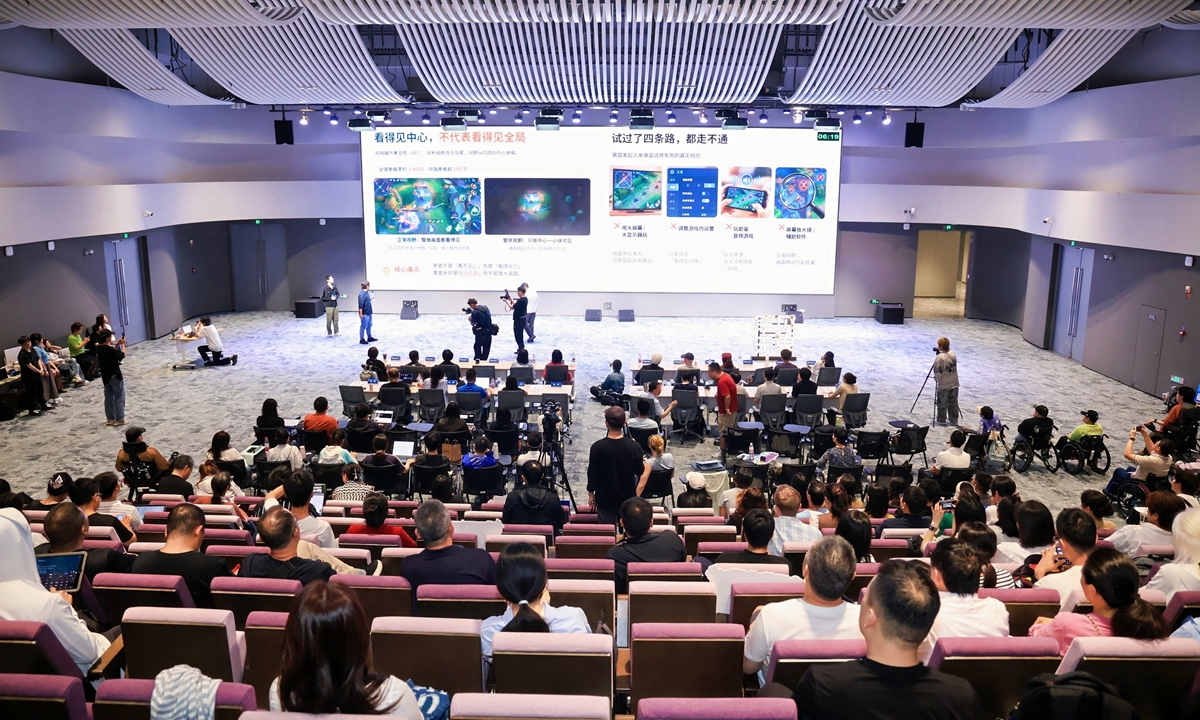
Participants exchange ideas at the "Rare Beyond Bounds" open-source innovation carnival in Hangzhou, East China's Zhejiang Province, in October 2026. Photo: Courtesy of Beijing Illness Challenge Foundation
According to the Yangtze Evening Post, he developed the basic functions in about two days and continued modifying the program through use.
He then published the code on GitHub, making his work accessible to others.
At the Hangzhou event, other projects demonstrated how AI could assist with the recurring work of managing a disease.
Qian Lulin, a student at Duke Kunshan University, presented a self-management platform developed for people with FSHD. The team focused on a familiar difficulty: patients with long medical histories may need to explain years of symptoms, examinations and treatment whenever they visit a new doctor.
The platform brings together personal records, daily observations and uploaded reports. Its functions include extracting text from reports, arranging information along a disease timeline and generating a PDF summary for appointments. An AI question-and-answer function draws on medical reference materials, Qian explained at the event.
Making the code available also creates opportunities for adaptation. During the event, Aili introduced a developer who said he had used the FSHD platform's code to build a version for people with hemophilia over the National Day holiday.
This possibility draws on a broader ecosystem of shared technology. Zhu Yue, a scholar at Tongji University Law School, told the Global Times that China's open-source AI ecosystem extends beyond foundational models to include supporting frameworks, datasets and other components that enable downstream applications.
Discussing AI for scientific research, Zeng Dajun, deputy director of the Institute of Automation under the Chinese Academy of Sciences, previously told the Global Times that open platforms were helping move work from fragmented, closed operations toward collaborative development.
From working prototypes to everyday use
Making a first version is only one stage of that work. Further development requires time, funding and expertise that small teams may struggle to sustain.
A related project presented at the event illustrated the difficulty. Yuan Zhihan, who described what it was like to live with rheumatoid arthritis, had previously assembled a large spreadsheet to track her medical history.
It contained test results, consultations, medication responses and other changes across years of treatment.
With AI-assisted coding, she and her partner began developing an application to record symptoms and daily activities and organize health documents. Neither worked in the medical technology industry, and they were building the project in their spare time.
At the event, Yuan said it remained at the demonstration stage. The team lacked experience with medical data requirements and bringing an application into public use, and was seeking collaborators who could help.
Volunteer projects also need continuity.
Sun called for other developers and university teams to continue refining the open-source glove design, so that further development would not depend on a single student team.
Publishing the design preserved a starting point for another team; adapting it still required people to produce components, organize tests and respond to users.
For patients, the promise begins with getting one useful tool into daily life. That is a first step worth building on.
RELATED ARTICLES