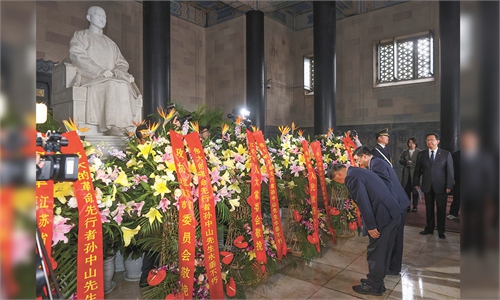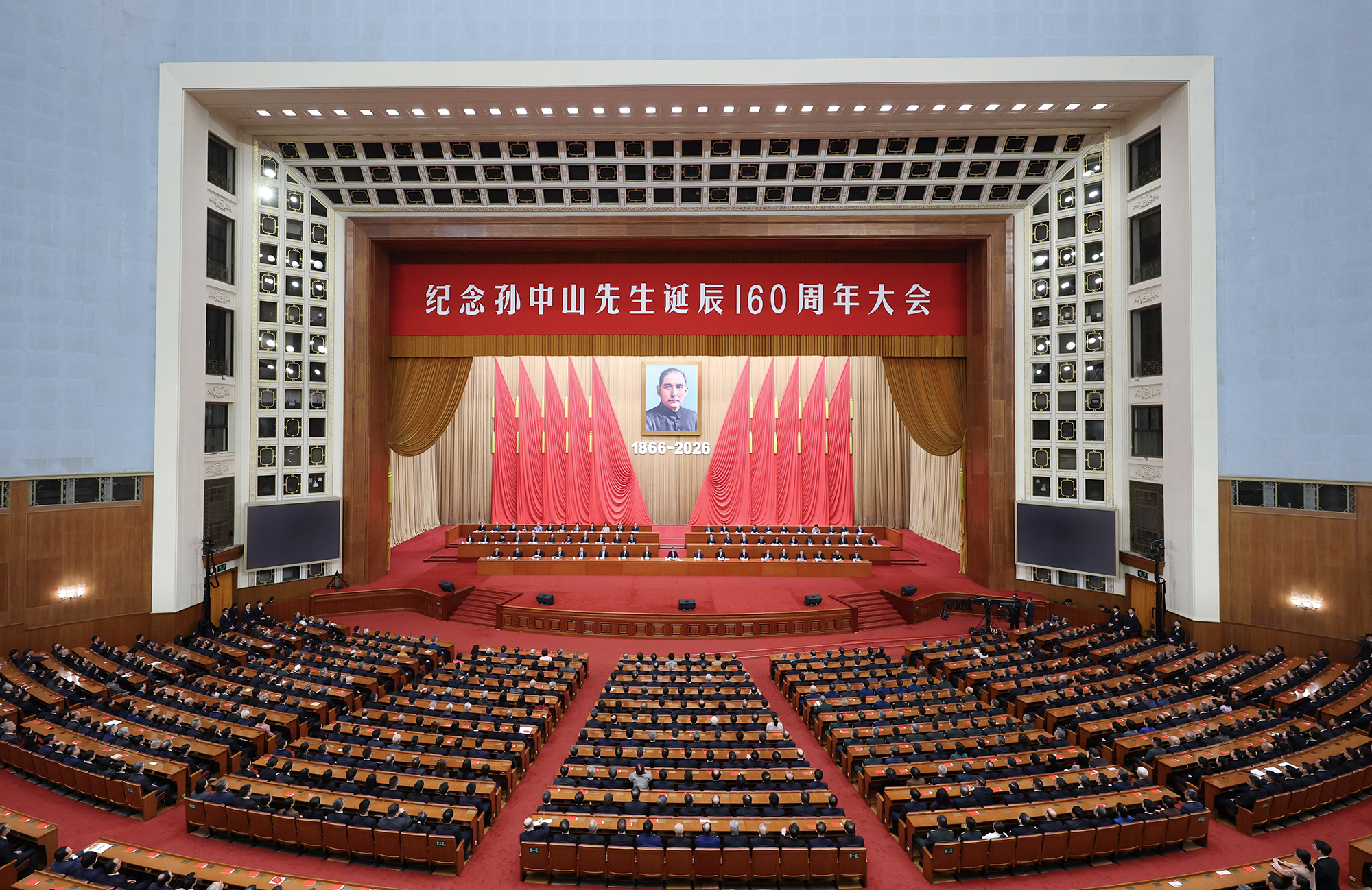
A gathering to commemorate the 160th anniversary of Sun Yat-sen's birth is held in Beijing, capital of China on November 12, 2026. Photo: Xinhua
Chinese President Xi Jinping on Thursday called for carrying forward the legacy of Sun Yat-sen, one of the nation's revered revolutionary forefathers, to make joint efforts for national rejuvenation and turn into reality the great dream of all Chinese people since the advent of modern times.
Xi, also general secretary of the Communist Party of China (CPC) Central Committee and chairman of the Central Military Commission, made the remarks at a gathering held in Beijing to commemorate the 160th anniversary of Sun's birth, the Xinhua News Agency reported Thursday.
Born in 1866, Sun led the Revolution of 1911 more than a century ago to abolish the absolute monarchy that had ruled China for thousands of years. He died in 1925. Thursday marks the 160th anniversary of Sun Yat-sen's birth.
Xi noted that Chinese communists are the most steadfast supporters, loyal collaborators, and faithful successors to the revolutionary cause initiated by Sun.
For more than 100 years, the CPC has led the Chinese people in writing the most magnificent chapter in the history of the Chinese nation, Xi said, calling on the Chinese people to carry forward Sun's unyielding determination, rise to challenges ahead and break new ground in the country's development.
Call for unity
Calling on people to learn from Sun's commitment to unity, Xi also emphasized adhering to the united front and strengthening the great unity among all the sons and daughters of the Chinese nation.
Resolving the Taiwan question and realizing the complete reunification of the motherland is an unwavering historical mission for the CPC, the shared aspiration of all Chinese people, and a natural requirement for the great rejuvenation of the Chinese nation, Xi stressed.
People on both sides of the Taiwan Straits and all Chinese at home and abroad should join hands to oppose the "Taiwan independence" secessionist forces, and work together for the peaceful development of cross-Straits relations and the complete reunification of the motherland, Xi said.
Zheng Jian, a professor at the Taiwan Research Institute of Xiamen University, said Sun's legacy carries particular relevance nowadays amid growing international tensions, stressing that people on both sides of the Taiwan Straits have every reason to unite in pursuing national rejuvenation rather than allowing internal divisions or external interference to undermine their shared interests.
A peaceful resolution of the Taiwan question under the "one country, two systems" framework could offer a model for addressing similarly complex historical and political disputes elsewhere in the world, Zheng told the Global Times.
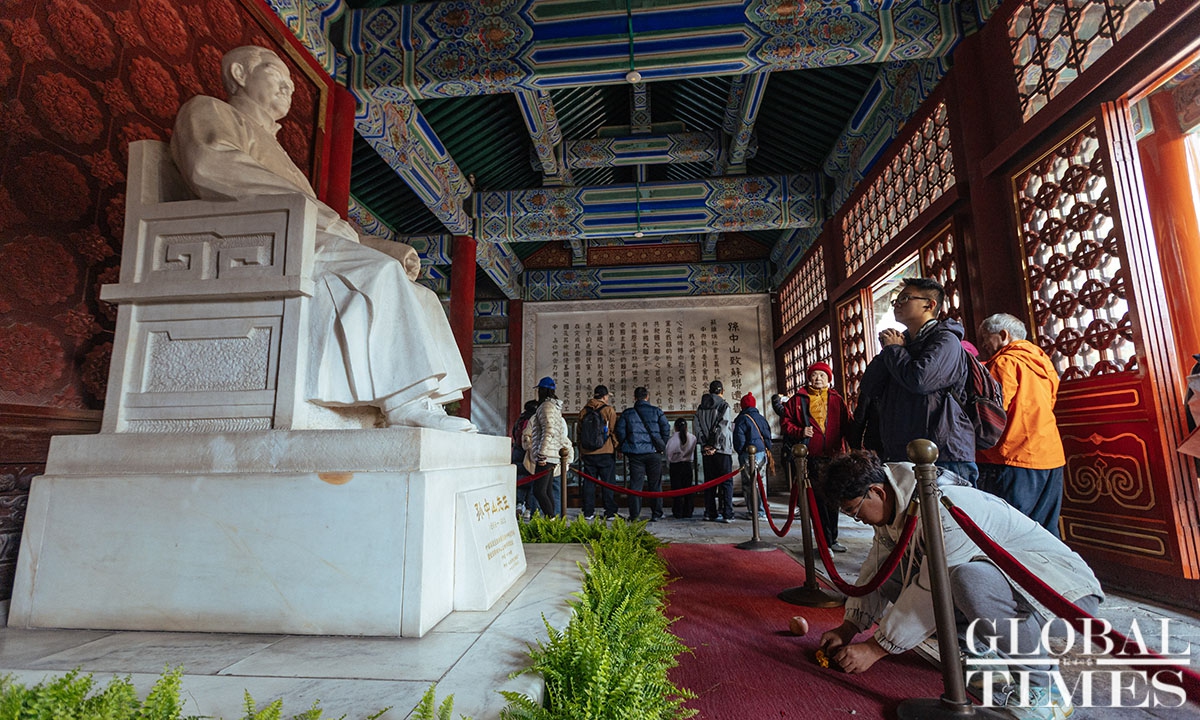
Visitors pay tribute at Sun Yat-sen Memorial Hall on 160th anniversary of his birth. Photo: Li Hao/Global Times
Wide celebration
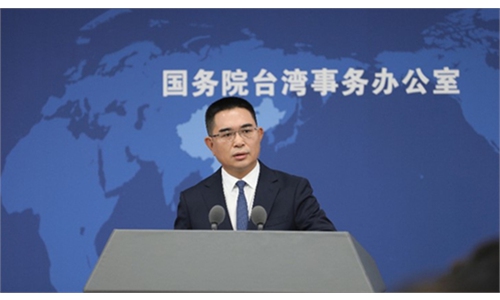
Beijing is hosting a series of exhibitions and cultural events throughout November to commemorate the Restoration of Taiwan and the 160th anniversary of Sun's birth, drawing more than 1,200 participants from both sides of the Taiwan Straits, including nearly 100 who traveled from Taiwan, Zhang Han, spokesperson for the State Council Taiwan Affairs Office, said on Wednesday.
On Thursday, visitors gathered at the Sun Yat-sen Memorial Hall in Beijing's Xiangshan. They paused before displays of Sun's handwritten manuscripts, writings and personal artifacts, reflecting on the legacy of a man whose lifelong ambition was to revive a nation weakened by decades of turmoil and foreign aggression, the Global Times reporter observed.
A visitor surnamed Zheng told the Global Times that he had made a special trip to the memorial hall to mark Sun's birthday, drawn by the story of a revolutionary who helped bring down China's centuries-old imperial system at a time when the country was struggling against foreign aggression and internal turmoil.
"His story inspires me to keep fighting for what I believe in, no matter how difficult the circumstances," he said. "I will always remember his words: 'The revolution has not yet succeeded; comrades, you must strive on.'"
Chi Chia-lin, honorary chairman of the Reunification Alliance Party in Taiwan and a Taiwan-based historian, traveled to Beijing to participate in the anniversary activities. Chi told the Global Times that despite Taiwan authority's absurd "de-Sinicization" effort, Sun is still widely and highly respected and his legacy is remembered by people in Taiwan. "Both sides of the Taiwan Straits share a common understanding and appreciation of Sun Yat-sen's historical legacy, making joint commemorations of the revolutionary leader a particularly meaningful and constructive undertaking amid current cross-Straits tensions," Chi said.
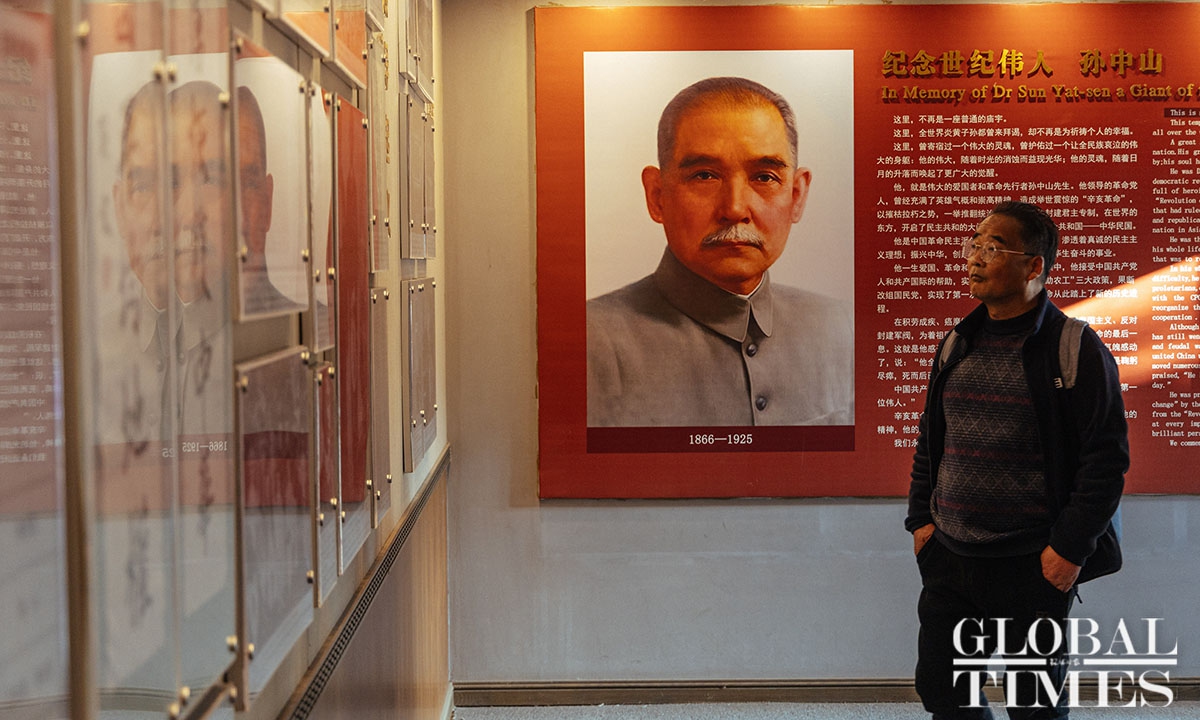
Visitors pay tribute at Sun Yat-sen Memorial Hall on 160th anniversary of his birth. Photo: Li Hao/Global Times
Guangzhou, the southern China city where Sun helped lay the groundwork for the revolution, will host a five-day exchange program from November 12 to 16, bringing together scholars, political commentators and young media professionals from both sides of the Taiwan Straits.
A six-episode documentary titled "Sun Yat-sen" has aired simultaneously since November 8 to commemorate Sun's anniversary.
In Hong Kong, the anniversary has been marked with an official commemorative ceremony and the release of a special stamp collection highlighting Sun's historical ties to the city, where he studied, organized revolutionary activities and delivered public speeches, Hong Kong media reported.
DPP's fruitless thwart
However, the anniversary of Sun's birth appears to have struck a nerve with Taiwan's Democratic Progressive Party (DPP), which, fearing that Sun's legacy could reinforce a shared sense of Chinese identity among people on both sides of the Taiwan Straits, has sought to discourage Taiwan residents from participating in commemorative events.
Taiwan's so-called "Mainland Affairs Council (MAC)" recently said that applications from people on the island who require official permission to travel to the mainland to attend the events related to Sun's birth anniversary would not be approved. It also urged people from other sectors not to travel to the mainland, Hong Kong, or Macao special administrative regions to participate in or co-organize related activities.
Over the years, the DPP authorities have faced repeated accusations of seeking to erase Sun's legacy. During Lai Ching-te's tenure as mayor of Tainan, a controversy over the removal of a statue of Sun prompted protesters to camp out for days in opposition.
Pro-DPP figures have proposed removing requirements to display Sun's portrait, while pro-independence groups have called for Yat-sen street named after him to be renamed. Earlier this year, the DPP authorities pushed for a redesign of Taiwan's banknotes, raising concerns that Sun's portrait could be removed from the currency, according to a People's Daily report.
Sun Yali, president of the Sun Yat-sen Culture Foundation in Zhongshan and representative of Sun Yat-sen's family, told the China News Service on Wednesday that she is concerned many young people on the island of Taiwan have become so unfamiliar with Sun Yat-sen that some cannot even identify him when they encounter his statue. The fading historical memory has left her saddened, frustrated and, at times, angry.
The DPP is particularly wary, as it fears commemorations of Sun Yat-sen, a revolutionary figure revered on both sides of the Taiwan Straits, would evoke identification with the shared history and cultural heritage.
But no matter what tricks the DPP authorities play, they cannot alter the fact that both sides of the Taiwan Straits belong to one China, sever the deep historical and cultural bonds between people across the Straits, erase the imprint of Chinese culture on Taiwan society, or reverse the inevitable trend toward national reunification, Zheng said.
RELATED ARTICLES