Japan's govt-backed arms export push ‘fuels concerns over its military buildup’: Chinese expert
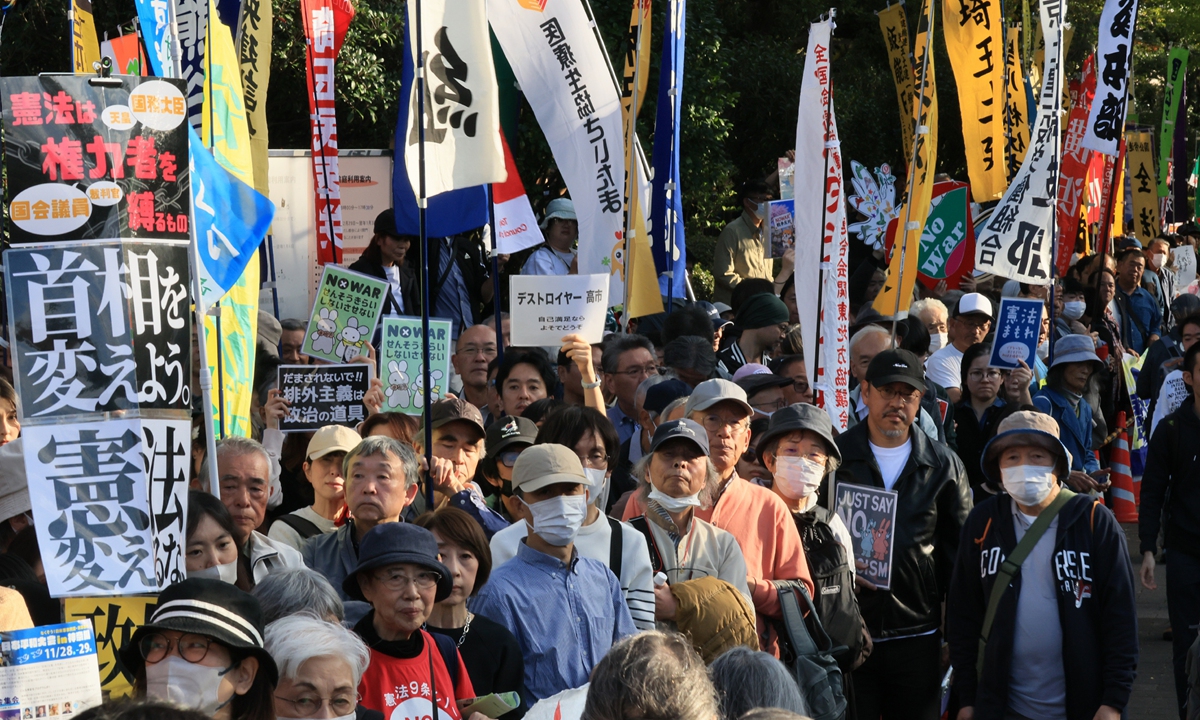
People take part in a "November 3 Rally to Defend Japan's Constitution" outside the National Diet Building in Tokyo, Japan, on November 3, 2026. The rally was held to oppose constitutional revision, military expansion and discrimination. Photo: VCG
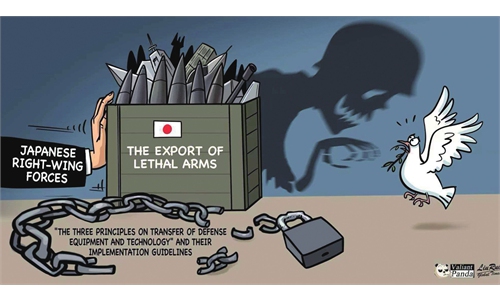
Japan is moving to take a more direct role in promoting arms exports, with plans to establish a government-backed entity to purchase defense equipment from domestic manufacturers and sell it to overseas customers, a move that Chinese experts said could further accelerate the country's military buildup and threaten regional security.
According to Japanese government sources, the proposed program is part of a planned defense industrial base strategy, which the government intends to formulate this year alongside revisions to the country's three security documents. The new public-private entity would act as an intermediary between Japanese manufacturers and foreign customers, in a system modeled on the US Foreign Military Sales (FMS) program, Japan's Yomiuri Shimbun reported on Tuesday.
Under the proposed arrangement, the entity would purchase equipment that private companies might otherwise find difficult to export independently, particularly products considered important to Japan's national security. It would also coordinate with relevant government departments to facilitate overseas sales.
The latest proposal signals a further shift toward direct government involvement in arms exports, reflecting both diplomatic and economic considerations. By providing defense equipment to allies and like-minded partners, Tokyo is seeking to strengthen security ties, advance its broader strategic agenda in the so-called "Indo-Pacific" region and achieve its push of containing China, while also seeking new growth opportunities for its defense industry amid sluggish growth in traditional civilian exports, Lian Degui, director of the Center for Japanese Studies at Shanghai International Studies University, told the Global Times on Tuesday.
The move is also believed to strengthen the government's leverage in promoting Japanese defense products overseas. The Diplomat reported that "Government involvement could provide foreign customers with greater confidence that Japan will remain a reliable long-term partner. It would also allow Tokyo to integrate defense exports more closely into broader foreign and security policy objectives."
Beyond facilitating exports, Tokyo is also seeking to build a more comprehensive support system for its defense industry. The proposed plan includes financial assistance for manufacturers, incentives to expand production capacity in emergencies, closer coordination between defense companies and senior defense ministry officials, as well as efforts to develop defense-related research talent at universities, per the Yomiuri Shimbun.
The new entity would coordinate after-sales services, including personnel training and local production of spare parts in recipient countries, according to the report.
"Taken together, these measures go beyond simply facilitating commercial exports, pointing to a broader effort to integrate Japan's defense industry into its national security strategy," Lian said. Strengthening the defense industrial base is also an important component of Japan's military buildup, he added.
This shift highlights the changing nature of Japan's postwar pacifist principles. The Diplomat reported that a decade ago, Japan's political debate centered on whether defense equipment exports should be allowed at all. Today, the debate has shifted toward how actively the government should promote and support them.
Tokyo claims that defense equipment transfers can contribute to Japan's security and to regional and international peace. However, Lian argued that Japan's increasingly expansive interpretation of pacifism has departed from the postwar principles of demilitarization and military restraint.
By portraying military expansion and arms exports as contributions to peace, Tokyo risks fueling an arms race, heightening regional tensions and undermining stability in East Asia, turning itself into a source of insecurity for its neighbors, Lian said.
"Japan's reckless remilitarization and repeated breach of its 'exclusively defense-oriented' policy seriously threaten regional peace and stability, and challenge the postwar international order. The international community must stay on high alert and jointly push back this dangerous tendency," Chinese Foreign Ministry spokesperson Guo Jiakun said on November 5, in response to reports that the Japanese government is set to approve the updated three security documents in December.
RELATED ARTICLES