Scholars’ Perspectives: Shenzhen offers a model for Asia-Pacific coordination, underscoring the need for openness and cooperation amid rising protectionism
Qu Jian, vice president of the Shenzhen-based think tank China Development Institute
In 2023, commissioned by the Ministry of Economy and Finance of Cambodia, my team took part in the master plan for the Sihanoukville Special Economic Zone (SEZ). We conducted field research on-site and presented the plan to Cambodia's Deputy Prime Minister and Minister of Economy and Finance, as well as senior officials from 22 central ministries. Covering approximately 2,600 square kilometers, the project stretches far beyond the scope of a conventional industrial park. From the perspective of integrated regional development, it requires coordinated planning for ports, industries, urban areas and infrastructure. The plan also needs to address practical issues including governance frameworks, industrial positioning, investment and financing arrangements, as well as investment promotion and operation.
According to an assessment by The Economist, Shenzhen has been a really successful example among more than 4,300 large SEZs worldwide. Many developing countries hope to learn from Shenzhen's success. However, they often focus on specific measures such as preferential policies, infrastructure development and investment promotion, expecting to achieve similar results by replicating these practices. Yet countries differ significantly in their resource endowments, legal systems, industrial foundations and stages of development. Shenzhen's specific policies and development approach therefore cannot be simply transplanted elsewhere and must be adapted to local conditions.
This project in Cambodia deepened my understanding that SEZ development entails more than just the "zone" itself. More importantly, it is about fostering an enabling environment for industrial growth and building an industrial ecosystem capable of continuously attracting enterprises and investment.
Drawing on our long-standing involvement in the planning and development of China's SEZs and industrial parks, we have distilled Shenzhen's practical experience into a "123456" planning and operation system: one regulatory and policy framework; two plans for industrial development and spatial layout; three professional reports on development models, investment and financing, as well as investment promotion and operation; four types of entities working together to create a closed loop for resources and capital; five generations of industrial parks with pathways for smart and eco-friendly upgrading; and six business models for generating returns. This system represents the core experience of the Shenzhen SEZ that is most worth sharing with other countries.
When developing SEZ in any country, several fundamental questions must be addressed: how to build an institutional framework, select industries, secure funding, define the roles of different stakeholders, and ensure the zone's long-term sustainability. Shenzhen's most valuable experience lies in taking a systematic approach to regional development. It moves beyond the traditional mindset of "prioritizing construction over operation," and systematically addresses core challenges such as industrial positioning, spatial layout, investment and financing balance, and long-term operation. It offers targeted solutions to a common dilemma facing industrial parks in developing countries: "they may be easy to build, but difficult to strengthen and sustain."
From a broader regional development perspective, the significance of SEZs and industrial parks should not be limited to attracting investment and developing local industries. They can also serve as important platforms for connecting different economies, facilitating cross-border flows of production factors and deepening cooperation along regional industrial chains.
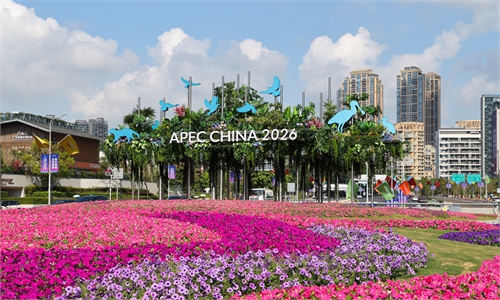
As the host city of this year's APEC meeting, Shenzhen offers an important window into China's efforts to deepen open cooperation with Asia-Pacific economies. From the slogan "Once you come to Shenzhen, you're a Shenzhener," to the city's rise over more than four decades, one underlying principle stands out: opening-up brings capital, technology and talent to a city. Moreover, through cross-border industrial coordination, it can create new opportunities for broader regional economic development.
From benefiting from global industrial relocation in its early days to developing an indigenous innovation system, building advanced manufacturing clusters and rising to become a global innovation hub, Shenzhen has grown through opening-up and made breakthroughs amid competition. Opening-up has brought Shenzhen not only investment and markets, but also advanced technologies, international rules and innovative thinking. This demonstrates that high-standard opening-up is a key driver of high-quality regional development.
The logic of development through opening-up is also reflected in the deepening international presence of Shenzhen-based enterprises. In recent years, these firms have fundamentally transformed their global strategies, moving decisively beyond the traditional model of simply exporting goods. They are now pursuing deeper, more comprehensive cooperation through technology exports, joint development of production capacity, supply chain deployment and localized operations, becoming more deeply integrated into the Asia-Pacific industrial system.
BYD's vehicle manufacturing plant in Thailand marks a shift in China's new energy industry from simply exporting finished products to a more advanced model of cooperation featuring localized production, local supply chains and deeper engagement across the entire industrial chain. It has helped drive the broader upgrading of Southeast Asia's new energy sector. When expanding overseas, Shenzhen-based enterprises uphold the principle of mutually beneficial cooperation. Rather than pursuing short-term gains from trade, they focus on long-term industrial development with their partners. Through localized production, talent development and partnerships with local stakeholders, they help host countries improve their industrial systems and manufacturing capabilities. Meanwhile, their strategic overseas operations help strengthen their global supply chains. This creates a mutually beneficial framework of joint R&D, joint production and joint efforts to expand markets, continuously injecting new momentum into industrial cooperation and shared prosperity across the Asia-Pacific.
The story of Shenzhen is a vivid reflection of China's development through opening-up and the mutual benefits it can bring. The more complex and volatile the international environment becomes, the more important it is to remain committed to opening-up and deepen cooperation. By empowering one another, economies can strengthen regional economic resilience and achieve shared development.
China's domestic and international dual circulation are by no means two separate systems. Rather, they form an organic whole in which the two mutually complement and reinforce each other. Leveraging China's vast domestic market, complete manufacturing system and diverse innovation scenarios, the domestic circulation consolidates the fundamentals of industrial development. Through deeply integrating into global division of labor, the international circulation draws in overseas technologies, capital and market resources to support the upgrading of domestic industries. The coordinated development of the two circulations keeps improving the quality of China's economic growth and its capacity to withstand risks.
Against the backdrop of rising protectionism and spreading anti-globalization sentiment, the drawbacks of shallow regional industrial cooperation have become increasingly evident. For Asia-Pacific economies at different development stages and with distinct resource endowments, blindly pursuing industrial self-sufficiency is neither realistic nor economically viable. Building a division of labor based on comparative advantages and jointly developing a complementary, mutually beneficial industrial ecosystem is therefore a necessary path for regional development.
In today's highly specialized global industrial division of labor, key production factors such as talent, technology, capital and data already flow across national borders. Isolation and protectionism offer no way forward. Expanding opening-up is an inevitable choice for China to connect with high-quality global resources, broaden its development space, drive industrial upgrading and strengthen its core competitiveness.
The author is the vice president of the Shenzhen-based think tank China Development Institute.
This article is part of the 31st installment of the special series "Decoding the Book of Xi Jinping: The Governance of China."
RELATED ARTICLES