ARTS / CULTURE & LEISURE
Chinese ‘baduanjin’ instructor gives Mexican President Claudia Sheinbaum a private lesson during APEC meeting
Chinese ‘baduanjin’ instructor gives Mexican president private lesson during APEC meeting
By Published: Nov 22, 2026 09:56 PM
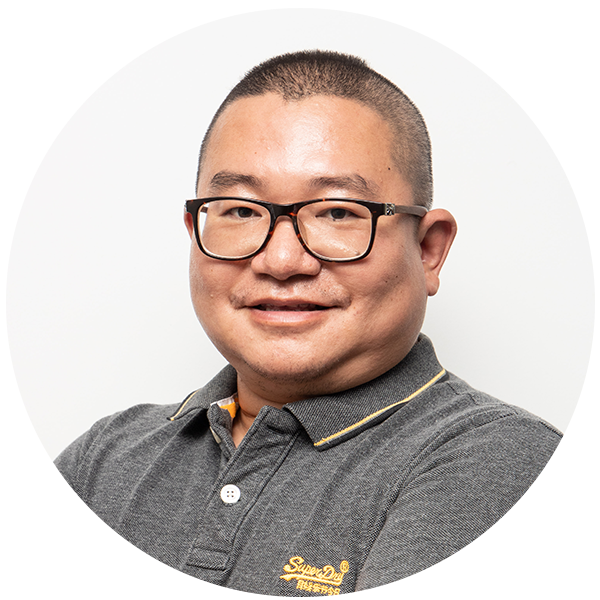
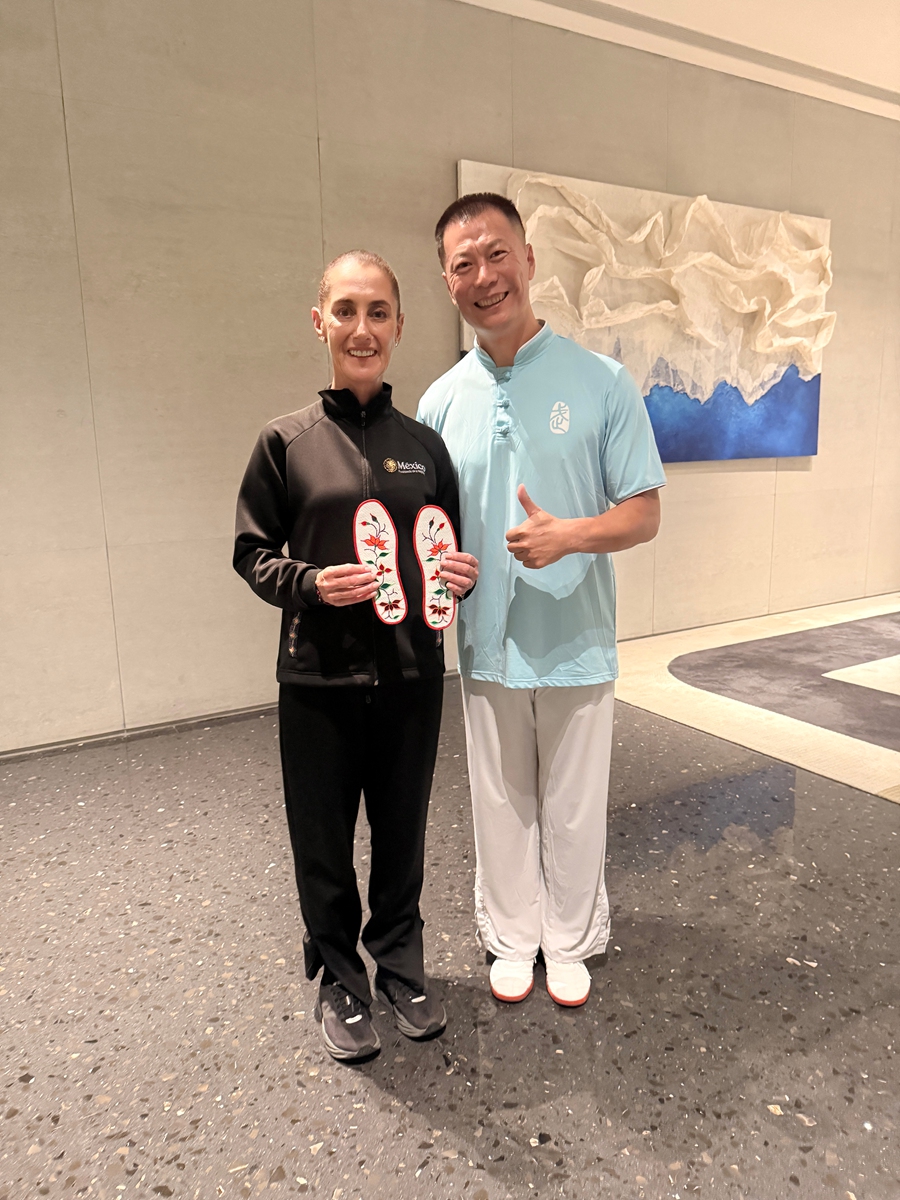
Mexican President Claudia Sheinbaum (left) and Niu Aijun Photo: Courtesy of Niu Aijun
The teacher who stepped into the improvised space was Niu Aijun, vice-dean of the School of Sports and Physical Education at Shenzhen University of Information Technology.
They practiced for about 90 minutes, from roughly 7 pm to 8:30 pm. Niu told the Global Times that when the impromptu lesson ended, Sheinbaum told him she had learned more in that single session than in the previous year of practicing on her own.
Niu could see at once that she already knew the sequence. Her posture was basically correct. Her problems were much more subtle. He noticed that when she raised her palms overhead, she would hold her breath. She also moved too quickly from one position to the next, reluctant to linger in the brief stillness the form demands.
"The hardest part of teaching a head of state is not the movements," Niu said. "It is knowing how much instruction to give." He demonstrated each section while facing her, then worked through the eight pieces one by one, offering only a single point of focus at a time — first the body, then the breath, and only later, a touch of the underlying idea.
For the opening posture, palms pressing upward as if supporting the sky, he asked her to feel the opposition: The roots of her hands lifting while her shoulders dropped, the crown of her head rising while her feet pressed into the floor. When her shoulders crept up during the "drawing the bow" movement, he did not correct her with a technical command. He simply asked her to push her hands farther outward and let her elbows loosen. Her shoulders then settled on their own. "Slow the movement," he told her, "and the breath will follow."
Niu had been contacted only the evening before, after Mexican representatives requested instruction. He prepared three possible lesson lengths — 90, 40, and 20 minutes — reviewed the 2018 official handbook, and stripped his notes to just the cues and corrections.
The gift he brought was small and personal. Before leaving home he packed a pair of cotton insoles his mother had hand-stitched and embroidered with traditional designs. "A guest should not arrive empty-handed," he explained. Sheinbaum accepted them with a smile, and the two posed for a photograph.
A practice crossing borders
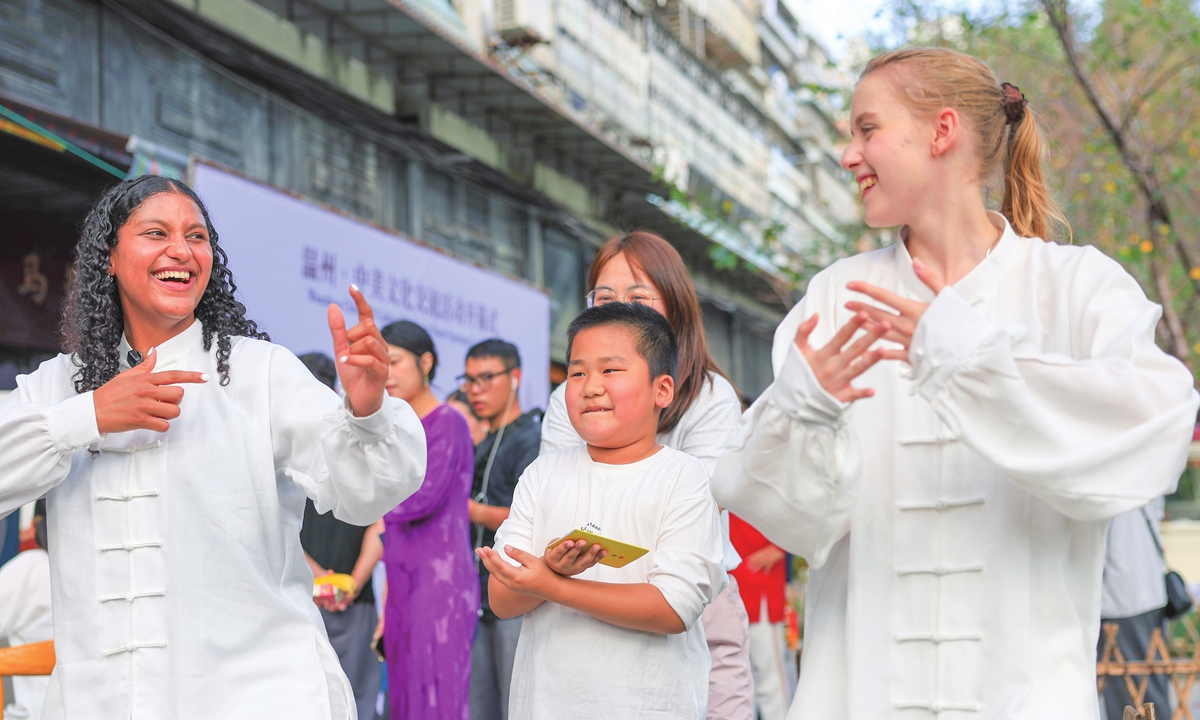
Children practice baduanjin with international students from Wenzhou-Kean University at Ma'anchi Park in Wenzhou, Zhejiang Province on October 18, 2026. Photo: VCG
Baduanjin has traveled by two different routes. One is organized, as overseas promotional efforts have been carried out by the national sports authority since the early 2000s.The other route depends on visibility rather than official programming. On September 29, the day before his opening match at the China Open, Serbian tennis player Novak Djokovic practiced baduanjin beside Kunming Lake at the Summer Palace in Beijing.
Sheinbaum said at an August 12 press conference that she had been introduced to fitness qigong by the head of Mexico's national sports commission and was still practicing it. According to reports, baduanjin has become part of her routine.
Niu sees that interest as part of a wider wave. On overseas social platforms, "becoming Chinese" has become a playful shorthand for taking up Chinese habits — baduanjin, tai chi, traditional ways of staying healthy — as an entry point into the culture. The overseas practitioners Niu named during his interview with the Global Times included Mexican president, Djokovic and Pamela Reif, the German fitness influencer who has also tried baduanjin and released a video about it.
He offers two reasons for the increased interest. Sports, in his view, can cross language barriers, while health is a shared human pursuit. But he said that is only half of it. The other half is the growing influence and appeal of Chinese culture, including the country's traditional culture. As China's international standing has grown, he said, its traditional sports have found wider acceptance abroad, carrying a distinct view of life and a form of exercise that people of almost any age can take up. In his account, that cultural pull runs alongside, but is not the same as, organized state-backed promotion.
Young learners
The same emphasis on immediate physical sensation helps explain why baduanjin has found an unexpectedly young audience. Many practitioners are office workers and students who spend long hours seated, shoulders locked, necks bent over screens. They describe the sequence as a low-barrier corrective: 12 minutes, no equipment, no need to chase intensity or speed.
On Chinese social platforms such as Red Note, short follow-along videos set to electronic music or pop remixes circulate under playful tags that treat the form as "electronic Chinese medicine."
What draws them is the tangible feedback. After a few careful repetitions the palms warm, the back softens, the legs begin to tremble slightly. "It's not that baduanjin is exhausting," one social-media post observed. "It's that the body has grown used to being broken down." The practice does not compete on sweat or metrics; it tests consistency and the ability to resist distraction. Search suggestions show phrases such as "after one month of baduanjin" and "changes after half a year," a sign that some young people are treating the slow forms as a practical daily reset rather than a pastime for the elderly.
But the same platforms that make the forms easy to find also strip them down. What circulates is mostly the shape of the movements, set to a beat and cut to a few minutes. The breathing, the ideas behind the postures, and the reason for that brief stillness tend to fall away in the sharing. It is the part Niu has spent years trying to hold in place.
RELATED ARTICLES