‘Even a short drama wouldn’t dare to script it’: Chinese netizens relish Jensen Huang’s 11-day return, mock US media hype
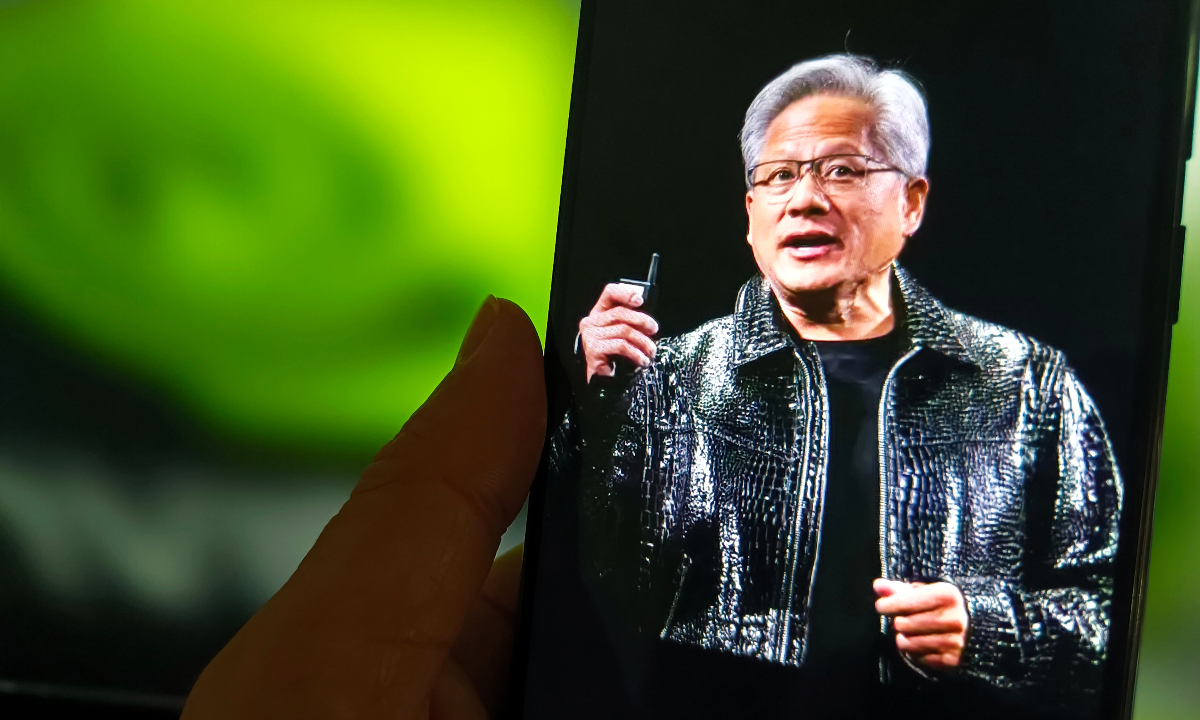
Jensen Huang. Photo: VCG
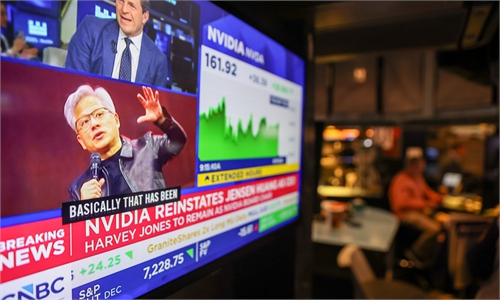
Nvidia founder Jensen Huang’s dramatic return as president, CEO, and board member – just 11 days after stepping down amid a personal scandal and China-related hype–has sparked widespread discussion on Chinese social media overnight, with Chinese netizens relishing the dramatic twist while offering sharp commentary on the US political and media ecosystem behind the saga.
On Tuesday morning, three of the top 10 trending topics on Sina Weibo, China’s X-like social media platform, were related to Jensen Huang. The hashtag “Jensen Huang says I made some very serious mistakes” topped the chart, followed by “reasons behind Jensen Huang’s reinstatement” at No. 6, and “the New York Times mocked after Jensen Huang’s return” at No. 8.
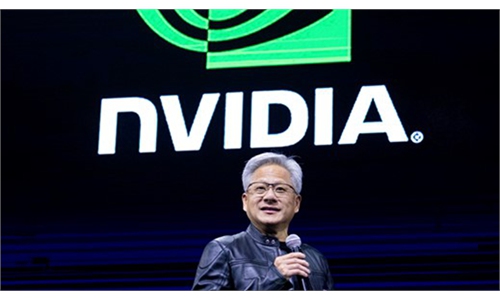
A number of video clips showing Huang returning to Nvidia’s headquarters as employees cheered, chanted “Jensen” and embraced him went viral across Chinese social media platforms. Some of the clips had garnered over 8.3 million views as of press time. Commenting on the warm reception, some netizens noted that it showed Huang “still enjoys strong popular support, with employees firmly behind him.”
The sheer drama of the turnaround was one of the first things to capture online attention.
“It’s an absolutely historic scene –one that even a short drama wouldn’t dare to script: Hounded by schemers, I’m forced to step down as CEO of the top company I founded, sending global stocks into a tailspin. The US president personally calls for my reinstatement, while the world’s richest man goes all out to back me. So I make a triumphant comeback, global markets soar, and the whole world celebrates…” Niutanqin, a popular WeChat public account covering international affairs, said in a latest post on Tuesday.
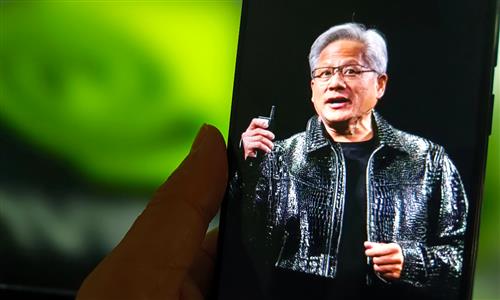
In the comment sections of the viral videos, sharp-eyed Chinese netizens quickly zeroed in on Huang’s wardrobe change. Known for his trademark black leather jacket, Huang returned to the office on Monday wearing an ordinary jacket instead.
“Not wearing the leather jacket, switching to a regular jacket – doesn’t dare to be rebellious anymore,” one netizen joked on Weibo, garnering over 1,300 likes. Another quipped about the 11-day absence: “Big companies are just different. You have to resign just to take a vacation,” mocking how absurdly short the ouster turned out to be – making a high-profile corporate resignation look little more than a brief getaway.
The wild market swings also prompted questions from netizens. One commenter suspected the whole episode was “purely meant to cash in on the stock market.”
Meanwhile, some US mainstream media outlets – such as the New York Times, which had extensively amplified the controversy–became targets of biting mockery from Chinese netizens. Under related hashtags on Weibo, one user asked bluntly, “Has the New York Times become the biggest clown?”Another quipped, “As long as they don’t feel embarrassed, it’s all fine.”
Beneath the jokes and memes, some Chinese netizens saw the 11-day episode as a reflection of agrowing distortion in the US public opinion environment.
From the knee-jerk hype that linked a messy personal controversy to baseless allegations of “Chinese infiltration” and the “China threat” narrative to the abrupt reversal aftermarket turbulence hit, the farce showed how readily certain US politicians and media outlets weaponize anti-China rhetoric to sow discord and drag global tech giants into partisan witch hunts.
As long as US political polarization and the “China threat” narrative continue to hijack technology and market rules, similar farces are likely to keep playing out, ultimately eroding the credibility of the US business environment and global investor confidence, some pointed out.
Global Times
RELATED ARTICLES