Jensen Huang is back at Nvidia. Will Taiwan’s Liberty Times still call him ‘Daddy’?
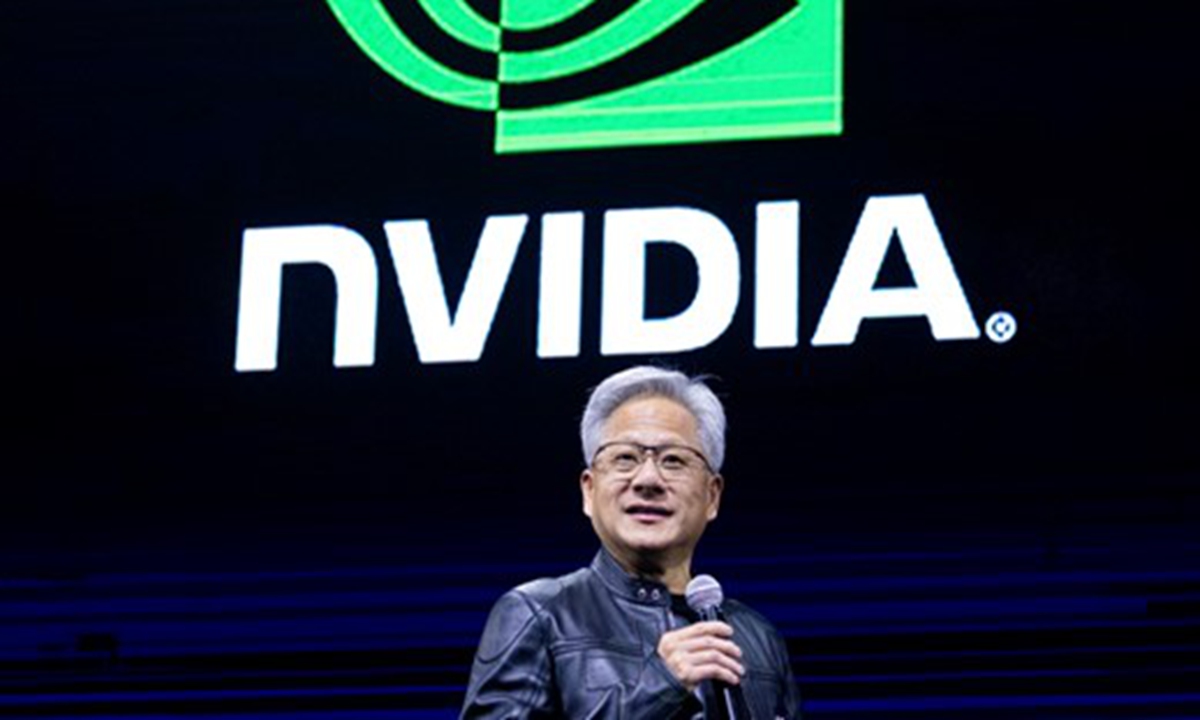
Jensen Huang Photo: VCG
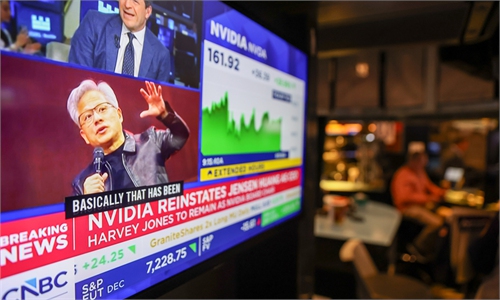
Jensen Huang's dramatic reinstatement at Nvidia, together with the US government's assessment that his return poses no "national security risk," has turned the comment sections of media outlets such as The New York Times into a spectacle of public humiliation. Yet compared with US media outlets that eagerly engage in witch hunts and hype up the "China threat," there is another group whose opportunism is even more glaring and whose abrupt change of tune is particularly hard to stomach.
That group is pro-independence media on the island of Taiwan, represented by the Liberty Times. Before the Jensen Huang incident, the Liberty Times, a staunch advocate of currying favor with the US, could hardly hide its adulation for Nvidia, a leading US chipmaker. Its fawning coverage of Huang knew few bounds. During Huang's visit to Taiwan, it hailed him with cries of "Long live our emperor!" and elevated him to the status of "godfather of Taiwan's AI industry" and "pride of Taiwan," while repeatedly touting the benefits of the "Team Taiwan" supply chain. Even when Nvidia's business performance came under pressure earlier this year, the outlet took to social media to plead with him: "Daddy Huang, you can't let us down!" It repeatedly referred to him as "Daddy," "Daddy Huang" and "godfather," lavishing on him more "affection" than even Huang's own son could muster.
But as soon as the Jensen Huang affair broke, the Liberty Times changed its tune, becoming one of the most enthusiastic voices amplifying claims of alleged "Chinese espionage infiltration in the US." Its headlines repeatedly played up terms such as "Chinese spy" and "female Chinese spy," while declaring that Huang was "finished" and "owed the world an explanation." It even said that "in the post-Jensen Huang era, Taiwan cannot rely on just one tech figure to represent it." The irony is striking: Just 11 days after Huang resigned, Nvidia reinstated him, and the Liberty Times promptly resumed its hero worship, describing his return as a "stunning comeback" and claiming that he had "almost been poached by China" and that Nvidia had "fortunately come to its senses."
These repeated about-faces reveal Taiwan pro-independence media's shameless fawning over and kowtowing to the US. They also expose the opportunistic nature of "Taiwan independence" forces, which are driven by political self-interest. What they need is the narrative that "the world cannot function without Taiwan's chips," which they can use to seek political leverage and security commitments from the US. As long as Huang served that narrative, they were more than happy to call him "Daddy." But the moment he appeared to pose a threat to such narratives, whether real or imagined, they were quick to cast him aside and seize on the story of "Chinese infiltration" to keep the narratives alive.
Behind this nauseating behavior lies an almost pathological sense of dependence. Taiwan's technological achievements are packaged as political assets under the banner of "aligning with the US and confronting China," ready to be offered to Washington as a token of allegiance. At the end of the day, Jensen Huang is merely a convenient prop for those Taiwan media outlets. As long as he can be used to prove that the island of Taiwan must "bind itself ever more tightly to the US," they seem not to care how many times they contradict themselves or undermine their own credibility.
Now that Huang is back at Nvidia, will the Liberty Times still call him "Daddy"?
RELATED ARTICLES