The world-famous Boracay island in the Central Philippines Photo: VCG
The Philippines has extended visa-free entry for Chinese nationals for another year, in a move aimed at attracting more Chinese tourists and business visitors as Manila seeks to boost its economy. Yet its efforts to deepen economic ties with China contrast with its moves on security and other China-related issues, raising questions about its willingness to improve bilateral relations.Chinese experts urged Manila to make concrete efforts to manage differences, ease maritime tensions and create a more favorable environment for bilateral cooperation.
The 14-day visa-free entry privilege will remain in effect from January 16, 2027, to January 15, 2028, in line with Philippine President Ferdinand Romualdez Marcos Jr.'s directive to boost international tourist arrivals and investment, Philippine news website Inquirer.net reported on Tuesday.
Under the arrangement, Chinese nationals may enter the Philippines without a visa for up to 14 days, exclusively for tourism or business purposes, the report said.
Chinese arrivals have increased significantly since the visa-free policy was introduced in January. From January to August, Chinese tourist arrivals totaled 303,567, up 93.45 percent from 156,926 in the same period of 2025. This made China the country's fourth-largest source market for tourists, after the US, South Korea and Japan, according to Inquirer.net.
Ji Qing, a Chinese national, told the Global Times on Tuesday that she was preparing for her trip to the Philippines this Friday, with the visa-free policy playing an important role in her decision.
She had previously wondered whether travel opportunities would become more limited if the policy expired without renewal, making future visits less convenient. The extension would make travel to the Philippines more convenient and give more Chinese tourists the confidence to include the country in their travel plans, she said.
China was once one of the Philippines' largest sources of foreign tourists during the administration of former president Rodrigo Duterte, but arrivals dropped sharply amid deteriorating bilateral relations. Against the backdrop of domestic economic pressures, Manila is now seeking to revive this pivotal market, recognizing the economic benefits Chinese visitors can bring to local businesses, Dai Fan, director of the Center for Philippine Studies at Jinan University, told the Global Times on Tuesday.
The Philippines' Department of Tourism also said in a statement on Monday that arrivals from China had increased by 70.18 percent year-on-year, reflecting renewed visitor interest and growing opportunities to attract visitors from this important source market.
Beyond tourism, the Philippines is also seeking to attract Chinese investment in sectors critical to its economic development, particularly renewable energy.
During his recent visit to China for the 33rd Asia-Pacific Economic Cooperation (APEC) Economic Leaders' Meeting in Shenzhen, Marcos signed an agreement with Ming Yang, a Chinese wind turbine manufacturer, for the construction of wind turbines in the Philippines designed to withstand super typhoons, Manila Bulletin reported.
The Philippines also secured an initial $87 million investment commitment from Chinese bearings manufacturer C&U Group to develop a 20-hectare facility in Alitagtag, Batangas, Inquirer reported.
Dai said the Philippines' reliance on imported oil and ambitious clean energy targets make Chinese investment and expertise particularly valuable, as China has the technological capabilities and industrial capacity to support the country's offshore wind development.
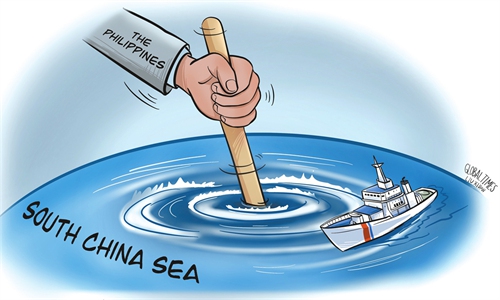
However, Manila's efforts to attract Chinese investment have contrasted with its approach to China-related issues in the maritime, security and education fields. The Philippines and Australia signed a new defense cooperation arrangement on November 15 to deepen military ties. Philippine Defense Secretary Gilberto Teodoro claimed the deal would bolster the Philippines' "credible deterrence posture," including in the South China Sea, Reuters reported.
In August, the Philippine Department of National Defense claimed it "firmly rejects" China's comments questioning its security oversight of foreign-linked cultural and academic exchange programs. The department also raised concerns over what it called the risks posed by foreign legal frameworks, making allegations related to China's ethnic unity policies.
Dai pointed to a growing tendency among certain Philippine political forces to view China-related issues through a national security lens, extending such concerns beyond maritime and defense matters to education and academic exchanges. By exaggerating the so-called "China threat" narrative and politicizing normal exchanges, such forces have undermined mutual trust and created obstacles to practical cooperation between the two countries, he added.
While Manila seeks to benefit from Chinese tourists and investment, improving bilateral ties will require more than visa facilitation and investment promotion, said Dai. "It will also require concrete efforts to manage differences, ease maritime tensions and create a more favorable environment for bilateral cooperation."
RELATED ARTICLES