Dog peeking through hole at thousand-year-old temple wins hearts online, fridge magnets featuring it often sell out
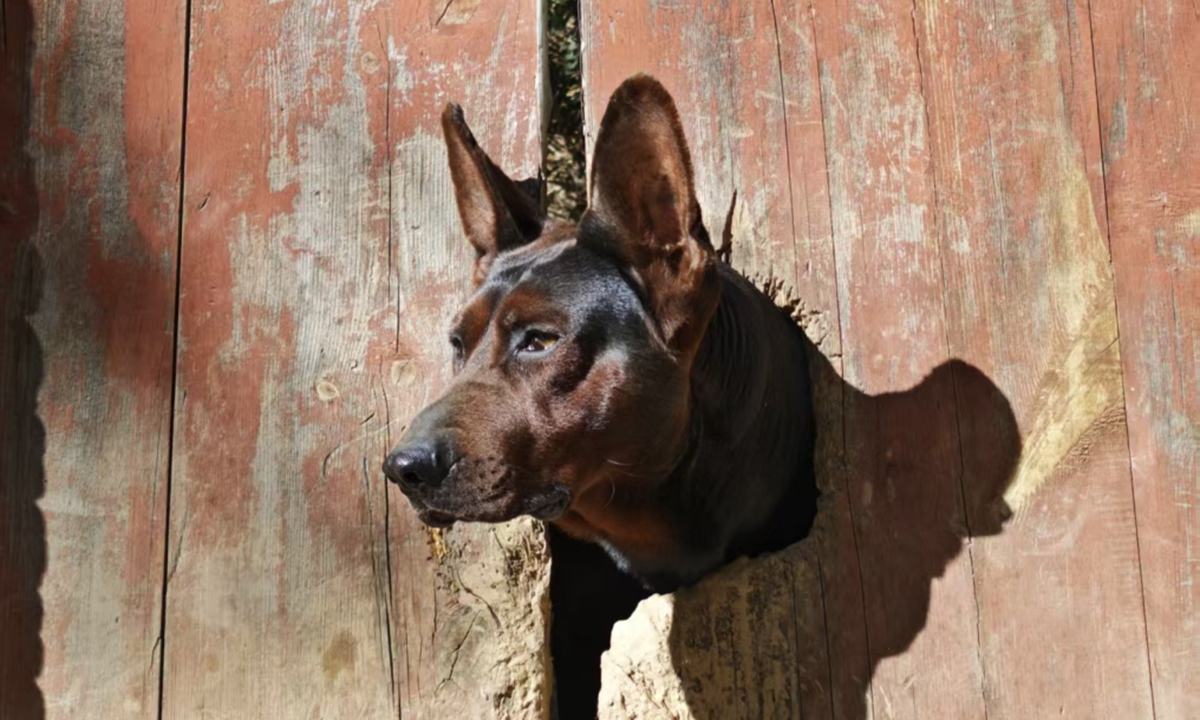
A dog named Erliang in Foguang Temple. Photo: thepaper.cn
At a thousand-year-old temple in North China's Shanxi Province, visitors can admire ancient architecture - and catch a glimpse of a furry local celebrity who loves poking its head through a hole in a worn-out red gate just steps from the main hall.The hole in the thick wooden gate of Foguang Temple is the dog's own handiwork, chewed out by the furry resident. Now, the dog, named Erliang, regularly pokes its head through the opening to greet visitors coming and going, turning the quirky sight into a recent online sensation, according to thepaper.cn.
The story dates back four or five years, when a group of puppies was brought to Chunyang Palace in Shanxi. One of them was later taken to Foguang Temple and named Erliang, the media reported.
Living in a courtyard beside the temple's most important historic building, the East Hall, Erliang has a very official job - patrolling the grounds at night, guarding the temple and protecting its ancient architecture.
A cultural and creative designer has also taken notice of Erliang, turning the scene into a fridge magnet dubbed "the day one gets a break." A vendor selling souvenirs outside the temple said the magnet has become hugely popular and often sells out.
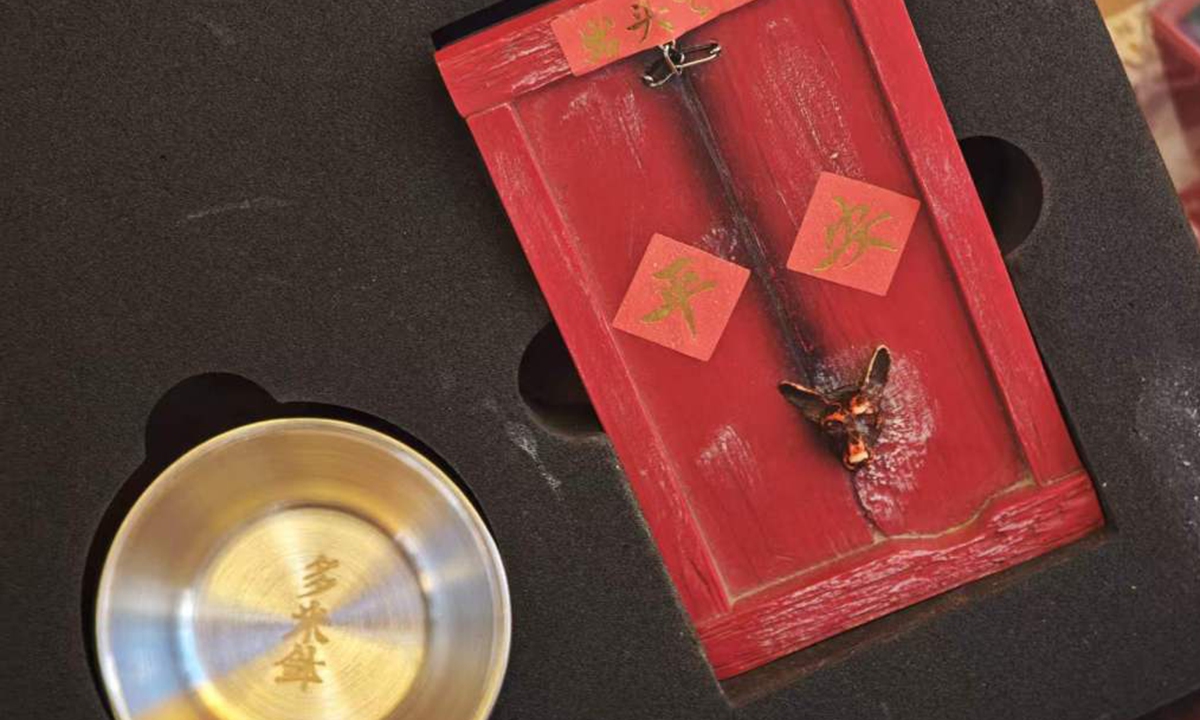
Fridge magnets featuring Erliang Photo: thepaper.cn
Despite being an architectural treasure, Foguang Temple has still found an unexpected internet star in Erliang. Some netizens shared photos of the dog poking its head out on social media, calling it adorable, while others said they would love to get a fridge magnet featuring the furry guardian.
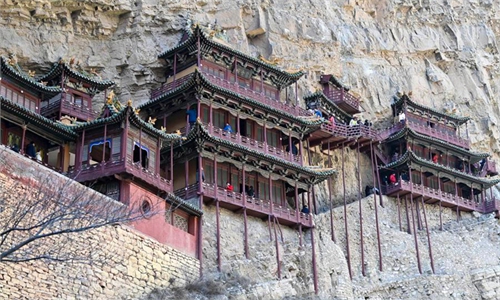
Among China's surviving rare Tang Dynasty (618-907) timber-framed buildings, East Hall of Foguang Temple is the largest and best-preserved, according to the Xinhua News Agency. In 1937, renowned Chinese architects Liang Sicheng and Lin Huiyin traveled to Mount Wutai in Shanxi in search of the temple.
The discovery not only led Liang to hail Foguang Temple as "China's No. 1 national treasure," but also directly disproved claims by Japanese scholars that no timber structures from the Tang Dynasty or earlier survived in China.
Lu Yi, director of Shanxi's research institute for the conservation of ancient architecture, painted sculptures and murals, said that Foguang Temple keeps dogs, which help patrol the premises at night and deter unauthorized visitors, forming part of the temple's canine-based security system.
"Ancient architecture is different from modern museums. Protecting it in a way that is closer to its original living environment can actually be more effective," the director said.
Lu said that with human security, technological safeguards and canine patrols working together, Foguang Temple, which appears as quaint and untouched as ever, is in fact under "tight security" behind the scenes as it balances public access with heritage preservation.
Global Times
RELATED ARTICLES