SCI-TECH / TECH
China launches AI research platform to help scientists investigate weather and climate
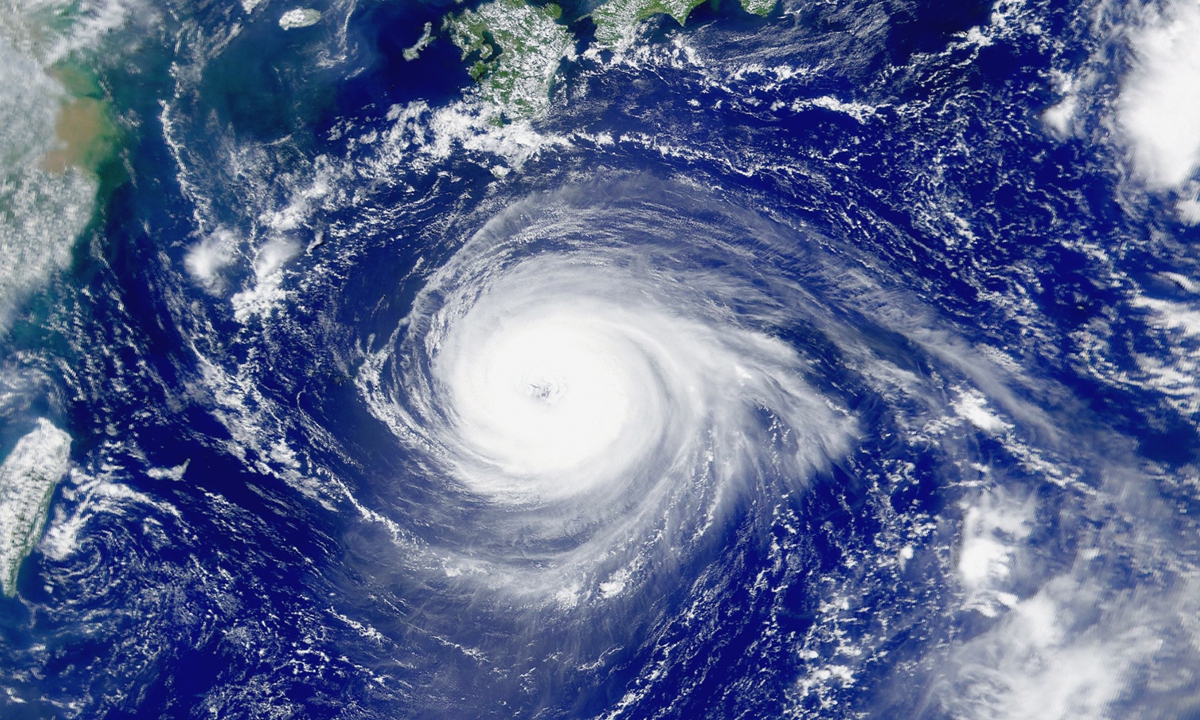
Photo: VCG
China has launched an artificial intelligence (AI) platform designed to help scientists conduct research into weather and the broader Earth system. The platform can autonomously plan research steps, access scientific data, literature and tools, and assist with experiments and analysis, the Beijing-based Science and Technology Daily reported.The Earth System Intelligence Research Platform, named ZHU·GE, was jointly developed by the China Meteorological Administration (CMA) and the Shanghai Artificial Intelligence Laboratory. It was officially launched at the 2026 Xiong'an International Symposium on Meteorological Artificial Intelligence in Xiong'an, North China's Hebei Province on Monday.
The name ZHU·GE pays homage to Zhuge Liang, a renowned strategist of the Three Kingdoms period (220-280) celebrated in Chinese culture for his mastery of astronomy and geography.
Built on the foundation of the Tianqing meteorological big data cloud platform and the research agent Duanyan-Lingtai, it focuses on integrating large-scale meteorological data with atmospheric science, adapting research frameworks and conducting application trials.
The platform currently contains about 10 petabytes of public scientific data, an initial 1 petabyte of data authorized by the China Meteorological Administration, and approximately 2 million academic records. It also incorporates more than 5,000 coding tools and over 10 general-purpose scientific research skills, with additional meteorological data being added.
Users can submit research questions using natural languages. The platform then clarifies research objectives and parameters, including geographical scope, time frame and evaluation criteria, before developing a research plan and identifying the resources needed.
Different experimental tasks can be carried out in parallel or sequentially, depending on the results of previous steps. If data is missing or programming errors occur, the platform can check for possible causes, adjust its approach and repeat the verification process. If findings do not support the original hypothesis, it retains the results and uses them to help researchers revise or abandon the hypothesis. It then generates charts, reports and records of the research process, allowing researchers to retrace and verify each step.
Ling Fenghua, head of the Astronomy and Earth Science Center at the Shanghai Artificial Intelligence Laboratory, said the platform supports research into scientific mechanisms, the development of forecasting methods, and the construction and optimization of numerical and AI models.
According to Ling, its potential applications range from helping local forecasters examine weather patterns and improve forecasting methods to assisting researchers in investigating the mechanisms behind extreme weather events and identifying biases in numerical weather prediction models.
It can also support the development, training and evaluation of AI-based global and regional weather forecasting models, while enabling interdisciplinary research in Earth system science at universities and research institutes.
The team has adopted a collaborative approach in which meteorological professionals identify practical problems, research and technology teams work together to address them, and experts evaluate the results.
Meteorological specialists and researchers contribute real-world questions and domain knowledge, and assess the research findings. Meanwhile, the AI team is responsible for developing the agent's research framework, task scheduling and feedback mechanisms, while the Duanyan product and development team identifies user needs and workflows to facilitate the platform's practical application. The data and platform team handles data integration, computing infrastructure and security management.
The team is continuing to improve the platform in response to research needs, optimizing data access and coordination among multiple AI agents. It is also working to strengthen the platform's analysis of weather maps, satellite imagery, radar observations and scientific charts, while expanding its capabilities in research into scientific mechanisms, numerical simulation and AI modeling.
The team also plans to establish an online research community for Earth system science and related fields to support the development and sharing of high-quality research. Additionally, researchers will be able to publish findings produced with the platform and invite experts in relevant fields to review their work.
RELATED ARTICLES