China's plateau border troops shift from stockpiling winter supplies to dynamic delivery
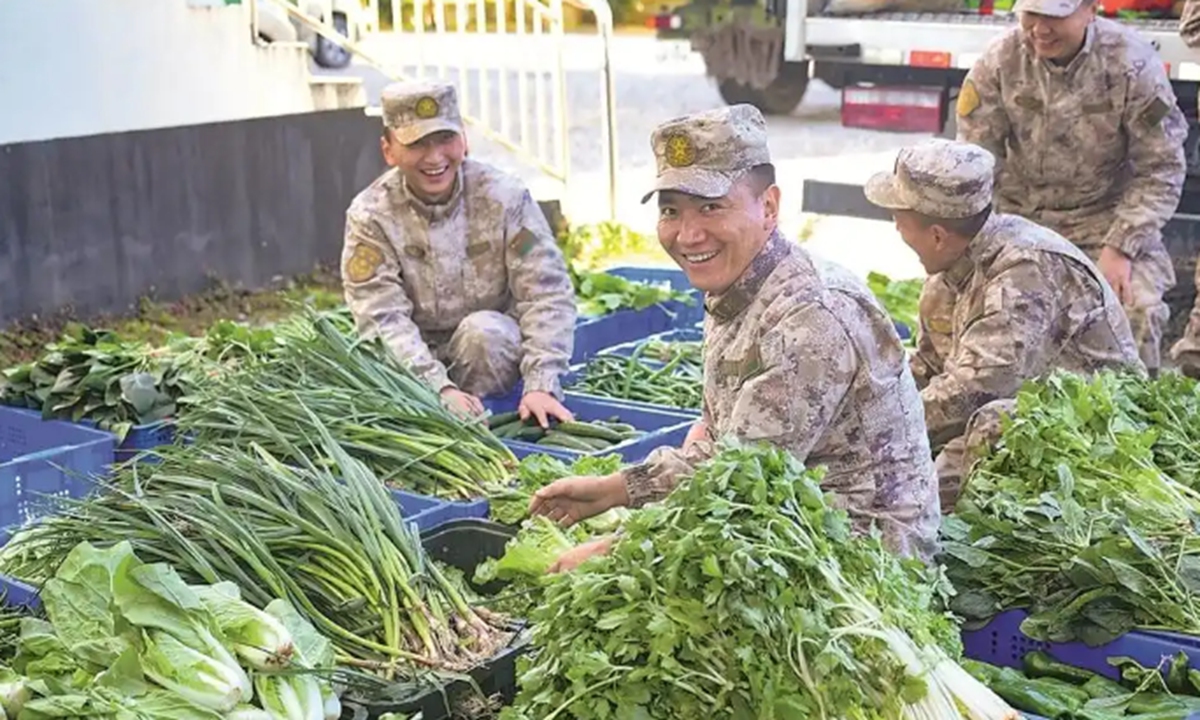
Photo: PLA Daily
China's plateau border troops are moving away from the traditional practice of stockpiling large quantities of winter supplies toward a more flexible system based on on-demand procurement and cold-chain delivery, as improved infrastructure and supply-chain services reshape logistical support for troops stationed in remote, high-altitude areas, the PLA Daily reported on Tuesday.Recently, Wu Wengui, a quartermaster at a border defense company of the Chinese PLA Army, placed an order for winter supplies through an online platform dedicated to the regional procurement of food and other daily necessities.
"Suppliers now handle centralized procurement and quality inspections, before delivering the supplies directly to border outposts through cold-chain transportation. Some items go straight to the kitchens, while the rest are temporarily stored in vegetable cellars," Wu told the PLA Daily.
"Winter preparations have become much easier and faster, with supplies purchased according to demand through a single online order," Wu said.
In the past, winter preparations for troops stationed on the plateau largely relied on stockpiling physical supplies before the onset of winter. Due to harsh weather and difficult road conditions, soldiers had to secure sufficient quantities of fuel, coal, rice, flour, cooking oil and other food supplies in advance to last through the winter.
At the time, the amount of supplies stored in warehouses and the capacity of vegetable cellars were important measures of how well units had prepared for the cold season.
That approach is now gradually giving way to a more dynamic model. As border road infrastructure continues to improve, cold-chain delivery vehicles can reach field locations directly, allowing supplies to be replenished as needed rather than stored in large quantities ahead of winter.
As a result, many high-altitude outposts are no longer as constrained by traditional seasonal road closures. Shorter transportation times have also reduced food spoilage and losses, while fresh ingredients are increasingly appearing on delivery lists.
With improved road conditions, the prolonged periods of road closures caused by heavy snowfall have largely become a thing of the past. The main challenge now is how to deal with delivery delays caused by temporary snow-related road closures, according to the report.
When roads are open, refrigerated trucks deliver supplies to the outposts weekly. When roads are blocked, fresh leafy vegetables grown in greenhouses, together with emergency reserves kept in storage, help ensure that the quality of meals for troops remains unaffected.
Alongside improvements in transportation, the supply network has also been expanded and made more resilient. Models including centralized regional procurement of food supplies, supplier-managed storage and contract-based reserves are being introduced more widely, enabling troops to place orders online while suppliers arrange the necessary goods and deliver them directly through cold-chain networks.
The shift means that instead of individual units having to store everything themselves, more resources can be kept available across the broader supply system and mobilized when needed.
While the volume of supplies kept in company vegetable cellars has declined, the range of resources accessible through the supply chain has expanded. The change has not only eased the burden of winter preparations but also improved the freshness and variety of meals available to troops.
An official from the Central Military Commission's Logistic Support Department told the Daily that efforts will continue to improve procurement and reserve mechanisms, integrating winter preparations, traditionally treated as a seasonal task, into the regular logistic support system.
RELATED ARTICLES