Shenzhou-24 to carry first foreign astronaut to China's space station
Mission to carry out 90 scientific experiments and technological tests
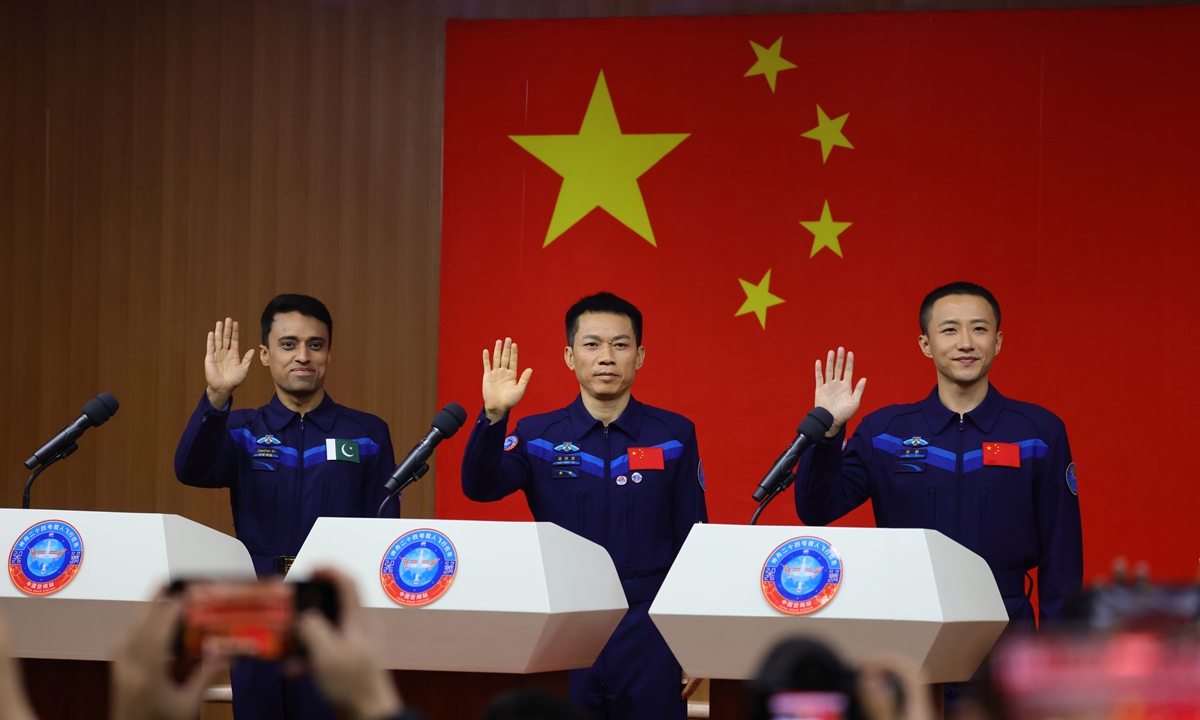
Chinese astronauts Tang Hongbo (center), Wu Yi (right) and Pakistani astronaut Muhammad Zeeshan Ali meet the press at the Jiuquan Satellite Launch Center in Northwest China, on November 24, 2026. Photo: Fan Wei/Global Times
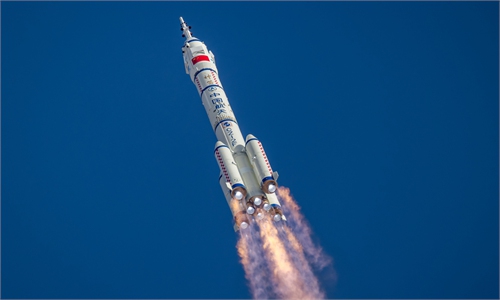
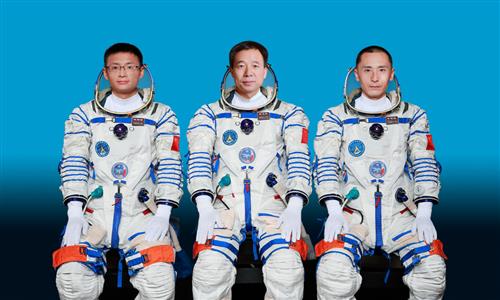
China is set to launch the Shenzhou-24 crewed spacecraft at 8:18 am on Wednesday from the Jiuquan Satellite Launch Center in Northwest China, carrying Chinese astronauts Tang Hongbo, Wu Yi and Pakistani astronaut Mohammad Zeeshan Ali. Ali will become the first foreign astronaut to visit the China Space Station, marking the first joint flight involving Chinese and a foreign astronaut in the history of China's manned space program.
The mission highlights the China Space Station's role as a global public good, offering countries new opportunities to participate in human spaceflight and space-based research. The participation of a foreign astronaut reflects a more open and inclusive approach to space exploration, bringing the space aspirations of more countries within reach, Chinese observers said.
Historic launch
At a press conference on Tuesday, Zhang Jingbo, spokesperson for the China Manned Space Agency (CMSA), announced that the Shenzhou-24 crew would be led by Tang, with Wu and Ali serving as flight engineer and payload specialist, respectively. Tang is set to make his third visit to the China Space Station, while Wu will undertake his first spaceflight.
According to the plan, after entering orbit, the Shenzhou-24 spacecraft will prioritize a 3.5-hour autonomous rapid rendezvous and docking strategy, connecting to the forward port of the Tianhe core module to form a three-spacecraft, three-module combination, according to the CMSA.
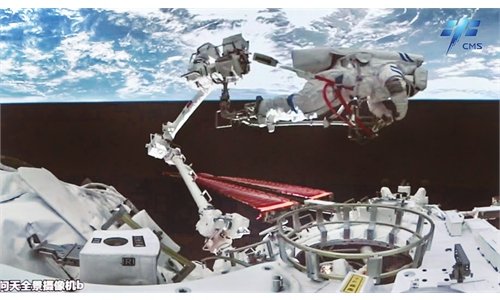
The Shenzhou-24 mission will complete an in-orbit crew rotation with the Shenzhou-23 mission crew, maintain the space station's routine operations and conduct scientific research and technology tests. A total of 90 scientific experiments and technological tests are planned during the Shenzhou-24 mission, covering fields including space life science, space materials science, microgravity fluid physics and combustion science, fundamental physics, space medicine, and new space technologies, according to Zhang.
Shenzhou-23 crew member Zhu Yangzhu will remain aboard the China Space Station for a one-year in-orbit residency trial, marking the longest-duration in-orbit stay trial for a Chinese taikonaut to date.
Zhu, a veteran of the Shenzhou-16 mission, blasted off again on May 24, 2026 as commander of the Shenzhou-23 crew. His extended stay covering the Shenzhou-24 mission will make him China's first astronaut to spend a full year in orbit, witnessing the four seasons in a special way aboard Tiangong space station.
According to Zhang, the trial presents new challenges to the current in-orbit support system safeguarding astronauts' health, work and life. It will also provide a valuable chance for research and technical validation to better grasp the scientific challenges and supporting technologies for long-term healthy human survival in space.
Joint flight
Pakistani astronaut Mohammad Zeeshan Ali is serving as a payload specialist on a short-term joint flight mission. During his stay aboard the station, he will take part in routine crew duties and China-Pakistan joint space science experiments, primarily on installing experimental samples and units, and conducting the planned in-orbit experiments. After completing his mission, he will return to Earth aboard the Shenzhou-23 spacecraft alongside two Chinese astronauts.
Pakistan is China's all-weather strategic cooperative partner. The participation of a Pakistani astronaut in this China Space Station mission marks the first joint flight involving Chinese and foreign astronauts in the history of China's manned space program, and the first time the station hosts a foreign astronaut. It is another landmark achievement in bilateral cooperation as the two countries celebrate the 75th anniversary of the establishment of diplomatic ties, and an important reflection of the traditional friendship between the two countries, Zhang said at the press conference.
At a media meeting also on Tuesday following the press conference, Ali said that seven months ago, he stepped into the China Astronaut Research and Training Center, where he mastered flight skills and studied Chinese language.
Yu Guang, an aerospace technology expert, told the Global Times that allowing foreign astronaut to enter the Tiangong space station as payload specialist represents an important step in China's efforts to build itself into a leading space power through openness.
"With the arrival of a Pakistani astronaut at the China Space Station, China is providing countries around the world, particularly those in the Global South, with a new pathway to access space and realize their space dreams," he said.
Pang Zhihao, a national chief science communication expert on space exploration technology, told the Global Times that the first Chinese-foreign joint crewed flight marks a new stage in China's manned space international cooperation, with the Tiangong space station developing into an open space science experiment platform for scientists worldwide.
Pakistani media Dawn reported on Tuesday that Planning Minister Ahsan Iqbal has described the joint mission as reflecting "the trust and iron brotherhood between Pakistan and China," while Information Minister Attaullah Tarar said in an X post that a Pakistani astronaut going into space was a source of joy and pride for the entire nation.
For Pakistan, the gains extend well beyond several days in orbit. The mission offers an opportunity to obtain practical experience in human spaceflight, scientific payload operations and astronaut training, all contributing to its future space ambitions, said a Xinhua commentary.
The exploration of the vast universe and peaceful use of outer space are humanity's shared pursuit and bear on the welfare of all peoples. China advocates the peaceful use of outer space, and engages in active international cooperation to share its continuous advances in space science and technology with the world, the commentary said.
Wang Yiwei, a professor at the School of International Studies at the Renmin University of China, told the Global Times on Tuesday that the arrival of a foreign astronaut demonstrates the China Space Station's role as a global public good. China's space program, he said, is not only advancing its own achievements but also enabling partners that share a common future to pursue their space dreams.
Wang added that the growing diversity of China's astronaut corps reflects a more open, inclusive and transparent approach to space exploration, breaking away from a single professional background. He said it imparts broader meaning to the vision of a community with a shared future for humanity.
For Ali, the significance of this historic cooperation goes far beyond the mission itself. "This mission is not an end point; it is a launch pad," he said at the meeting with the media.
RELATED ARTICLES