China successfully launches Shenzhou-24 crewed spaceship with Pakistani astronaut as first foreign guest
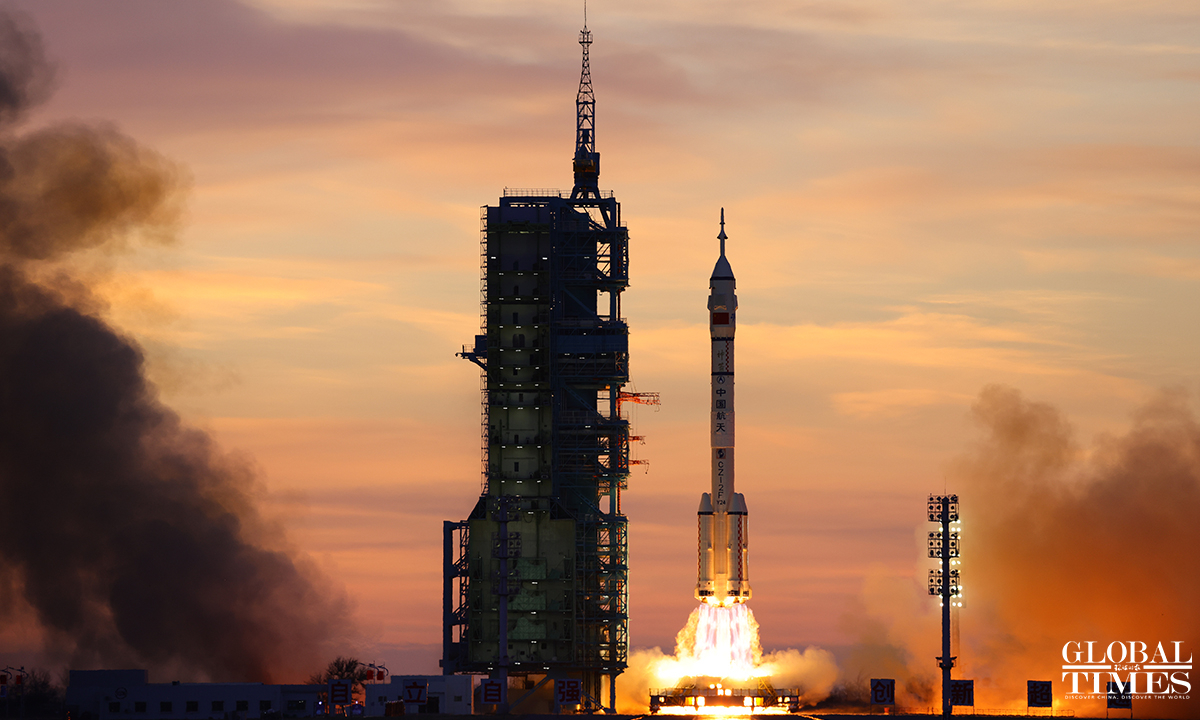
The Shenzhou-24 crewed spacecraft carried by the Long March-2F Y24 carrier rocket, lifts off from the Jiuquan Satellite Launch Center in Northwest China's Gobi Desert on November 25, 2026. Photo: Fan Wei/Global Times
The Shenzhou-24 crewed spacecraft carried by the Long March-2F Y24 carrier rocket lifted off at 8:18 am from the Jiuquan Satellite Launch Center in Northwest China's Gobi Desert on Wednesday, marking China's first crewed spaceflight involving a foreign astronaut.
About 10 minutes later, the spacecraft successfully separated from the rocket and entered its preset orbit. The astronauts were in good condition, marking the successful completion of the launch mission.
During the mission, the crew will carry out a range of experiments and applications in fields including space life sciences and human research, microgravity physics, and new space technologies. These include multiple scientific experiment projects conducted in cooperation with international partners.
To date, a total of 31 Chinese astronauts and one foreign astronaut have made 50 spaceflight trips. The mission also marks the 680th flight of the Long March series of carrier rockets and the 24th flight of the Shenzhou spaceship.
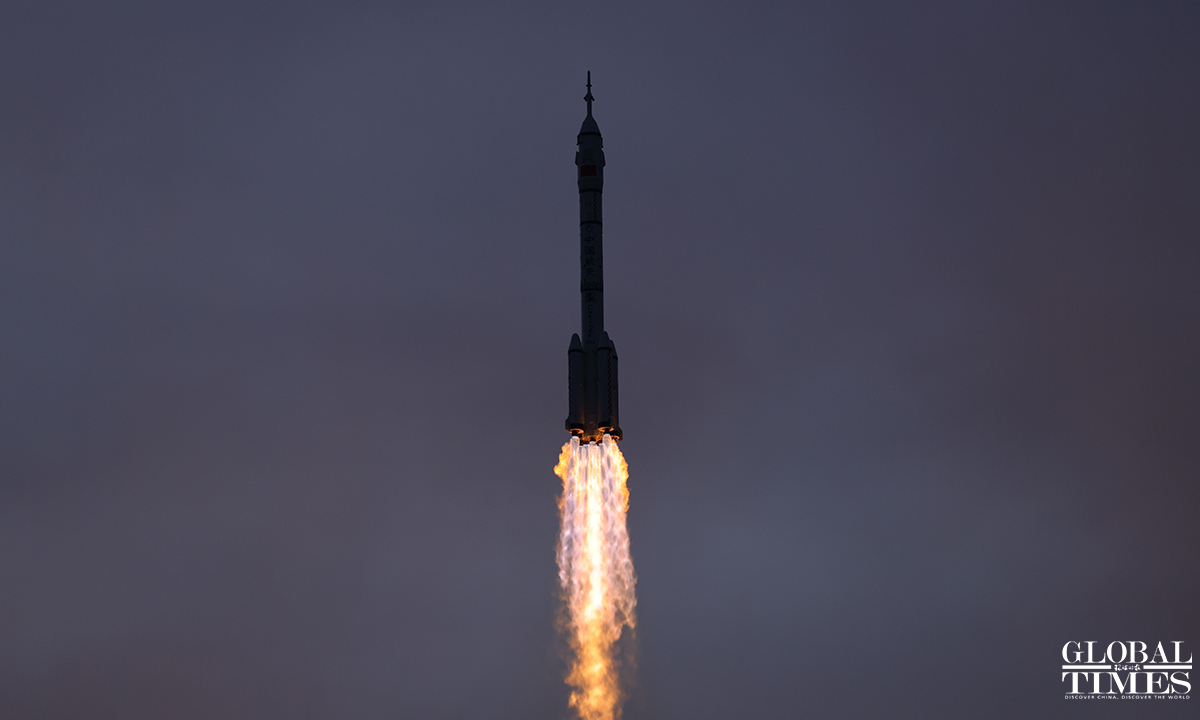
The Shenzhou-24 crewed spacecraft carried by the Long March-2F Y24 carrier rocket, lifts off from the Jiuquan Satellite Launch Center in Northwest China's Gobi Desert on November 25, 2026. Photo: Fan Wei/Global Times
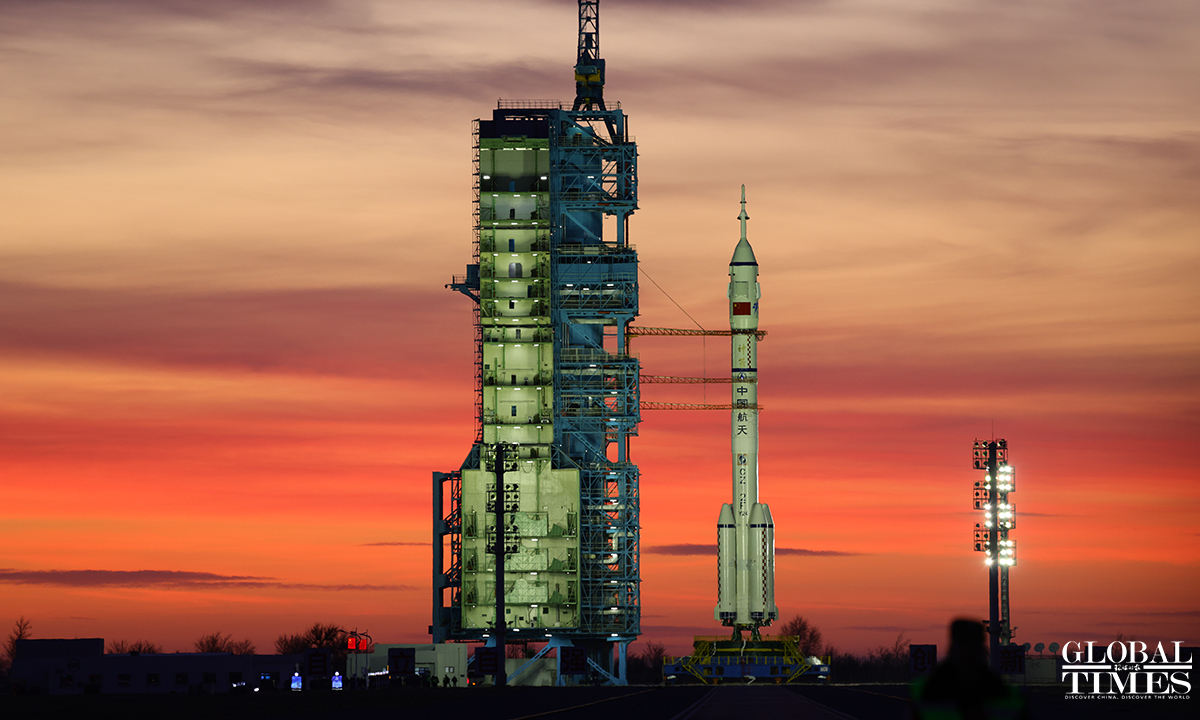
Shenzhou-24 crewed spacecraft ready for launch Photo: Fan Wei /Global Times
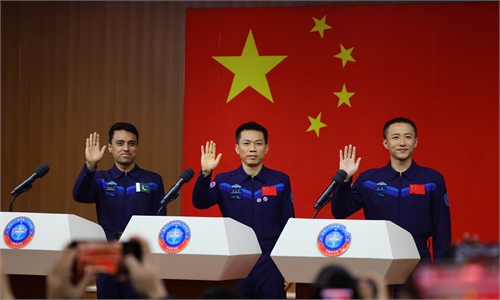
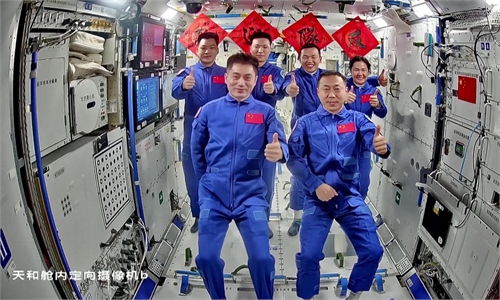
At a press conference on Tuesday, Zhang Jingbo, spokesperson for the China Manned Space Agency (CMSA), announced that the Shenzhou-24 crew would be led by mission commander Tang Hongbo, Chinese flight engineer Wu Yi and Pakistani payload specialist Mohammad Zeeshan Ali. Tang is set to make his third visit to the China Space Station, while Wu will undertake his first spaceflight.
Pakistani astronaut Mohammad Zeeshan Ali is going to be the first foreign astronaut to visit China Space Station.
After entering orbit, the Shenzhou-24 spacecraft is scheduled to use a 3.5-hour autonomous rapid rendezvous and docking strategy, connecting to the forward port of the Tianhe core module to form a three-spacecraft, three-module combination, according to the CMSA.
This was the 8th crewed launch mission since the implementation of the China Space Station application and development program, and the 41st flight mission of China's manned space program. The Long March-2F carrier rocket maintained its stable condition for the high-profile mission.
"Although the overall mission plan remained largely unchanged, the rocket team completed 12 technical improvements to further strengthen safety for the flight," Li Wenqing, a technical expert with China Aerospace Science and Technology Corporation (CASC), told the Global Times. The improvements covered both rocket and ground systems, focusing on reliability, safety redundancy and more efficient launch-site operations.
The team optimized the structure and rubber compound formulation of seals in the rocket's pressurization and propellant feed system, while tightening acceptance standards. These improvements enhanced the system's sealing performance, reliability and safety redundancy, Li said.
The rocket team also added a manual forced-separation control channel between the rocket and launch tower as a backup for the automatic system, while increasing redundancy in separation signals between systems to improve launch reliability.
The movable launch platform also underwent considerable upgrades, including improved displays and human-machine interaction, automatic rotation and speed adjustment, and an upgraded health monitoring system. These changes improved its automation, reliability and operational safety, Li said
He Pengju, the overall technical lead for launch and tracking operations, told the Global Times that strong winds and sandstorms were more likely during the seasonal transition. The center implemented zoned temperature and humidity controls in the launch area.
At a media meeting on Tuesday, Tang recalled the excitement of first entering the China Space Station during the Shenzhou-12 mission five years ago. This time, he said he would welcome an international colleague aboard China's space home. Tang said the joint mission required intensive training in spacecraft operations, emergency response and scientific experiments, while also preparing the crew to support a long-stay astronaut and assist the Pakistani payload specialist.
Flight engineer Wu said six months of joint training had enabled the crew to move from simply understanding one another to being able to anticipating each other's actions, despite language and cultural differences. Ali said seven months of training in China had equipped him with flight skills and enabled him to communicate in Chinese with his crewmates. He said he was carrying the hopes of 250 million Pakistanis.
After the launch, the Long March-2F Y25 carrier rocket will enter emergency rescue standby under the program's rolling backup plan, continuing to support space station missions, the Global Times learned from the launch center.
RELATED ARTICLES