China's Jiaolong carries first Cook Islands scientist to observe her country's deep seabed
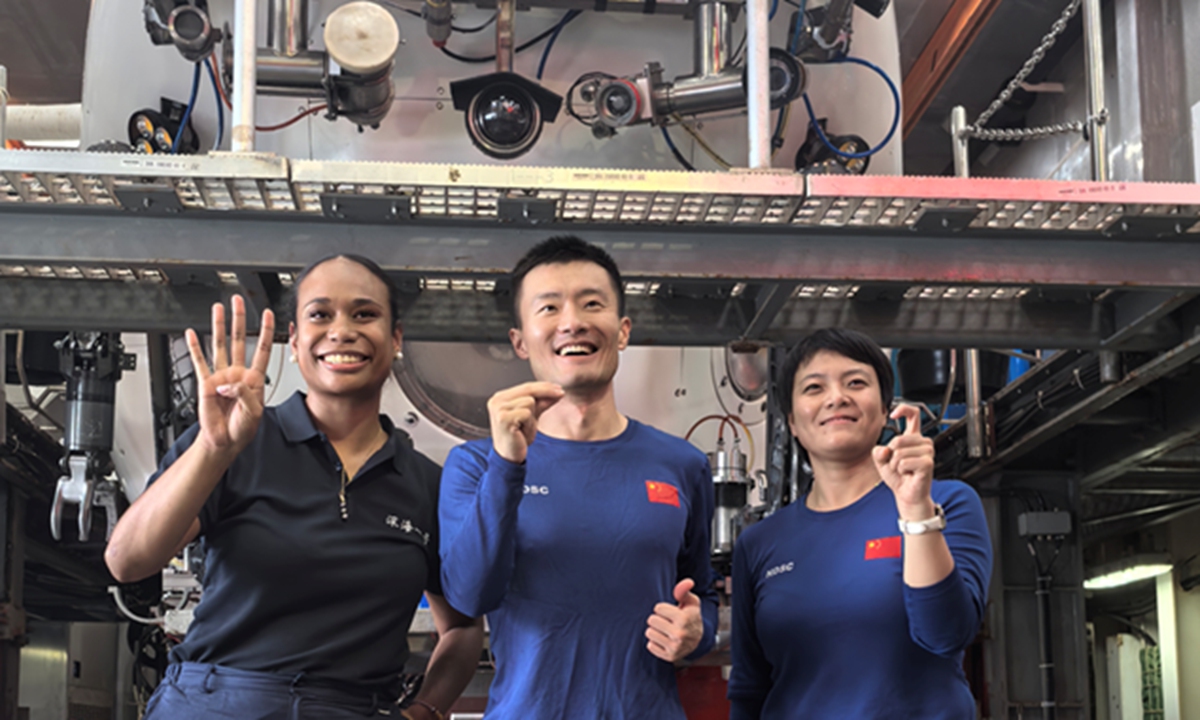
Chloe Wragg (left), a scientist from the Cook Islands, poses with Jiaolong pilots Yang Yifan (center) and Zhao Shengya (right) after the submersible's 479th dive. Photo: Yan Wei
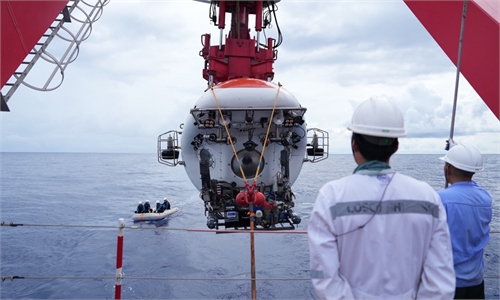
China's manned deep-sea submersible Jiaolong successfully completed a dive in the Cook Islands' exclusive economic zone on November 21, local time, carrying a Cook Islands scientist who became the first from her country to directly observe the deep-sea environment in its own waters, the Global Times learned from China's Ministry of Natural Resources on Wednesday.
Scientist Chloe Wragg joined Chinese submersible pilots Yang Yifan and Zhao Shengya aboard the submersible for the dive in the Manihiki Plateau region. The mission collected valuable deep-sea environmental data and samples, further advancing scientific cooperation between China and the Cook Islands.
After completing the dive, Wragg said she was excited to witness the milestone firsthand, describing it as a demonstration of the Cook Islands' commitment to deepening its understanding of its own seabed.
She also expressed gratitude for the opportunity to conduct the dive alongside colleagues from China's National Deep Sea Center and the Second Institute of Oceanography under the Ministry of Natural Resources, saying the expedition reflected the close friendship and scientific ties between the two countries.
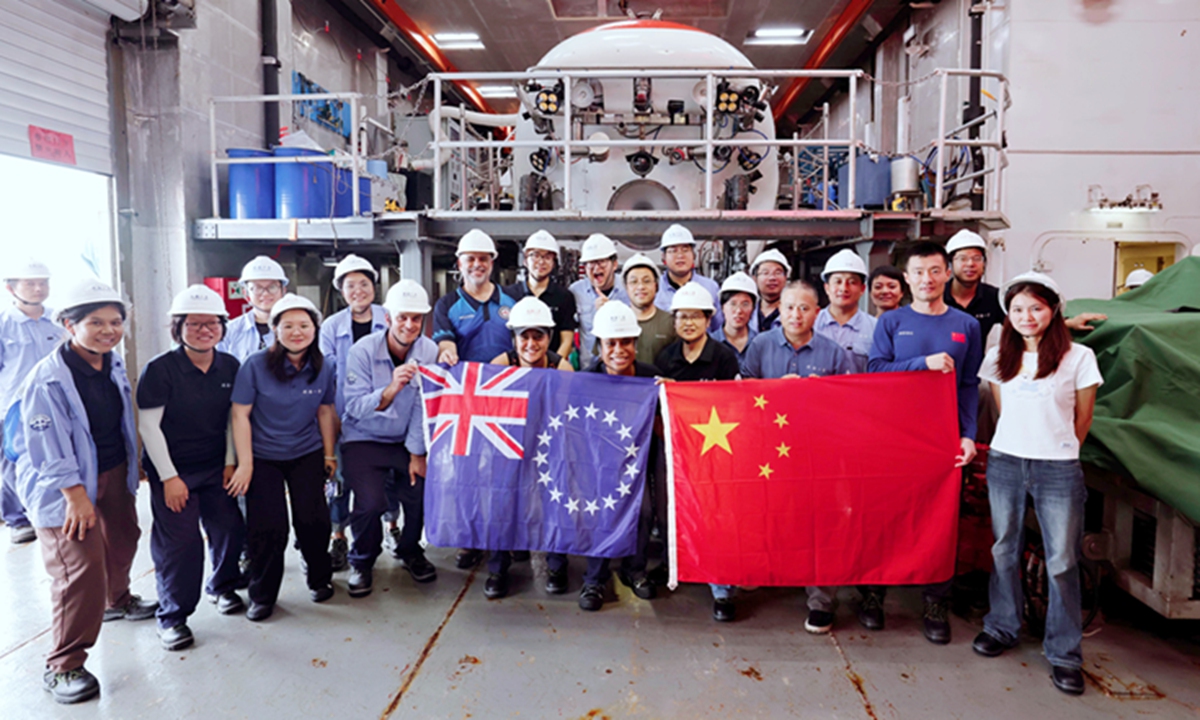
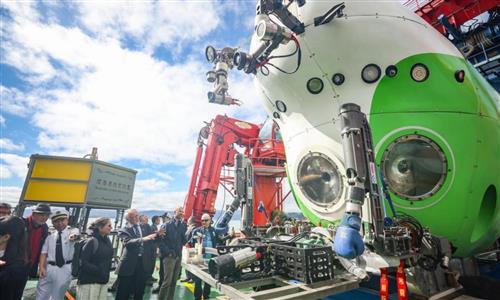
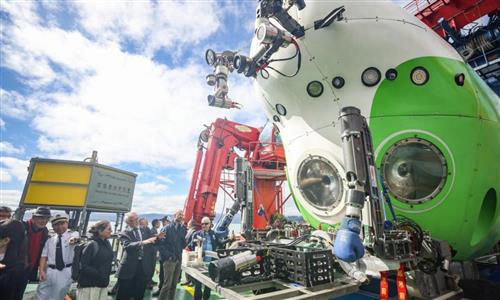
Chinese and foreign scientists pose for a group photo after Jiaolong's 479th dive. Photo: Ji Ye
The expedition marks the second joint marine scientific research mission between China and the Cook Islands, following their first joint expedition in 2025. The successful Jiaolong dive in the Cook Islands' exclusive economic zone represents a concrete step in their blue partnership, the two sides said.During the current expedition, Jiaolong is scheduled to carry out five dives in the Cook Islands' exclusive economic zone. The mission is expected to help fill gaps in the country's baseline deep-sea data and give local researchers firsthand experience in manned deep-sea dives.
The two countries will use the expedition as an opportunity to further expand cooperation in deep-sea scientific research, marine capacity building and the blue economy, with the aim of advancing a shared future for the oceans, according to the statement.
The 2026 China-Cook Islands joint marine scientific research expedition, part of the second leg of China's 100th oceanic expedition, is managed and guided by the China Ocean Mineral Resources R&D Association. The National Deep Sea Center is responsible for its organization and implementation, while the Second Institute of Oceanography provides technical support at sea. The Cook Islands Seabed Minerals Authority is the foreign partner.
RELATED ARTICLES