ARTS / ART
Chinese heritage traditions converge in a contemporary design, bringing centuries-old skills to the international stage
Four crafts, one APEC scarf

A dye worker lays out long strips of silk threads to dry across a grassy field. Photos on this page: VCG
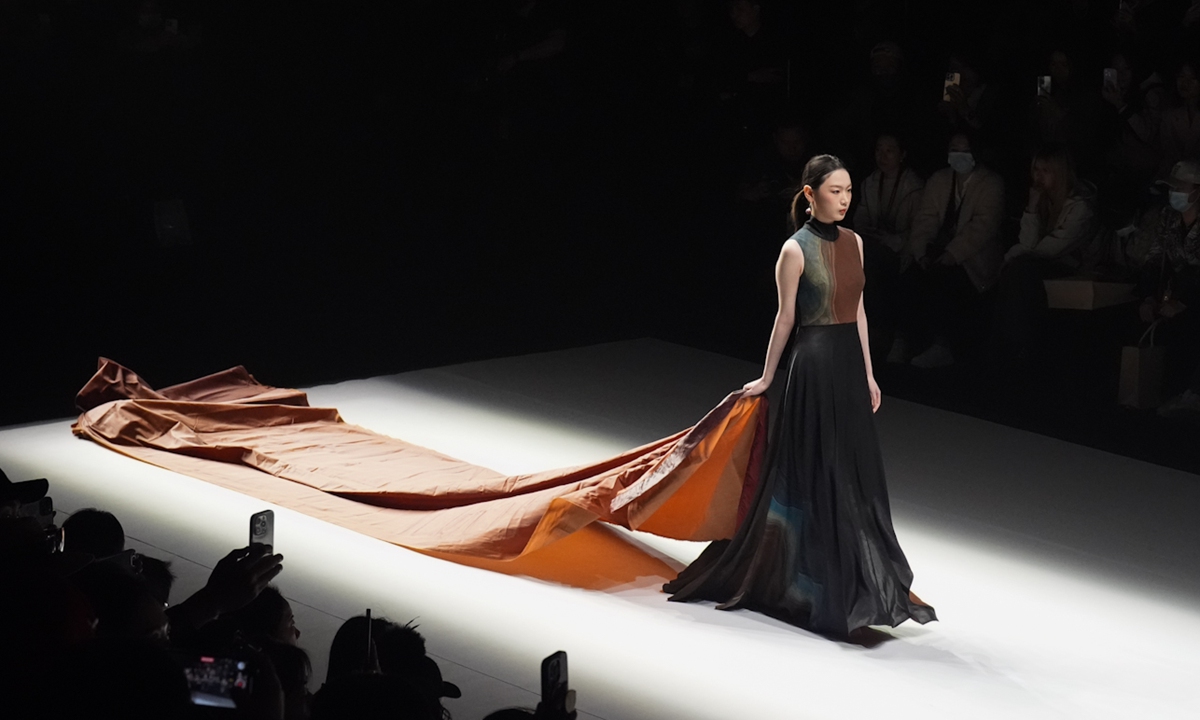
A model shows off Xiangyunsha silk during a show on March 25, 2025. Photos on this page: VCG
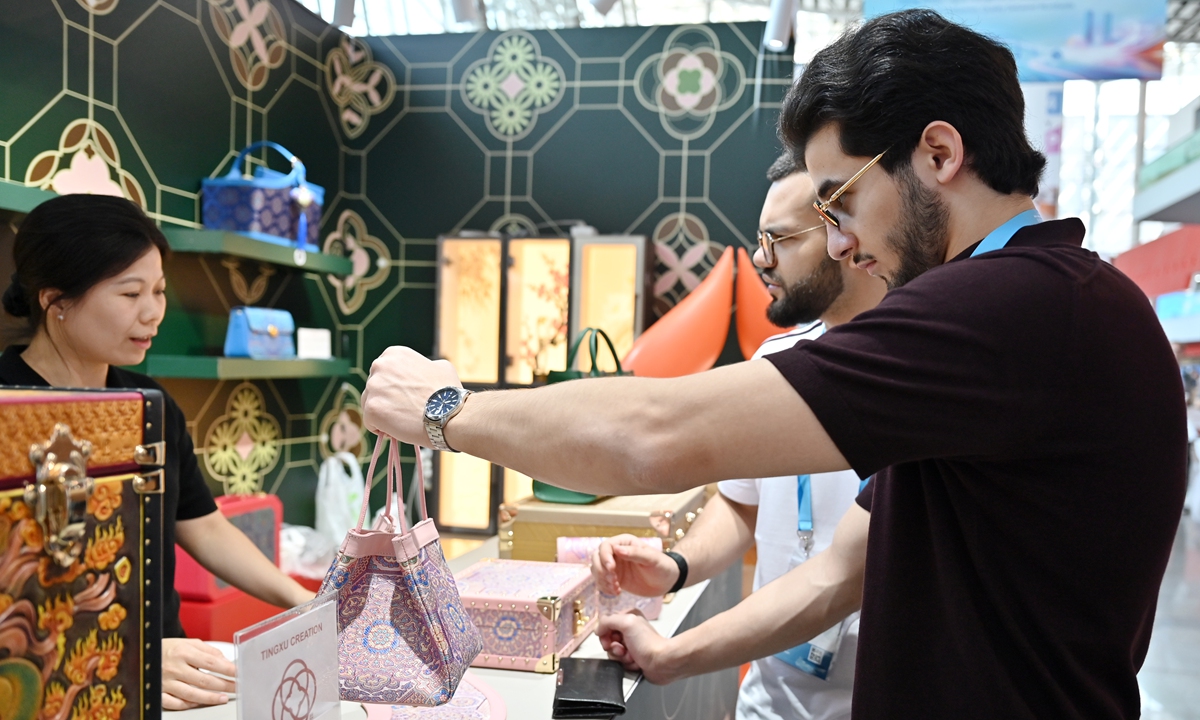
A foreign customer looks at a handbag woven with Song brocade techniques on October 26, 2026. Photos on this page: VCG
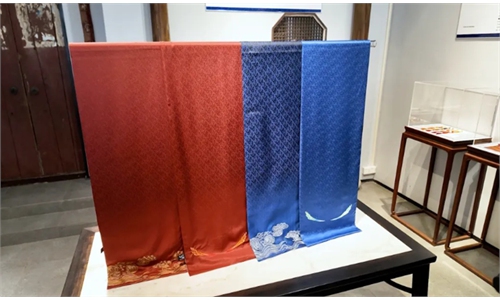
When leaders and representatives of Asia-Pacific Economic Cooperation (APEC) economies gathered for a group photo in Shenzhen on November 19, they did not wear the coordinated traditional outfits seen at some previous APEC meetings. Instead, they were given a choice between red and blue silk scarves to wear over their formal attire.The scarves, named "Tongxin Hejin," or "Shared Harmony," soon attracted widespread attention on Chinese social media. Behind their understated appearance was a collaborative effort combining four Chinese intangible cultural heritage techniques: Song brocade weaving, Xiangyunsha dyeing and finishing, Suzhou embroidery and Cantonese embroidery.
The blue scarf was made using Song brocade, a traditional Chinese silk textile dating back to the Song Dynasty (960-1279). The red version was made primarily from Xiangyunsha, also known as gambiered Canton gauze, a traditional silk fabric once traded along the ancient Maritime Silk Road. Suzhou and Cantonese embroidery were incorporated into the designs of the two scarves.
Each scarf also contains 21 strands of natural wild silk woven into its fabric, symbolizing cooperation among the 21 APEC member economies. Leaders and representatives were free to choose either color rather than being assigned a uniform look.
The Global Times spoke with the artisans behind the project to learn about the techniques and ideas behind the designs, and how traditional skills are being adapted for a new generation.
Craftsmanship meets innovation
For Shen Hui, a designated inheritor of Song brocade weaving, the appeal of the centuries-old textile lies in its deep cultural roots.
"Song brocade has been selected for national gifts and featured at occasions such as APEC meetings many times. Its defining quality is that it is rooted in a cultural tradition stretching back thousands of years," said Shen.
Originating in Suzhou, Song brocade emerged as a distinctive silk textile during the Southern Song Dynasty (1127-1279), when a weaving workshop was established in the city. It was used to make garments and to mount paintings and calligraphy.
In 2009, Song brocade weaving was included on UNESCO's Representative List of the Intangible Cultural Heritage of Humanity as part of China's sericulture and silk craftsmanship. According to Shen, Song brocade is distinguished by its intricate patterns, soft sheen and restrained elegance. Its use of different weft techniques also creates rich layers of color, producing an effect that is vibrant without being overwhelming.
Xiangyunsha, by contrast, derives much of its character from a natural dyeing process. The fabric is made from mulberry silk treated with the juice of the gambier plant, followed by repeated exposure to iron-rich river mud and sunlight. The process produces a distinctive deep-dark, glossy surface on one side and a warm reddish-brown tone on the other.
More than 30 traditional manual processes are involved, with the final color and texture determined by both natural conditions and the artisans' experience.
For the APEC scarves, Shen described the improvements as a balance between preserving tradition and embracing innovation. Modern technology simplified the production process without compromising Song brocade's elegant style. The patterns were adapted, while the traditional color palette was retained. Adjustments to the weft density and yarn proportions made the fabric softer and more suitable for scarves.
Traditional Song brocade was often used for mounting paintings and calligraphy. Its firm, thick texture worked well when used to wrap a scroll, but was less suited to being worn around the neck. To serve as a diplomatic gift, it had to be adapted for use as an accessory, Shen noted.
Adapting Xiangyunsha to the scarf design required careful adjustments to a dyeing process highly dependent on natural conditions.
The dyeing and finishing process alone took three months, He Chao, an inheritor of Xiangyunsha, told the Global Times.
The team had to make extensive adjustments to accommodate the combined patterns and achieve the desired color. Changes were made to the traditional drying process, including fine-tuning temperatures, monitoring ultraviolet exposure and carefully selecting the drying site.
One of the biggest challenges was creating a brighter, more translucent shade to move beyond the dark, somewhat subdued appearance traditionally associated with Xiangyunsha. The team eventually developed a distinctive red, described as "Palace Red."
Staying alive
For Shen, taking Song brocade overseas means preserving its distinctive craftsmanship and aesthetic character while finding common ground with people around the world. She advocates simplifying technical explanations, leaving room for interpretation and communicating in a more universal visual language.
Traditional motifs can also be reinterpreted and combined with elements from other heritage crafts, opening up new applications in clothing, home textiles, medical products and cultural and creative goods.
The goal, she said, is to ensure Song brocade continues to evolve as a living tradition rather than being confined to museum displays.
He, meanwhile, sees adapting to market demand as essential to the future of Xiangyunsha. "It used to look dated to many people, but we have given it a brighter, more vibrant look, with all quality indicators exceeding national standards," he said.
"To modernize the craft, we need to reinterpret traditional patterns, drawing inspiration from good designs, colors and visual elements from both China and abroad, while staying true to the fabric's essence. This will give it new possibilities and help win over more consumers at home and overseas," He said.
RELATED ARTICLES