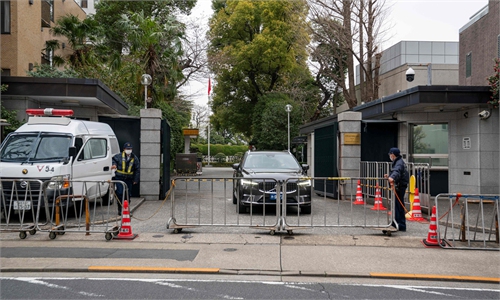
Deploying long-range missiles in Hokkaido, does Tokyo want to deter China and Russia simultaneously?
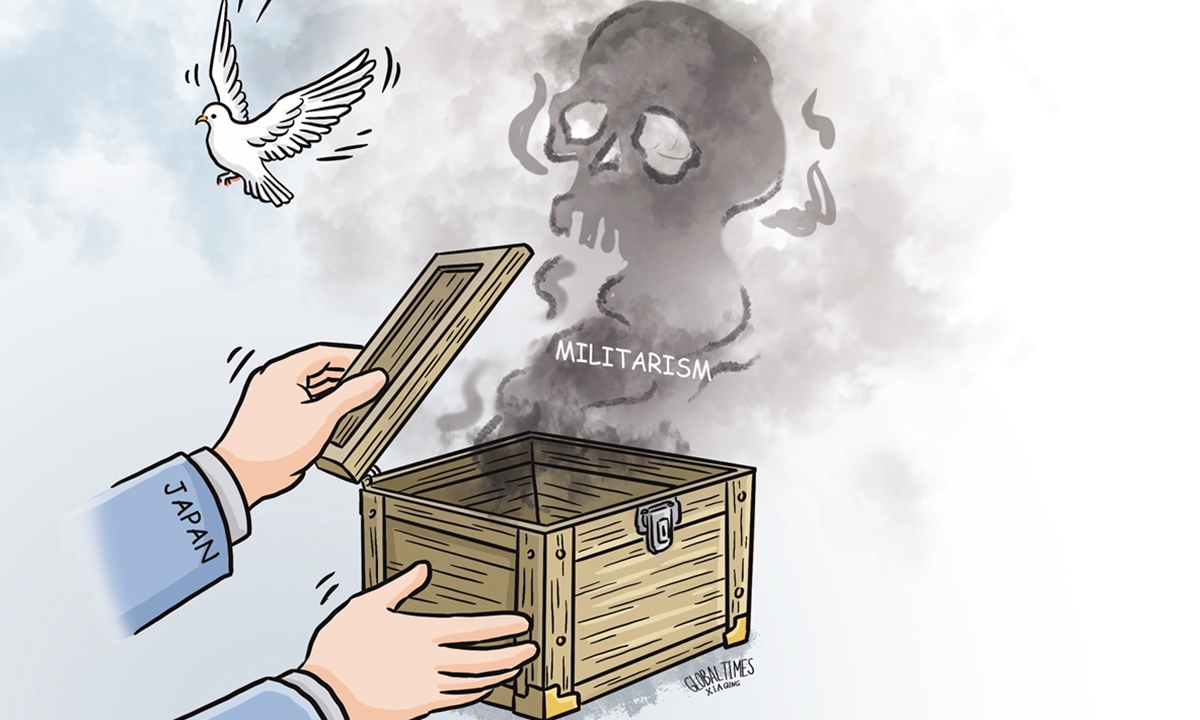
Japan Illustration: Xia Qing/GT
Japan is set to deploy long-range offensive missiles to Hokkaido. Japanese media reported that as early as early December, the Defense Ministry will transport launchers and related equipment for the Ground Self-Defense Force's Type-25 hypervelocity gliding projectiles to Camp Kamifurano in Hokkaido and begin deployment. This is the first time since Japan established so-called "counterstrike capabilities" in its 2022 three security documents that it has deployed a domestically produced hypersonic offensive weapon toward Hokkaido. It is also a key step in strengthening its "forward deterrence" posture in the northeast.
This is likely only the beginning. Under the Defense Ministry's plan for the hyper velocity gliding projectile for island defense, upgraded Block 2A and Block 2B variants are scheduled to enter service starting in fiscal 2027. Block 2A is expected to have a range of 2,000 kilometers, covering the entire Korean Peninsula, Russia's Far East, and major coastal cities in China. Block 2B will further extend the range to 3,000 kilometers, with its reach penetrating deep into China's inland. The Defense Ministry continues to label these as "for island defense," but this is just unconvincing.
The Sanae Takaichi administration is taking ever-larger steps toward reviving militarism and steadily expanding offensive combat power. On one hand, it is modifying warships to carry Tomahawk missiles and advancing the development of air-launched and ship-launched hypersonic missiles; on the other, it is pushing hard to revise the three security documents by the end of the year, even attempting to include items such as the introduction of nuclear-powered submarines. If the Block 2A and Block 2B variants of the hyper velocity gliding projectile for island defense are successfully deployed in succession, Japan will acquire a capability it has never possessed since the end of World War II: the ability to conduct conventional precision strikes against deep inland targets on the territories of neighboring major powers. From conventional long-range strikes to testing the boundaries of the nuclear taboo, Japan's right wing is step by step trampling the Pacifist Constitution and allowing the ghost of militarism to return in a new form.
"Don't expose Hokkaido to danger," "We want food, not missiles," "Why not just deploy 10,000 nuclear warheads?" Voices of anger and opposition from Hokkaido residents and the Japanese public continue to rise over this latest deployment. In the more than a year since taking office, the Takaichi government has openly adopted the stance of "prioritizing armaments over people's livelihoods." Russia's deputy foreign minister previously stated clearly that if Japan deploys hypersonic missiles near Russian territory, Russia will immediately take retaliatory measures. Now, on top of turning the so-called Southwestern Islands into operational bases, Tokyo is extending the deployment of offensive weapons toward the central and northern regions, seeking to turn the entire Japanese archipelago from south to north into a pre-positioned "battlefield." If it continues to rush headlong in this dangerous direction, Takaichi is essentially determined to bring the flames of war to Japan, and the cost will ultimately be borne by Japan itself.
RELATED ARTICLES