Pakistani astronaut's arrival at China's space station draws Indian media attention; diverse space paths suit each nation’s realities: expert
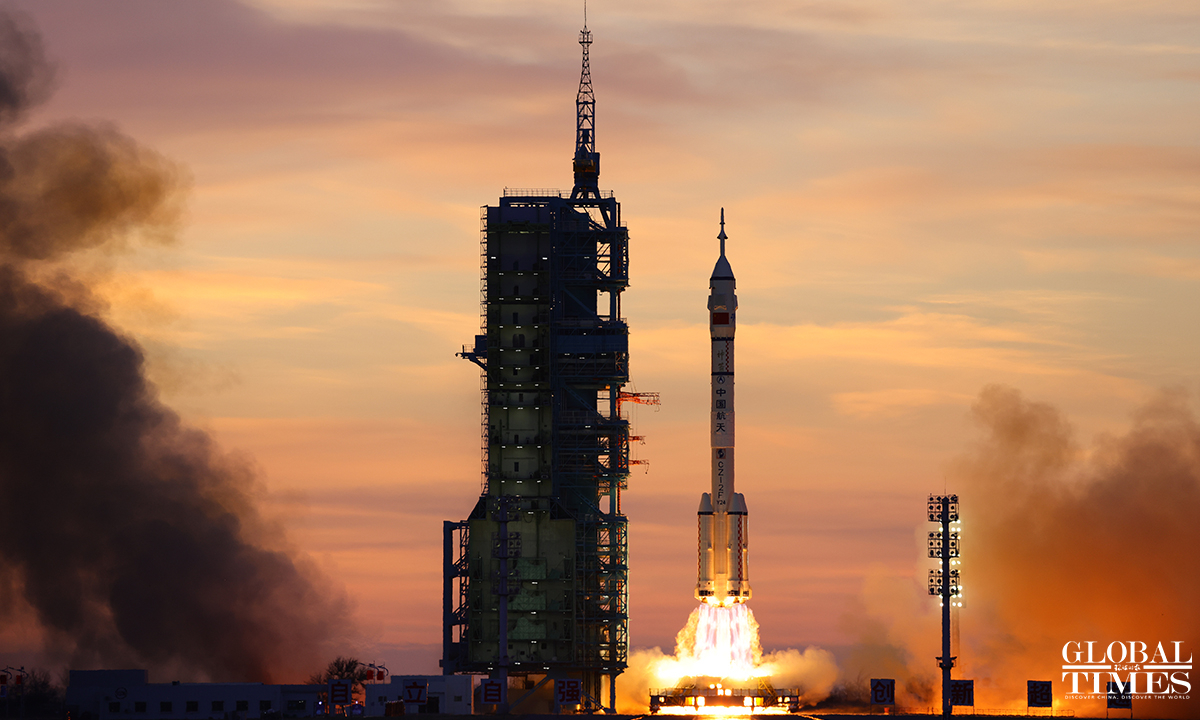
The Shenzhou-24 crewed spacecraft carried by the Long March-2F Y24 carrier rocket, lifts off from the Jiuquan Satellite Launch Center in Northwest China's Gobi Desert on November 25, 2026. Photo: Fan Wei/Global Times
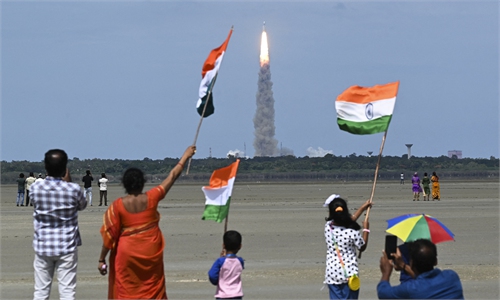
The arrival of Pakistan's first astronaut at China's space station has recently drawn attention from foreign media, including Indian media outlets, prompting comparisons between the space programs of the two South Asian neighbors and their respective spaceflight capabilities.A Chinese expert noted that the attention Indian media have paid to the China-Pakistan space cooperation reflects their expectations for their own country's space development. India has advantages in international cooperation and tailoring mission planning, and diversity in space exploration shows that every country can advance its space undertakings based on its own realities.
The Shenzhou-24 crewed spacecraft carried by the Long March-2F Y24 carrier rocket lifted off at 8:18 am from the Jiuquan Satellite Launch Center in Northwest China's Gobi Desert on Wednesday.
This marks China's first crewed spaceflight to include a foreign astronaut, Pakistani payload specialist Muhammad Zeeshan Ali.
An India Today report said that the achievement was particularly significant given Pakistan's challenges in building an independent space program. "For a country's scientific community, having an astronaut conducting experiments aboard an operational space station is a major achievement."
Another report by India Today cited an interview with India's Group Captain Angad Pratap, one of the four astronaut-designates selected for the country's Gaganyaan human spaceflight program, who urged people to judge the mission based on its scientific contributions rather than its geopolitical significance.
"India's human spaceflight program has a high technological starting point," Yu Guang, an aerospace technology expert, told the Global Times.
China's Shenzhou spacecraft initially adopted a three-module configuration - an orbital module, reentry capsule and propulsion module - due to technological constraints at the time, similar to Soyuz spacecraft, Yu said.
Today, most new-generation crewed spacecraft adopt a two-module configuration. China's Mengzhou spacecraft, for example, consists of a reentry capsule and a service module. This design requires a larger reentry capsule capable of accommodating the functions and equipment of the orbital module in a three-module spacecraft, making it more technologically challenging, the expert explained.
"India opted for this configuration from the outset. However, despite its high starting point, its program has encountered difficulties in keeping to the schedule," Yu continued.
India's ambitious human spaceflight programme, Gaganyaan, with the first uncrewed mission is unlikely to take off before February 2027, India Today reported. The mission was earlier planned for December 2026, but ongoing technical fine-tuning, additional simulations and validation exercises could push the launch beyond the current window, the report said.
India has certain advantages, as its international cooperation allows it to obtain key components and technical services from overseas, Yu said.
Yu added that India is also adept at tailoring solutions to its capabilities. For instance, Chandrayaan-4, which is supposed to bring back samples from the Moon, would not be launched at one go and instead, different parts of the spacecraft would be sent into orbit through two launches, and the spacecraft would be assembled in space before proceeding to the Moon, the Indian Express reported.
The report said that "this would have to be done because Chandrayaan-4 is expected to be beyond the carrying capacity of even the most powerful rocket that ISRO currently has."
China's space station program offers abundant scientific research resources, stable in-orbit operational capabilities, a well-established Earth-space transportation system, and a comprehensive astronaut selection and training system. Meanwhile, China's lunar exploration program is also making steady progress.
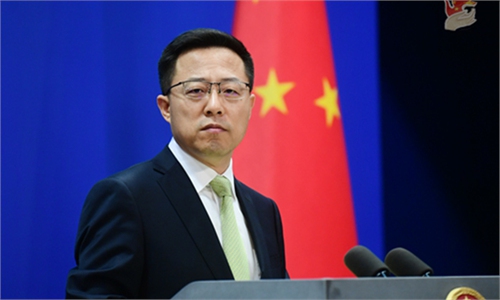
"China looks forward to working with more countries and regions to explore the vast universe, promote the peaceful use of outer space and work together to advance the common well-being of humanity," a spokesperson said during a press conference on Shenzhou-24 mission on Tuesday.
RELATED ARTICLES