CHINA NEOMAKE / CHINA NEOMAKE MORE NEWS
Nuclear technology becoming new ‘name card’ for Chinese science and technology
Clear technological advantages, expanding scenarios
By Fan Wei and Published: Nov 29, 2026 10:22 PM

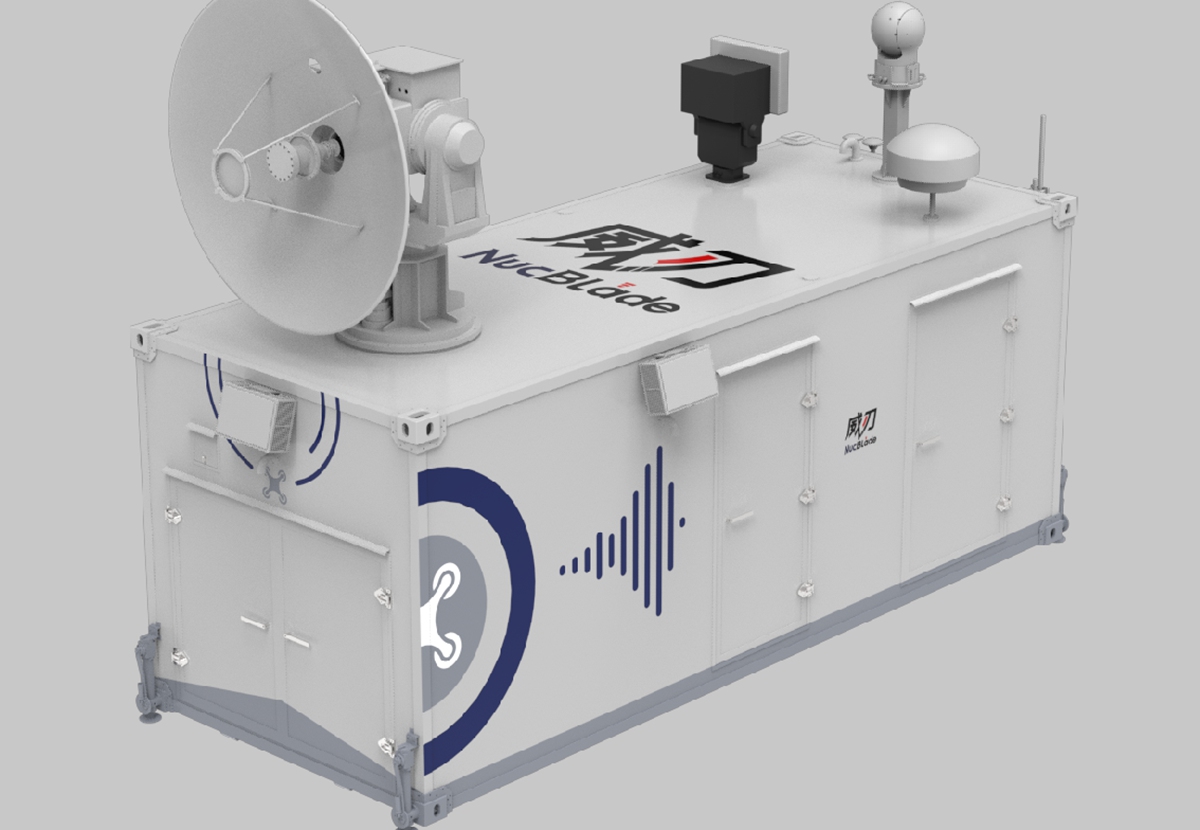
At a key facility, the sudden intrusion of small drones puts the security on high alert. Just before the unauthorized drones cross the “red line,” a “mysterious force” shoots them down.
This is an example of the latest application of nuclear technology, the Nuc Blade low-altitude defense system, designed by the China National Nuclear Corporation (CNNC) Tongfang Co Ltd.
The system uses a high-power microwave compressor to deter unauthorized low-altitude aircraft with directed radiation, securing the airspace over key sites such as energy facilities, major urban events and sensitive locations, according to Tongfang Co Ltd.
The Nuclear Technology Application Industry Chain Co-Chain Action Conference is scheduled to open on Wednesday in Guangzhou, South China’s Guangdong Province. Many livelihood-related nuclear technology brands are set to be showcased, while CNNC has announced its plans to establish the China Isotope Company in Guangdong Province. Insiders agree that nuclear technology is not a single product track but a toolbox empowering thousands of industries.
A complete system
Like nuclear power, nuclear technology applications are a major nuclear industry branch.
“These applications have been deeply integrated into public health, public security, industrial manufacturing and green development,” said Guo Lili, secretary-general of the China Isotope and Radiation Association (CIRA). A complete industrial system from research to applications has been set in place.
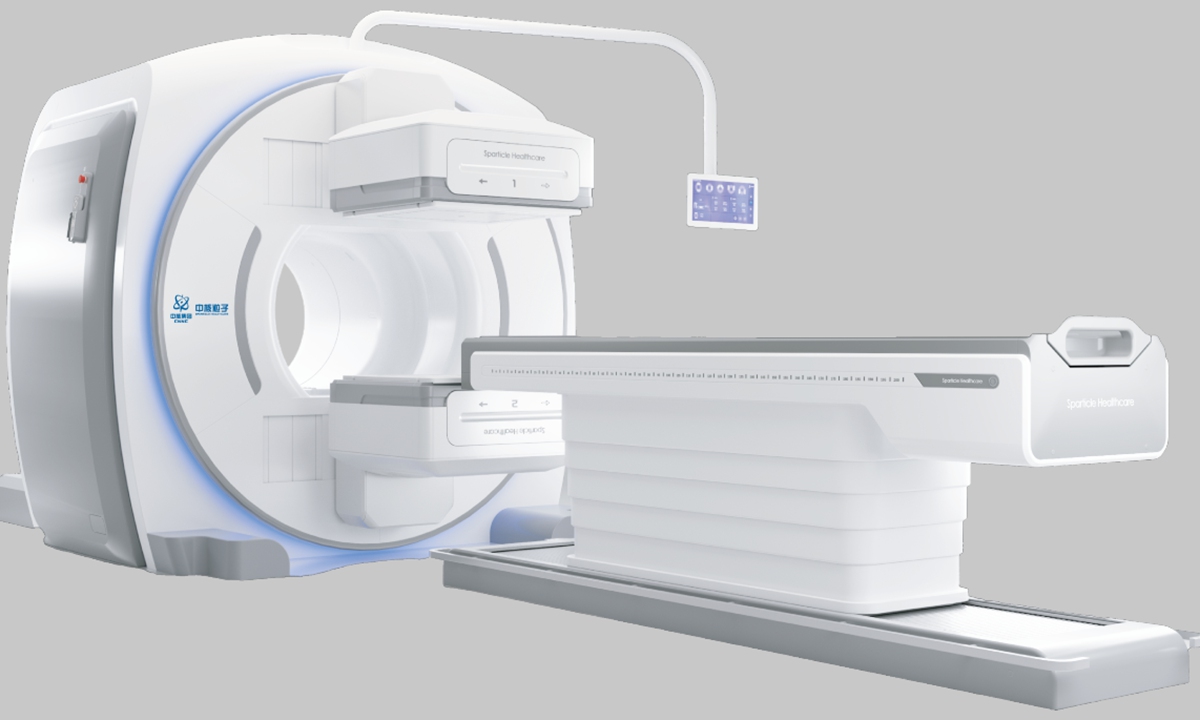
Public health is the most direct and fastest-growing application of nuclear technology. Nuclear medicine is irreplaceable in treating major diseases such as cancer and cardiovascular diseases, said He Jianrong, Party chief of CNNC Medical Industry Management Co Ltd. Frontier equipment such as independently developed gamma knives and boron neutron capture therapy systems are entering clinical application.
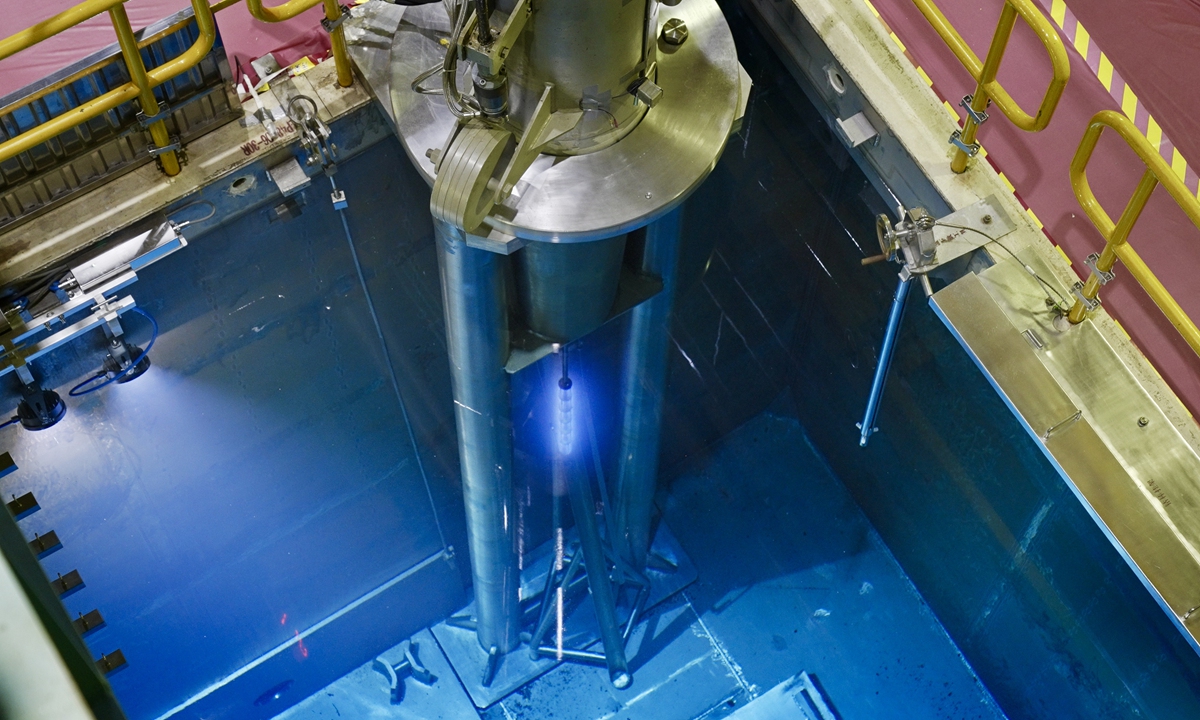
Medical isotopes are the core raw materials of nuclear medicine. CNNC’s Qinshan Nuclear Power Plant independently produces carbon-14 and lutetium-177 through its HEFU-1 project using heavy-water reactors. Carbon-14 for Helicobacter pylori testing is now fully supplied domestically, while cobalt-60 sterilizes medical supplies. Xenon-129 enables high-definition lung imaging, and copper-64, produced from nickel-64, serves in both diagnosis and treatment.
Nuclear technology is also upgrading industries with its unique “penetrating perception.” Radiation imaging now widely serves industrial manufacturing, said Tongfang Co Ltd. Nondestructive testing gives power batteries and high-end components noninvasive “CT checkups,” catching defects without dismantling equipment, while intelligent ore sorting improves resource efficiency and supports green development.
From hospital wards to factory workshops, a complete nuclear technology application industrial system has taken root in China. “This invisible technology has quietly entered thousands of households and serves social development,” Guo said.
Going deeper
The industrial system has essentially been established, Guo said. The focus from now on will be on tackling key technologies and expanding scenarios, anchoring five key directions – key isotopes, radiopharmaceuticals, radiation-modified new materials, high-end equipment and artificial intelligence – and advancing localization, clustering and integration to unleash new quality productive forces.
Core technology breakthroughs are the key to high-quality development, Guo noted. First is independent supply of key medical isotopes, followed by original research on radiopharmaceuticals, completing the chain from materials to industrialization. Under the new whole-nation system, institutes, universities, enterprises and hospitals will collaborate.
Nuclear medicine is another widely watched sector: Medical use is the earliest and most successful peaceful application, pioneered when Marie Curie discovered radium. CNNC’s nuclear medicine full-chain innovation scenarios, which recently entered the country’s first batch of 136 landmark scenarios, are set to develop radionuclides, radiopharmaceuticals, equipment and services to help build a Healthy China, He said.
Differentiated regional clusters have taken shape, Guo noted. The Pearl River Delta will become a nuclear medicine and radiation processing highland serving Hong Kong, Macao and ASEAN; the Bohai Rim will focus on research and commercialization; and Chengdu-Chongqing region will build medical isotope and radiopharmaceutical chains.
From breakthroughs to implementation, the industry is entering a key innovation stage. As shortcomings are filled and the ecosystem improves, nuclear technology will further empower thousands of industries and contribute more to people’s livelihoods, industrial upgrading and national security, according to Guo.
Reaching out
Chinese nuclear technology is empowering industries at home and going global. Through a complete industrial system and pragmatic cooperation, China’s projects have landed in many countries and regions, an official with the China Isotope and Radiation Corporation (CIRC) said. Through cross-domain integration, it is striving to become a new “name card” for China.
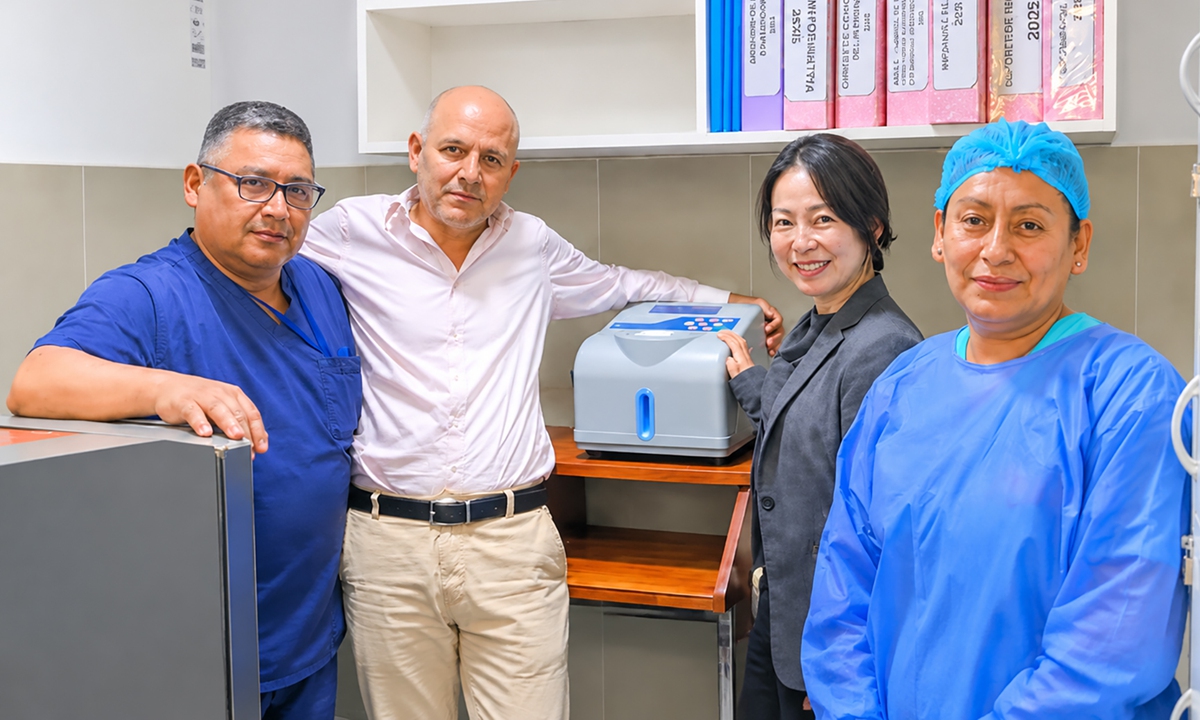
China has cooperated with the International Atomic Energy Agency (IAEA) on projects in ASEAN, South Asia and Latin America. Through the China-proposed Belt and Road Initiative, CNNC projects have made progress: Headway’s carbon-14 breath test equipment has entered the public hospitals in Peru; a million-curie irradiation station is operating in Bangladesh; the iodine-131 oral solution exported to Indonesia has opened the way for a cold chain for short-lived drugs. China’s nuclear technology solutions are gaining international recognition, the official said.
China’s nuclear cooperation has four advantages. First, whole-chain capability across nearly 40 sub-sectors delivers whole solutions, not just equipment. Second, a livelihood orientation focuses on real needs such as medical sterilization and food preservation. Third comes wide coverage: Breath test products serve more than 70 countries and regions. Finally, a complete service system covers construction, training and long-term maintenance.
“The institute’s ultra-high abundance silicon-28 from the Fuji-1 project can be used to produce silicon without lattice defects, which is key to integrated circuit breakthroughs,” said Liu Chengye, deputy director at the Tianjin-based Research Institute of Physical and Chemical Engineering of the Nuclear Industry.
Innovation supports the wider implementation of being “healthier, safer and smarter,” transforming research breakthroughs into products, services and perceptible improvements in daily life, Guo said.
China’s nuclear technology application industry is built on basic research, driven by scenario applications and safeguarded by independent controllability, CNNC said. While deepening cooperation and polishing frontier technologies, the industry will surely become a new “name card” for Chinese science and technology.
This is an example of the latest application of nuclear technology, the Nuc Blade low-altitude defense system, designed by the China National Nuclear Corporation (CNNC) Tongfang Co Ltd.
The system uses a high-power microwave compressor to deter unauthorized low-altitude aircraft with directed radiation, securing the airspace over key sites such as energy facilities, major urban events and sensitive locations, according to Tongfang Co Ltd.
The Nuc Blade low-altitude defense system Photo: Courtesy of China National Nuclear Corporation
The Nuclear Technology Application Industry Chain Co-Chain Action Conference is scheduled to open on Wednesday in Guangzhou, South China’s Guangdong Province. Many livelihood-related nuclear technology brands are set to be showcased, while CNNC has announced its plans to establish the China Isotope Company in Guangdong Province. Insiders agree that nuclear technology is not a single product track but a toolbox empowering thousands of industries.
A complete system
Like nuclear power, nuclear technology applications are a major nuclear industry branch.
“These applications have been deeply integrated into public health, public security, industrial manufacturing and green development,” said Guo Lili, secretary-general of the China Isotope and Radiation Association (CIRA). A complete industrial system from research to applications has been set in place.
Public health is the most direct and fastest-growing application of nuclear technology. Nuclear medicine is irreplaceable in treating major diseases such as cancer and cardiovascular diseases, said He Jianrong, Party chief of CNNC Medical Industry Management Co Ltd. Frontier equipment such as independently developed gamma knives and boron neutron capture therapy systems are entering clinical application.
A CNNC Medical SPECT/CT scanner Photo: Courtesy of China National Nuclear Corporation
Medical isotopes are the core raw materials of nuclear medicine. CNNC’s Qinshan Nuclear Power Plant independently produces carbon-14 and lutetium-177 through its HEFU-1 project using heavy-water reactors. Carbon-14 for Helicobacter pylori testing is now fully supplied domestically, while cobalt-60 sterilizes medical supplies. Xenon-129 enables high-definition lung imaging, and copper-64, produced from nickel-64, serves in both diagnosis and treatment.
Carbon-14 isotopes from HEFU-1 Photo: Courtesy of China National Nuclear Corporation
Nuclear technology is also upgrading industries with its unique “penetrating perception.” Radiation imaging now widely serves industrial manufacturing, said Tongfang Co Ltd. Nondestructive testing gives power batteries and high-end components noninvasive “CT checkups,” catching defects without dismantling equipment, while intelligent ore sorting improves resource efficiency and supports green development.
From hospital wards to factory workshops, a complete nuclear technology application industrial system has taken root in China. “This invisible technology has quietly entered thousands of households and serves social development,” Guo said.
Going deeper
The industrial system has essentially been established, Guo said. The focus from now on will be on tackling key technologies and expanding scenarios, anchoring five key directions – key isotopes, radiopharmaceuticals, radiation-modified new materials, high-end equipment and artificial intelligence – and advancing localization, clustering and integration to unleash new quality productive forces.
Core technology breakthroughs are the key to high-quality development, Guo noted. First is independent supply of key medical isotopes, followed by original research on radiopharmaceuticals, completing the chain from materials to industrialization. Under the new whole-nation system, institutes, universities, enterprises and hospitals will collaborate.
Nuclear medicine is another widely watched sector: Medical use is the earliest and most successful peaceful application, pioneered when Marie Curie discovered radium. CNNC’s nuclear medicine full-chain innovation scenarios, which recently entered the country’s first batch of 136 landmark scenarios, are set to develop radionuclides, radiopharmaceuticals, equipment and services to help build a Healthy China, He said.
Differentiated regional clusters have taken shape, Guo noted. The Pearl River Delta will become a nuclear medicine and radiation processing highland serving Hong Kong, Macao and ASEAN; the Bohai Rim will focus on research and commercialization; and Chengdu-Chongqing region will build medical isotope and radiopharmaceutical chains.
From breakthroughs to implementation, the industry is entering a key innovation stage. As shortcomings are filled and the ecosystem improves, nuclear technology will further empower thousands of industries and contribute more to people’s livelihoods, industrial upgrading and national security, according to Guo.
Reaching out
Chinese nuclear technology is empowering industries at home and going global. Through a complete industrial system and pragmatic cooperation, China’s projects have landed in many countries and regions, an official with the China Isotope and Radiation Corporation (CIRC) said. Through cross-domain integration, it is striving to become a new “name card” for China.
China has cooperated with the International Atomic Energy Agency (IAEA) on projects in ASEAN, South Asia and Latin America. Through the China-proposed Belt and Road Initiative, CNNC projects have made progress: Headway’s carbon-14 breath test equipment has entered the public hospitals in Peru; a million-curie irradiation station is operating in Bangladesh; the iodine-131 oral solution exported to Indonesia has opened the way for a cold chain for short-lived drugs. China’s nuclear technology solutions are gaining international recognition, the official said.
Headway’s carbon-14 test equipment in a public hospital in Peru Photo: Courtesy of China National Nuclear Corporation
China’s nuclear cooperation has four advantages. First, whole-chain capability across nearly 40 sub-sectors delivers whole solutions, not just equipment. Second, a livelihood orientation focuses on real needs such as medical sterilization and food preservation. Third comes wide coverage: Breath test products serve more than 70 countries and regions. Finally, a complete service system covers construction, training and long-term maintenance.
“The institute’s ultra-high abundance silicon-28 from the Fuji-1 project can be used to produce silicon without lattice defects, which is key to integrated circuit breakthroughs,” said Liu Chengye, deputy director at the Tianjin-based Research Institute of Physical and Chemical Engineering of the Nuclear Industry.
Innovation supports the wider implementation of being “healthier, safer and smarter,” transforming research breakthroughs into products, services and perceptible improvements in daily life, Guo said.
China’s nuclear technology application industry is built on basic research, driven by scenario applications and safeguarded by independent controllability, CNNC said. While deepening cooperation and polishing frontier technologies, the industry will surely become a new “name card” for Chinese science and technology.
RELATED ARTICLES