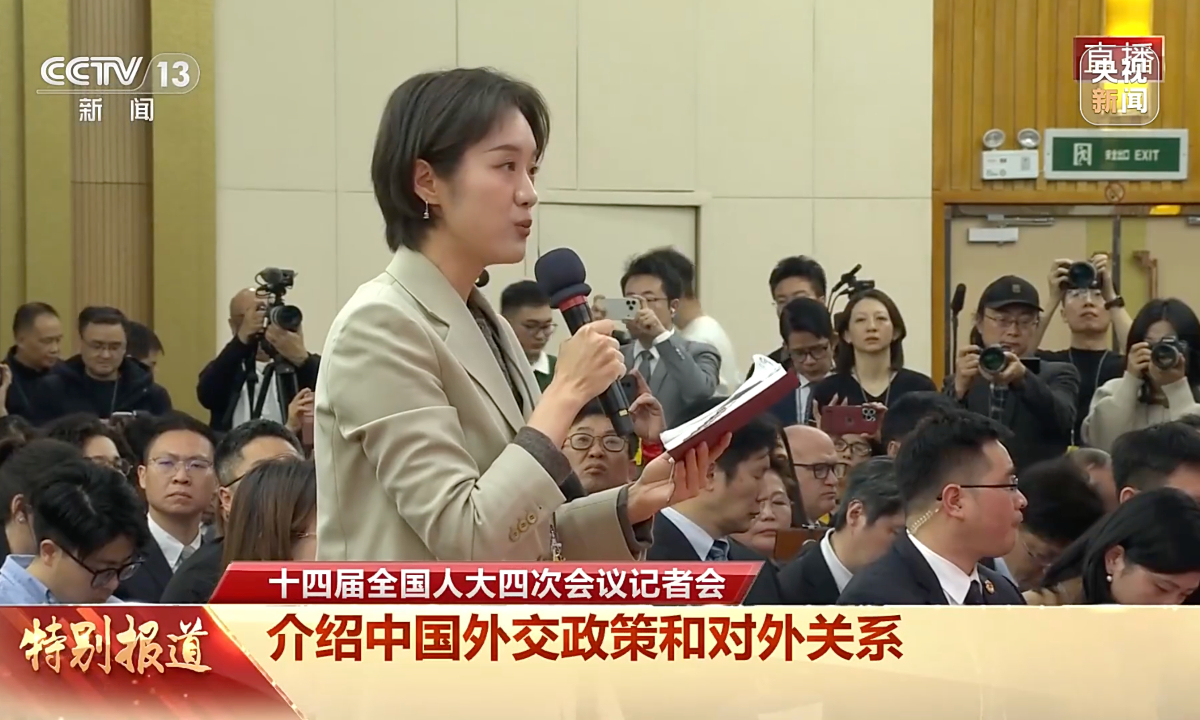
A journalist from the Global Times asks a question to Chinese Foreign Minister Wang Yi, also a member of the Political Bureau of the Communist Party of China Central Committee, about why China's diplomacy aims to build a community with a shared future for humanity amid the current situation in which global conflicts are growing and competition and confrontation are intensifying, during a press conference on China's foreign policy and external relations on the sidelines of the fourth session of the 14th National People's Congress (NPC) in Beijing, capital of China, on March 8, 2026. Photo: Screenshot from Xinhua
The truth and value of this vision of building a community with a shared future for humanity are sinking in with people around the world and it's like a beacon lighting the way forward for humanity, Chinese Foreign Minister Wang Yi said during the press conference on Sunday on the sidelines of the fourth session of the 14th National People's Congress. He answered questions from journalists from home and abroad on China's foreign policy and external relations, Xinhua News Agency reported.
Wang made the remarks when responding to a question from the Global Times about why China's diplomacy aims to build a community with a shared future for humanity amid the current situation in which global conflicts are growing and competition and confrontation are intensifying.
Humanity finds itself in an era fraught with challenges. Throughout history, even in the darkest times, there have always been those who never stopped chasing ideals and light. President Xi Jinping is such a pioneer. With the foresight and compassion of a leader at the helm of a major country, President Xi answered the big question of where humanity is headed by proposing to build a community with a shared future for humanity. His message is clear: Our enemies are not each other – they are war, poverty, hunger, and injustice. We cannot defeat them by fighting alone or looking after only ourselves. Instead, we must rally the world and build a common future. Alone, one is helpless; united, we can have great strength. The truth and value of this vision are sinking in with people around the world. It's like a beacon lighting the way forward for humanity, Wang said.
This vision encapsulates how China sees its role in the world and in history as a major country. The Chinese have always had a noble tradition of acting for the common good and pursuing harmony for all. Our great rejuvenation as a nation and our rise as a country of 1.4 billion people will not follow the beaten track where big powers vied for supremacy and territory. On the contrary, we will take a path of peaceful development, and we encourage other countries to take the same path. Together, we can build an open, inclusive, clean and beautiful world that enjoys lasting peace, universal security and shared prosperity, according to the Chinese foreign minister.
We are encouraged by the growing support for this vision. More than 100 countries and international organizations have embraced it, and nearly 80 percent of people around the world are in favor. Over 40 countries and regional organizations have joined us in realizing this vision. This attests to the saying that “right makes might.” A righteous cause is sure to garner mighty support of the world's countries, and pool the strength of the people, the Chinese foreign minister said.
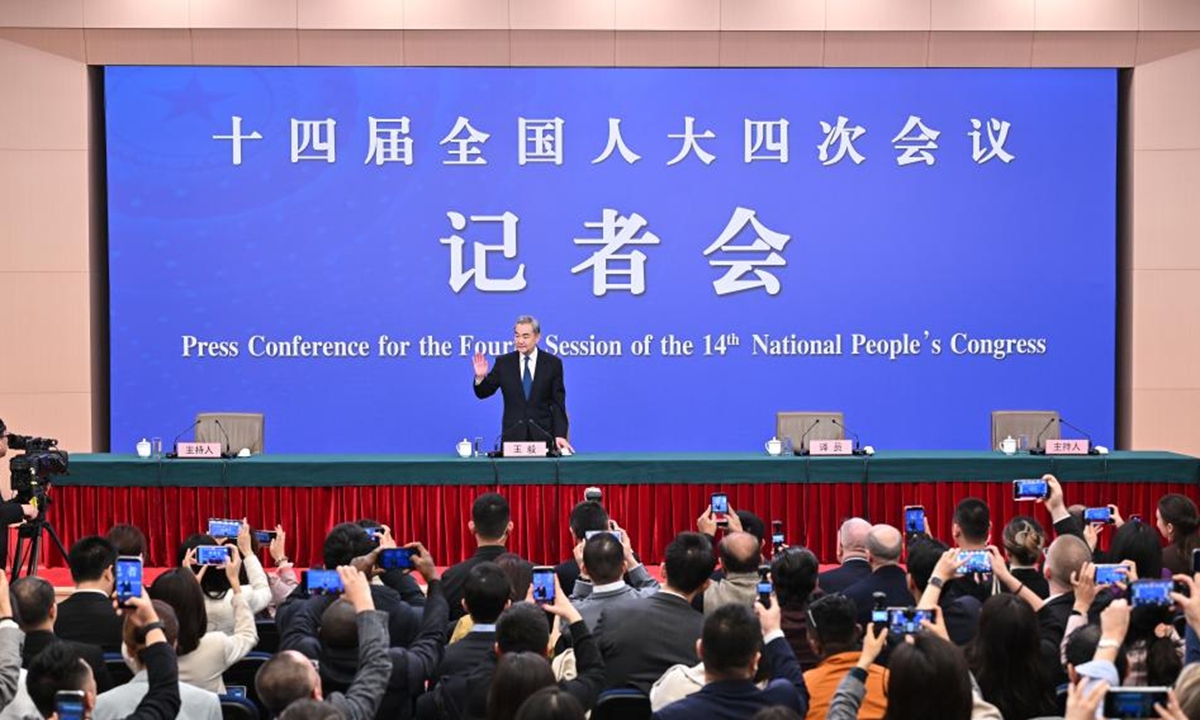
Chinese Foreign Minister Wang Yi, also a member of the Political Bureau of the Communist Party of China Central Committee, attends a press conference on China's foreign policy and external relations on the sidelines of the fourth session of the 14th National People's Congress (NPC) in Beijing, capital of China, March 8, 2026. Photo: Xinhua
The island of Taiwan has been Chinese territory since ancient times and is absolutely impossible to become any "country" in the past, present or future. We will never allow any individual or force to separate Taiwan from China, Chinese Foreign Minister Wang Yi said during the press conference on Sunday on the sidelines of the fourth session of the 14th National People's Congress.
Wang made the remarks in response to an inquiry about how China assesses the risk of accidental military conflict in the Taiwan Straits and whether China has established a timetable or roadmap for the reunification of the motherland, given that Taiwan's Lai Ching-teauthorities have repeatedly claimed that Taiwan is a "sovereign country" and that the Taiwan question is not China's internal affair, while tensions surrounding the Taiwan Straits continue to escalate and military exercises by the People's Liberation Army are occurring increasingly close to the island.
Taiwan island's return to China is an outcome of the victory of the Chinese People's War of Resistance Against Japanese Aggression and also a result of the victory of World War II. A series of international legal documents - including the Cairo Declaration, the Potsdam Proclamation, the Japanese Instrument of Surrender, and United Nations General Assembly Resolution 2758 - have firmly established Taiwan's status. Any attempt to create "two Chinas" or "one China, one Taiwan" in the international arena is doomed to fail, Wang said.
The Democratic Progressive Party (DPP) authorities stubbornly insist on a separatist stance advocating "Taiwan independence," which is the root cause of instability and disruption to peace in the Taiwan Straits. Facts have repeatedly shown that the clearer the international community's opposition to "Taiwan independence" separatism and the firmer its commitment to the one-China principle, the more secure peace and stability in the Taiwan Straits will be, Wang noted.
The Taiwan question is China's internal affair and lies at the very core of China's core interests. This red line must not be crossed or trampled upon. The international community has formed an overwhelming consensus on upholding the one-China principle. An increasing number of countries stand together with China, not only reaffirming their adherence to the one-China principle and recognizing Taiwan island as part of China's territory, but also explicitly opposing all separatist activities of "Taiwan independence" and supporting China's cause of national reunification. This fully demonstrates that opposing "Taiwan independence" and promoting reunification align with the trend of the times and meet the expectations of the international community, he said.
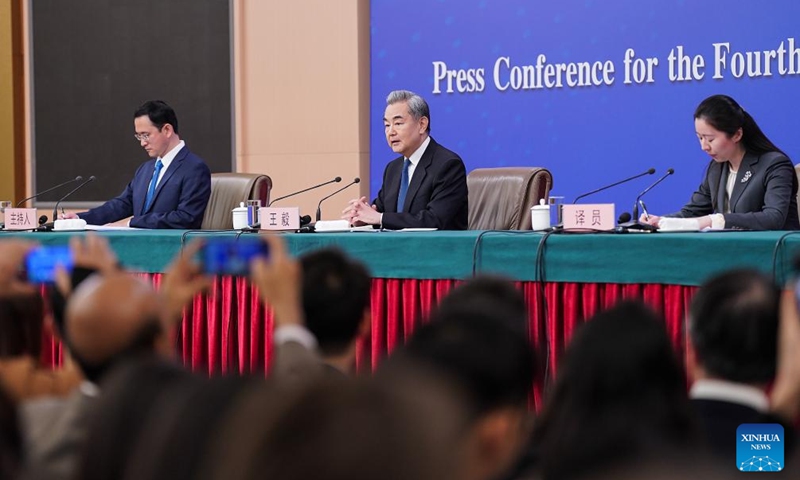
Chinese Foreign Minister Wang Yi, also a member of the Political Bureau of the Communist Party of China Central Committee, attends a press conference on China's foreign policy and external relations on the sidelines of the fourth session of the 14th National People's Congress (NPC) in Beijing, capital of China, March 8, 2026. (Xinhua/Fu Tian)
At a Sunday press conference on Sunday on the sidelines of the fourth session of the 14th National People's Congress, Chinese Foreign Minister Wang Yi outlined China's consular efforts over the past year. These include handling more than 100 major emergencies involving Chinese citizens and institutions overseas, processing over 79,000 cases of consular protection and assistance, answering more than 600,000 calls to the 12308 consular hotline. He also noted that the ministry issued over 3,000 overseas safety alerts, and successfully rescued more than 50 of compatriots from kidnappings situations in Africa.
China has also worked closely with neighboring countries to crack down on cross-border gambling and telecom fraud, leading to repatriation of tens of thousands of individuals, according to Wang.
In the past year, we have resolutely safeguarded the legitimate rights and interests of overseas Chinese enterprises, urged host governments to ensure the safety of Chinese personnel and projects, and firmly opposed any unwarranted suppression of Chinese companies. We have helped businesses enhance their risk prevention capabilities and their ability to protect their rights through legal means, the Chinese foreign minister said.
Wang said that the diplomatic personnel from China are stationed all over the world, shouldering a glorious mission. Some have remained steadfast for long periods in regions plagued by conflict and turmoil; others face daily threats from high disease prevalence. Some even live and work in shipping container offices or in high-altitude environments with severe oxygen deficiency. Yet, they all perform their duties diligently without complaint or regret.
Wang made the remarks while answering a question regarding China-U.S. relations at a press conference on the sidelines of the ongoing session of the national legislature.
China and the United States undoubtedly have a significant impact on the world, yet there are more than 190 countries on this planet, Wang said. "The future of humanity has always been forged through the collective efforts of all nations."
"China will never take the beaten path of seeking hegemony as its strength grows, nor do we subscribe to the logic that the world can be run by major countries," Wang said, adding that China is committed to pursuing a path of peaceful development.
As for how the international landscape should evolve, China's proposal is to build an equal and orderly multipolar world, Wang said. "This should be the common responsibility of all countries."
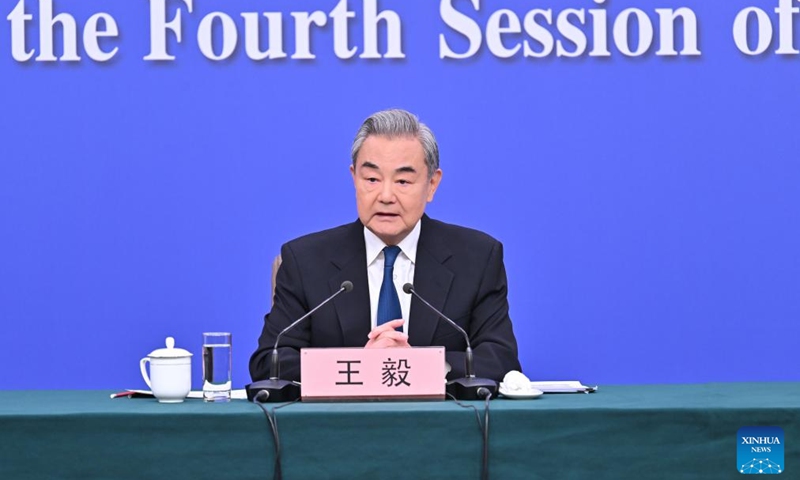
Chinese Foreign Minister Wang Yi, also a member of the Political Bureau of the Communist Party of China Central Committee, attends a press conference on China's foreign policy and external relations on the sidelines of the fourth session of the 14th National People's Congress (NPC) in Beijing, capital of China, March 8, 2026. (Xinhua/Li Xin)
As each other's important neighbors, and members of the Global South, China and India enjoy profound civilizational ties, and share extensive common interests, Chinese Foreign Minister Wang Yi said at a press conference on Sunday on the sidelines of the fourth session of the 14th National People's Congress of the People's Republic of China. He answered questions from journalists from home and abroad on China's foreign policy and external relations, Xinhua News Agency reported.Wang made the remarks in response to a question regarding the current state of China-India relations, the progress in their improvement and the future trajectory given that relations between the two countries have returned to a normal track and India is serving as the chair of BRICS this year.
Wang said that President Xi Jinping and Prime Minister Narendra Modi had a successful meeting in Tianjin last August. Building on the fresh start enabled by their Kazan meeting in 2024, it brought about further improvement in China-India relations. Both sides are earnestly implementing the important understandings of our leaders. We are heartened to see reenergized interactions at all levels, a new record in bilateral trade, and closer people-to-people exchanges. All this has brought tangible benefits to the two peoples.
As each other's important neighbors, and members of the Global South, China and India enjoy profound civilizational ties, and share extensive common interests. Wang said. Mutual trust and cooperation is beneficial to the development of the two countries, while division and confrontation is detrimental to the rejuvenation of Asia.
The two sides should follow the direction set by our leaders, remove interference, and advance toward the same goals, Wang said, outlining four perspectives.
China-LAC cooperation is about the mutual help and support between Global South countries, Wang said at a press conference on the sidelines of the fourth session of the 14th National People's Congress. "We never engage in geopolitical schemes, nor interfere in other countries' internal affairs, nor ask others to pick sides."
"Cooperation between China and LAC countries does not target any third party and should not be subject to interference by any third party," he said.
No matter how the situation evolves, China stands ready to work with LAC countries towards building a China-LAC community with a shared future, and spreading the benefits of the China-LAC comprehensive cooperative partnership to more people on both sides, Wang added.
Chinese Foreign Minister Wang Yi, also a member of the Political Bureau of the Communist Party of China Central Committee, attends a press conference on China's foreign policy and external relations on the sidelines of the fourth session of the 14th National People's Congress (NPC) in Beijing, capital of China, March 8, 2026. (Xinhua/Fu Tian)
China is already a strong country. The 1.4 billion people of China will never allow anyone to justify colonialism or reverse history's verdict on aggression, Chinese Foreign Minister Wang Yi said at a press conference on Sunday on the sidelines of the fourth session of the 14th National People's Congress, responding a question regarding China's relations with Japan.
The future of China-Japan relations hinges on Japan's choice, the Chinese Foreign Minister remarked when responding a question raised by a Japan's Kyodo News Agency reporter on Sunday. The question mentioned that in last November, China had lodged a strong protest against Japanese Prime Minister Sanae Takaichi's remarks on Taiwan. At present, China-Japan relations face challenges, and cooperation in various areas has also been affected.
The Kyodo reporter also claimed that since the Japanese government claimed that it always keeps the window for dialogue open since Takaichi won the election in February and then inquired what expectations the China has for the development of China-Japan relations.
Future of China-Japan relations hinges on Japan's choice, Wang said.
Last year marked the 80th anniversary of the victory of the Chinese People's War of Resistance Against Japanese Aggression. In such a special year, Japan should have deeply repented of the wrong path it chose, including its brutal invasion and colonization of Taiwan. Yet the current Japanese leader claimed that a Taiwan contingency could constitute a “survival-threatening situation” for Japan, under which Japan may exercise its so-called “right of collective self-defense.” It's well-known that the right of self-defense shall be invoked only when a country has come under armed attack, Wang said.
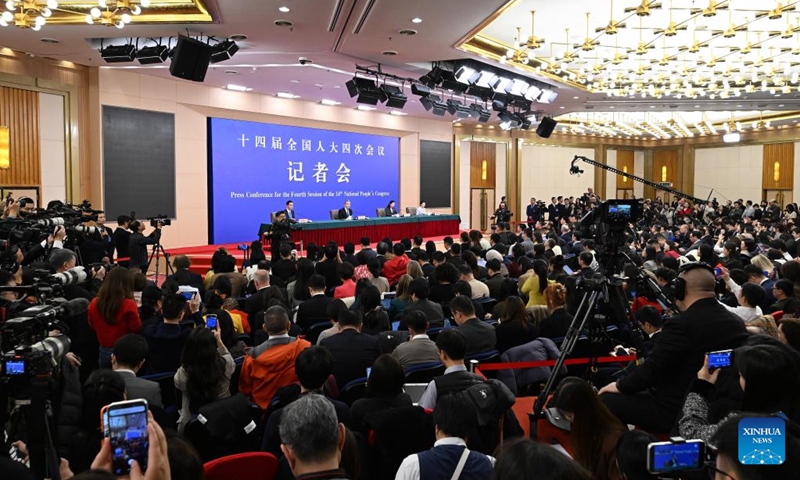
Chinese Foreign Minister Wang Yi, also a member of the Political Bureau of the Communist Party of China Central Committee, attends a press conference on China's foreign policy and external relations on the sidelines of the fourth session of the 14th National People's Congress (NPC) in Beijing, capital of China, March 8, 2026. (Xinhua/Cao Yiming)
China is already a strong country. The 1.4 billion people of China will never allow anyone to justify colonialism or reverse history's verdict on aggression, Chinese Foreign Minister Wang Yi said at a press conference on Sunday on the sidelines of the fourth session of the 14th National People's Congress, responding a question regarding China's relations with Japan.
The future of China-Japan relations hinges on Japan's choice, the Chinese Foreign Minister remarked when responding a question raised by a Japan's Kyodo News Agency reporter on Sunday. The question mentioned that in last November, China had lodged a strong protest against Japanese Prime Minister Sanae Takaichi's remarks on Taiwan. At present, China-Japan relations face challenges, and cooperation in various areas has also been affected.
The Kyodo reporter also claimed that since the Japanese government claimed that it always keeps the window for dialogue open since Takaichi won the election in February and then inquired what expectations the China has for the development of China-Japan relations.
Future of China-Japan relations hinges on Japan's choice, Wang said.
Last year marked the 80th anniversary of the victory of the Chinese People's War of Resistance Against Japanese Aggression. In such a special year, Japan should have deeply repented of the wrong path it chose, including its brutal invasion and colonization of Taiwan. Yet the current Japanese leader claimed that a Taiwan contingency could constitute a “survival-threatening situation” for Japan, under which Japan may exercise its so-called “right of collective self-defense.” It's well-known that the right of self-defense shall be invoked only when a country has come under armed attack, Wang said.
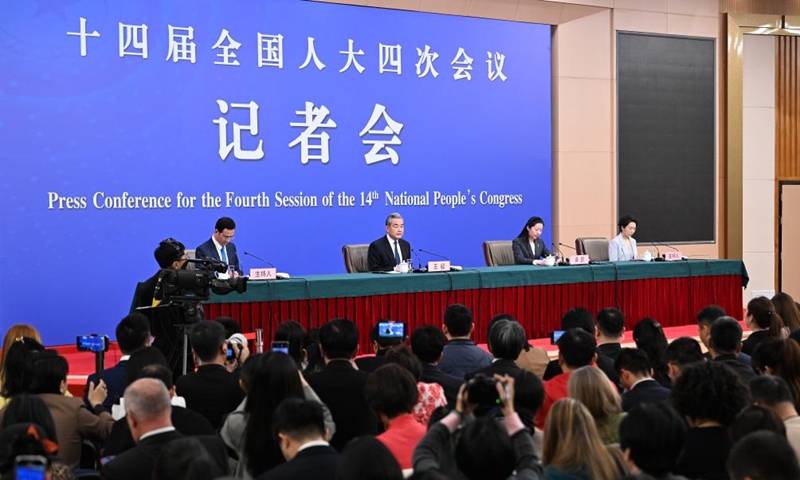
Chinese Foreign Minister Wang Yi, also a member of the Political Bureau of the Communist Party of China Central Committee, attends a press conference on China's foreign policy and external relations on the sidelines of the fourth session of the 14th National People's Congress (NPC) in Beijing, capital of China, March 8, 2026. (Xinhua/Cao Yiming)
China does not subscribe to the logic of "major-power co-governance," Chinese Foreign Minister Wang Yi said at a press conference on Sunday on the sidelines of the fourth session of the 14th National People's Congress. He answered questions of journalists from home and abroad on China's foreign policy and external relations, the Xinhua News Agency reported.
An NBC reporter said at the press conference that Foreign Minister Wang Yi has said China-US relations are one of the most important bilateral ties in the world and the strategic choices of the two countries influence global historic trends. In response to the reporter's inquiry whether China accepts the idea of "US-China co-governance" framework, proposed by people including US President Donald Trump, to share responsibility and deal with global challenges, and if not, what alternative China might offer to avoid confrontation with the US while assuring the world that a rising China does not intend to overturn the current international system, Wang said that China and the US of course have a significant impact on the world, but we should not forget that there are more than 190 countries on the planet, and world history has always been written collectively by all nations, while the future of humanity should be created jointly by the people of all countries. Diversity and coexistence are the true nature of human society, and multipolar coexistence is the proper form of the international landscape, Wang said.
Looking back at history, Wang said every episode of great-power rivalry and bloc confrontation has brought disasters and suffering to humanity. For this reason, China will never follow the old path that "a strong country is bound to seek hegemony," nor does it subscribe to the logic of "major-power co-governance." China's Constitution clearly stipulates that the country pursues an independent foreign policy and follows a path of peaceful development. Chinese leaders have repeatedly emphasized on international occasions that no matter how the international situation evolves and no matter how far China develops, it will never seek hegemony or expansion, Wang said.
As for how the international landscape should evolve, Wang said China's proposal is to build an equal and orderly multipolar world. "Equal" means that countries, regardless of size or strength, are all equal members of the international community and can find their place and play their due role in a multipolar framework. "Orderly" means that all countries should abide by universally recognized international rules, namely the purposes and principles of the UN Charter and the basic norms governing international relations.
Building an equal and orderly multipolar world should be the shared responsibility of all countries, Wang said, adding that major powers, with greater resources and capabilities, should demonstrate broader vision and responsibility by taking the lead in observing rules, honoring commitments and upholding the rule of law. China stands ready to remain a constructive force in a changing world and work with all countries to jointly welcome the arrival of a multipolar world.
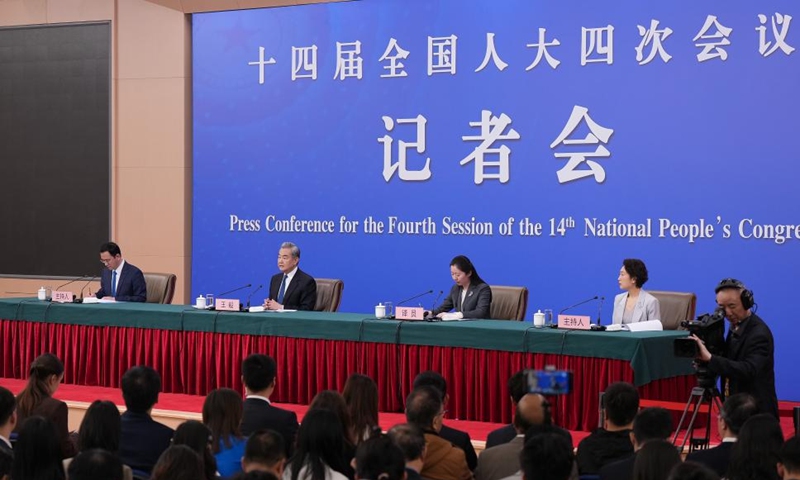
Wang made the remarks when he was asked to comment on how China would respond to US' Latin America policy, as the National Security Strategy of the US released last year shows that the US priority is to interfere in China-Latin America relations by pressuring Latin American countries. The reporter also noted some analyses point out that the US is secretly undermining China's port operations and oil trade in the region. China also issued its Policy Paper on Latin America and the Caribbean last year, proposing to promote relations between China and LAC countries to a new level, while the above-mentioned US policies and actions clearly pose a challenge to this objective, said the reporter.
Old scripts from the 19th century shouldn't be acted out on the international stage of the 21st. The resources of LAC belong to the people there, the path of LAC countries should be chosen by their people, and the choice of friends is a decision for LAC countries alone, Wang responded.
China-LAC cooperation is about the mutual help and support between Global South countries. China-LAC relations grew significantly in the past 50-plus years. The key lies in the fact that China always respects Latin American people and commits to equal treatment and mutual benefit with LAC countries, Wang said.
We never engage in geopolitical schemes, nor interfere in other countries' internal affairs, nor ask others to pick sides. At last year's Ministerial Meeting of the China-CELAC Forum, we jointly launched five programs for solidarity, development, civilization, peace, and people-to-people bonds, drawing a blueprint for China and LAC countries' joint march toward modernization, Wang added.
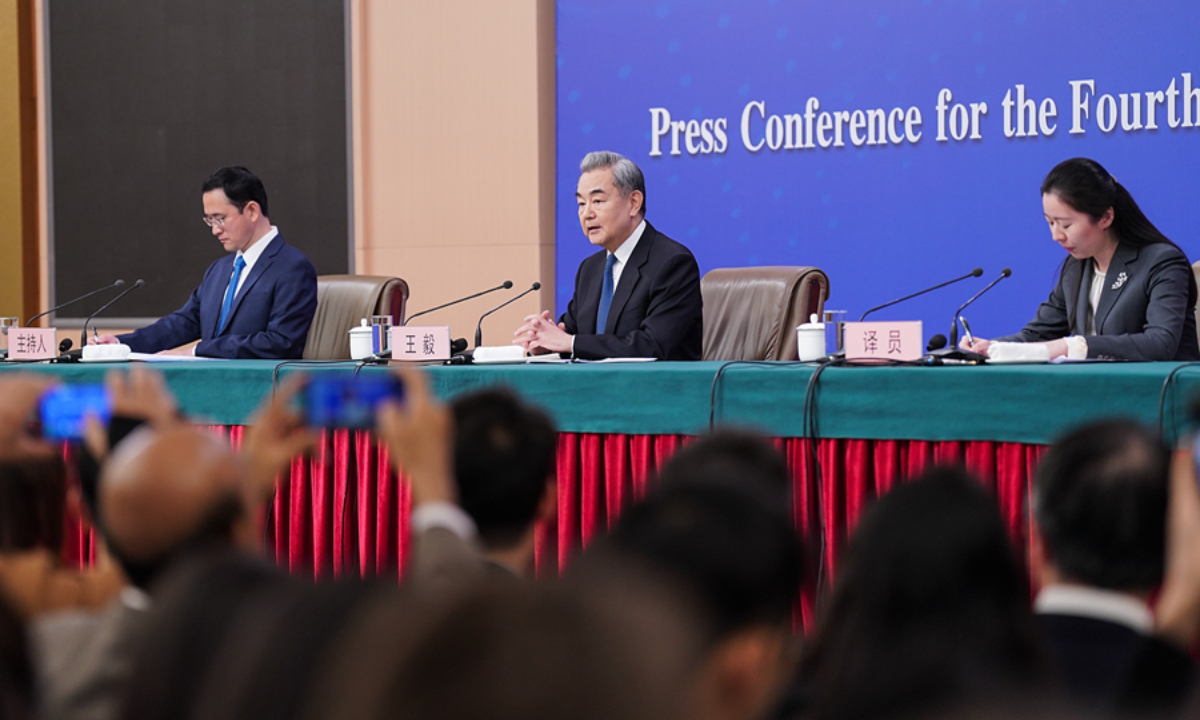
Chinese Foreign Minister Wang Yi, also a member of the Political Bureau of the Communist Party of China Central Committee, attends a press conference on China's foreign policy and external relations on the sidelines of the fourth session of the 14th National People's Congress (NPC) in Beijing, capital of China, March 8, 2026. Photo: Xinhua
We are glad to see European friends stepping out of the "small attic" of protectionism and walking into the "fitness club" of the Chinese market to build their strength and competitiveness, Chinese Foreign Minister Wang Yi said at a press conference on Sunday on the sidelines of the fourth session of the 14th National People's Congress. He answered questions from journalists from home and abroad on China's foreign policy and external relations, the Xinhua News Agency reported.
According to the livestream of the press conference, Wang made the remarks when responding to a question raised by a reporter from Spanish news agency Agencia EFE. The reporter noted that the return of US President Donald Trump has forced Europe to reassess its previously negative stance toward China. In recent months, several European leaders have visited China. The reporter asked what positive steps China believes the European side has taken in improving relations with China, which actions may have been mistaken, and whether China views the successive visits by European leaders as a sign of Europe strengthening its strategic autonomy.
Wang noted that since last year, relations between China and European countries have been regaining strength. Two-way trade topped US$1 trillion, over two million European tourists traveled to China under visa-free policies, and, European leaders paid a number of visits. Interactions are more active. A host of new cooperation agreements have been reached. "Facts have shown that China-Europe relations draw stability from shared interests and certainty from mutually beneficial partnerships," Wang said.
Wang continued that China has a clear stance on developing relations with Europe. We consistently believe that Europe should naturally be a pole in a multipolar world, that Europe is an important force underpinning the stability of the international order, and that Europe is a key partner for China in our modernization. For China-Europe relations to stay steady and sound, it is crucial for Europe to have a correct perception of China. We are witnessing a growing consensus among wise minds in Europe that China is not a "competitor" but an "global partner." This is especially true among young people. They are looking at China in a more objective and positive way, Wang said.
Wang stressed that in trade and economic ties, China and Europe are mutually complementary. A dynamic balance is entirely within reach amid growing ties. As testified by the facts in China-Europe cooperation, interdependence is not a risk; intertwined interests are not threats; and openness and cooperation will not weaken economic security; but building walls and barriers will only lead to self-isolation.
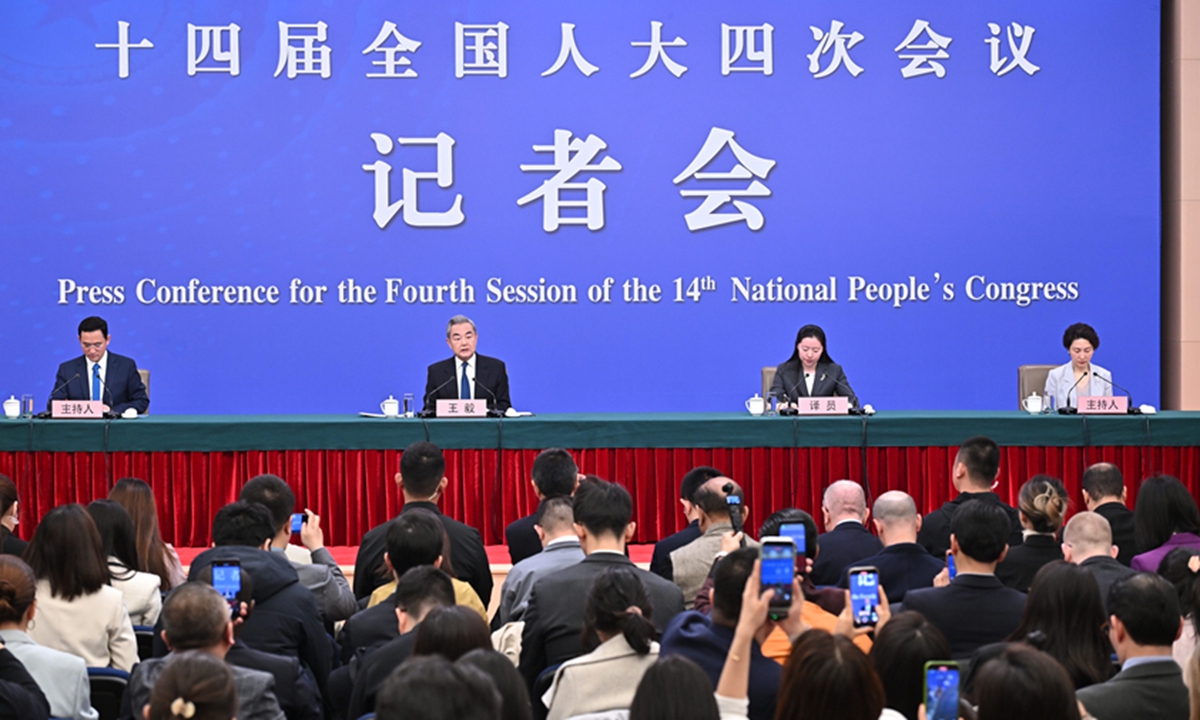
Chinese Foreign Minister Wang Yi, also a member of the Political Bureau of the Communist Party of China Central Committee, attends a press conference on China's foreign policy and external relations on the sidelines of the fourth session of the 14th National People's Congress (NPC) in Beijing, capital of China, March 8, 2026. Photo: Xinhua
China and the US are both big countries. Neither side can remodel the other, but we can choose how we want to engage, Chinese Foreign Minister Wang Yi said at a press conference on Sunday on the sidelines of the fourth session of the 14th National People's Congress. He answered questions of journalists from home and abroad on China's foreign policy and external relations, Xinhua News Agency reported.
In response to a question regarding how US-Israel joint military strikes against Iran could impact Trump's possible China visit, and China's expectation for the visit and development of bilateral relations, Wang said that the relationship between China and the United States is one of far-reaching and global implications. Turning our backs on each other would only lead to mutual misperception and miscalculation. Sliding into conflict or confrontation could drag the whole world down.
China and the US are both big countries. Neither side can remodel the other, but we can choose how we want to engage, that is, to commit to a spirit of mutual respect, to hold the bottom line of peaceful coexistence, and to strive for the prospect of win-win cooperation. That's what serves the interests of Chinese and American peoples, and that's also the expectation of the international community, according to Wang.
It is heartening to see that the presidents of the two countries have led by example. By maintaining good interactions at the top level, they have provided important strategic safeguard for the China-US relationship to improve and move forward, and they have brought the relationship back on an even keel after the ups and downs. This year is a "big year" for China-US relations. The agenda of high-level exchanges is already on the table. What the two sides need to do now is to make thorough preparations accordingly, create a suitable environment, manage the risks that do exist, and remove unnecessary disruptions, Wang said.
Chinese Foreign Minister Wang Yi, also a member of the Political Bureau of the Communist Party of China Central Committee, attends a press conference on China's foreign policy and external relations on the sidelines of the fourth session of the 14th National People's Congress (NPC) in Beijing, capital of China, March 8, 2026. Photo: Xinhua
Chinese Foreign Minister Wang Yi held a press conference on Sunday on the sidelines of the fourth session of the 14th National People's Congress.At the press conference, Wang Yi briefed his take on how China views the current situation in Iran and the propositions for resolving the Iran issue as the US and Israel recently launched a military operation against Iran.
Wang Yi noted, the situation in Iran is the focal point in the current international situation. China's attitude on this issue is objective and impartial. We have stated our principled position on multiple occasions, which can be summarized into one key message, that is, to bring about ceasefire and end hostilities. Ancient Chinese wisdom warns that weapons are ominous tools, and should not be used without discretion. The Middle East is engulfed in flames. This is a war that should not have happened—it is a war that does no one any good.
The history of the Middle East tells the world time and again that force provides no solution and armed conflict will only increase hatred and breed new crises. Once again, China calls for an immediate stop to military operations to avoid the spiraling escalation of the situation and prevent the conflict from spilling over and spreading.
Wang Yi pointed out, China is of the view that to find the right and proper solution to the issues relating to Iran and the Middle East, the following fundamental principles must be observed:
"Neighbors helping neighbors and building an amicable neighborhood is part of Chinese tradition and culture," Wang told a press conference on the sidelines of the ongoing session of the national legislature.
"China is always an anchor for regional security, an engine for development and prosperity, and a champion of the shared values of Asian countries," he said.
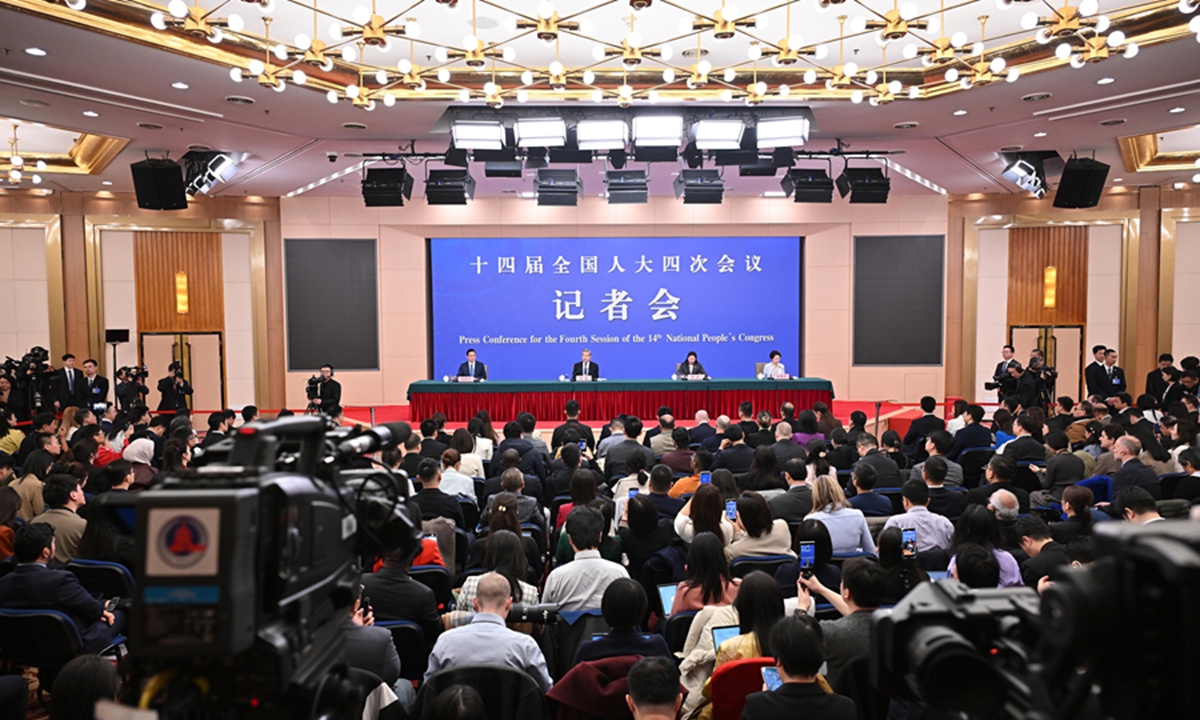
Chinese Foreign Minister Wang Yi, also a member of the Political Bureau of the Communist Party of China Central Committee, attends a press conference on China's foreign policy and external relations on the sidelines of the fourth session of the 14th National People's Congress (NPC) in Beijing, capital of China, March 8, 2026. (Xinhua/Li Xin)
In a fluid and turbulent world, China-Russia relationship has stood rock-solid against all odds, Chinese Foreign Minister Wang Yi said at a press conference on Sunday on the sidelines of the fourth session of the 14th National People's Congress. He answered questions of journalists from home and abroad on China's foreign policy and external relations, the Xinhua News Agency reported.
According to the livestream of the press conference, Wang made the remarks when responding to a question raised by Russia's Sputnik News Agency. The question noted that China has repeatedly stated its opposition to any deliberate infringement on the sovereignty and security of other countries. In the face of a complex international situation, how can China and Russia - two major powers - counter attempts to reshape international law and global trade rules, the reporter asked.
Wang said that this year marks the 30th anniversary of the China-Russia strategic partnership of coordination and the 25th anniversary of the China-Russia Treaty of Good-Neighborliness and Friendly Cooperation. In a fluid and turbulent world, China-Russia relationship has stood rock-solid against all odds. How is that achieved? I think the main reason is that the China-Russia strategic partnership of coordination has been based on equality, respect and mutual benefit since day one. It represents the direction of a new type of major-country relations.
Wang noted, China and Russia are strategically independent. We always respect each other's core interests, do not impose the will or agenda of one on the other, and keep to the principle of non-alliance, non-confrontation and not targeting any third party.
China and Russia share a high degree of political mutual trust. Working back-to-back lies at the heart of this relationship. And the strong strategic resilience enables it to defy any external instigation or pressure, Wang said..
Wang will answer questions of journalists from home and abroad on China's foreign policy and external relations.