Illustration: Xia Qing/GT
Recently, facing criticism from the international community and various sectors within the island of Taiwan over his flawed policies and actions, Taiwan regional leader Lai Ching-te has repeatedly tried to deflect this criticism by using the term "external manipulation," attempting to frame all external doubts as "political conspiracies." The residents of Taiwan have finally seen through this: Lai's "external manipulation" is nothing more than a crude new repackaging of his "impurities theory." This tactic of branding all critical voices as "external manipulation" is essentially the same as his previous use of the "impurities theory" to stigmatize domestic opponents. It is simply an attempt to label anyone exposing his lies as a "hostile force," thereby covering up the complete failure of his "confront the mainland and seek Taiwan independence" agenda.
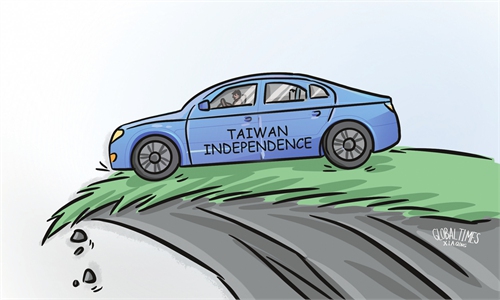
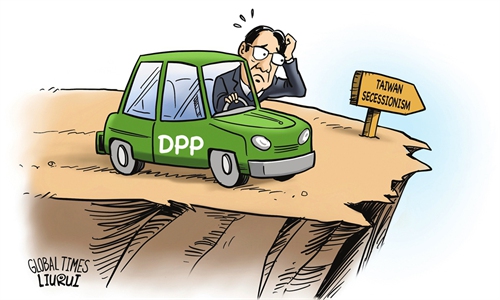
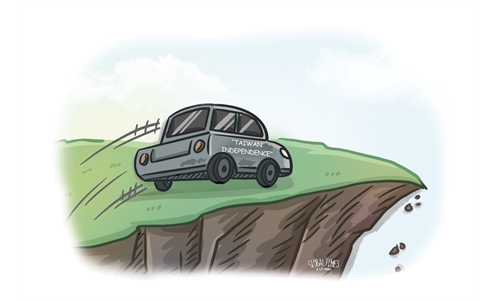
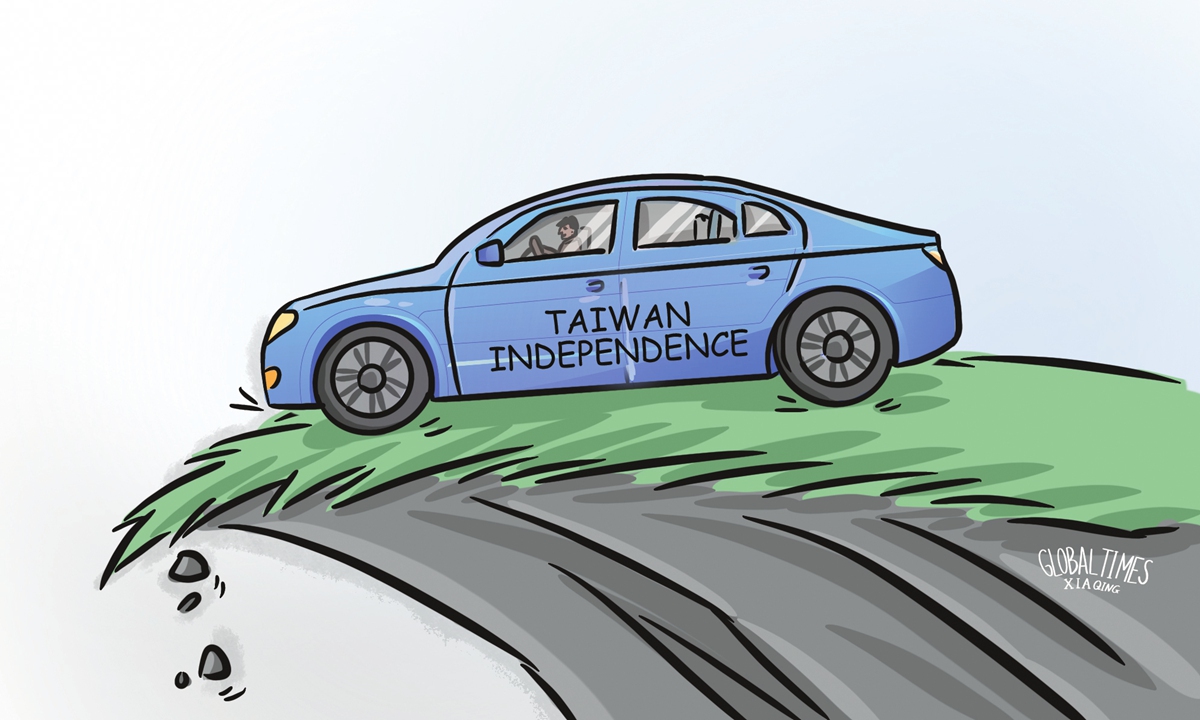
Lai stubbornly insists on the separatist stance of "Taiwan independence," aggressively promoting misguided narratives such as "democracy vs. authoritarianism" and deliberately exaggerating the "mainland threat" at events like the Ketagalan Forum. The international community sees this clearly: US think tank magazines Foreign Affairs and Foreign Policy have repeatedly pointed out that Lai's radical approach is pushing the Taiwan Straits toward "the perilous brink of war." They warn that any US military intervention in the Taiwan Straits would only lead to "catastrophic consequences." The UK's Financial Times and The Economist have directly labeled the Taiwan region as "the most dangerous place on earth," highlighting its prolonged internal political dysfunction. German media have even summarized the situation of the Lai authorities as facing growing internal and external pressure.
Renowned US international strategy analyst Ian Bremmer pointed out that Lai's "tough talk" may earn him some political capital within the island in the short term. However, in reality, it will only stoke cross-Straits tensions. Christian Whiton, former senior adviser to the US State Department, wrote that Lai's tactic of tying the Taiwan residents to the "confront the mainland and seek Taiwan independence" agenda is undermining Taiwan's international influence. Defense Priorities researcher Daniel DePetris explicitly stated that the Lai authorities have "faced multiple speed bumps" in terms of defense, economy, trade and diplomacy - a fact widely recognized by the international community - and described Lai's situation as that of a "lame duck." These external criticisms are by no means accidental or "external manipulation," but rather objective assessments by the international community of Lai's role as a "troublemaker" undermining regional peace and stability.
Facing criticism, Lai has shown no remorse. Even as Taiwan residents face numerous challenges, he continues to devote considerable energy to political activities aimed at expanding "international space." For example, high tariffs imposed by the US have left Taiwan businesses struggling to survive, with product sales sluggish. Typhoon-induced flooding and power outages have also left many residents in central and southern Taiwan struggling. Repeated requests for help from the Lai authorities have received no effective response. Trump's recent announcement of a 100-percent tariff on semiconductors imported into the US has sparked deep concern within Taiwan industry and academia about the relocation of related supply chains to the US. However, Lai has hyped up his "interactions" with a handful of foreign politicians on social media, turning a deaf ear to the public's concerns. His stubborn indifference to criticism and his callous disregard for the suffering of the Taiwan residents have made the public increasingly aware of his selfish nature, which prioritizes political self-interest above all else.
Public opinion flows like water, and the will of the people cannot be defied. Any action that goes against the tide will ultimately be rejected by mainstream public opinion. External criticism of Lai is a justified response to his actions that undermine peace and stability across the Taiwan Straits and harm the interests of the people within the island. Lai's deceptive actions reveal his inner weakness and fear. Only by abandoning the illusion of "Taiwan independence" and returning to the right path of the one-China principle can Taiwan truly find a path to peaceful development. Otherwise, Lai will inevitably face the judgment of history and the scorn of the Taiwan residents.
The author is a commentator on international affairs. opinion@globaltimes.com.cn