Exclusive: Only by reflecting on history can Japan win respect, say descendants of Japanese veterans of China’s Eighth Route Army
By Xing Xiaojing, Ding Yazhi and Published: Sep 05, 2025 12:32 AM

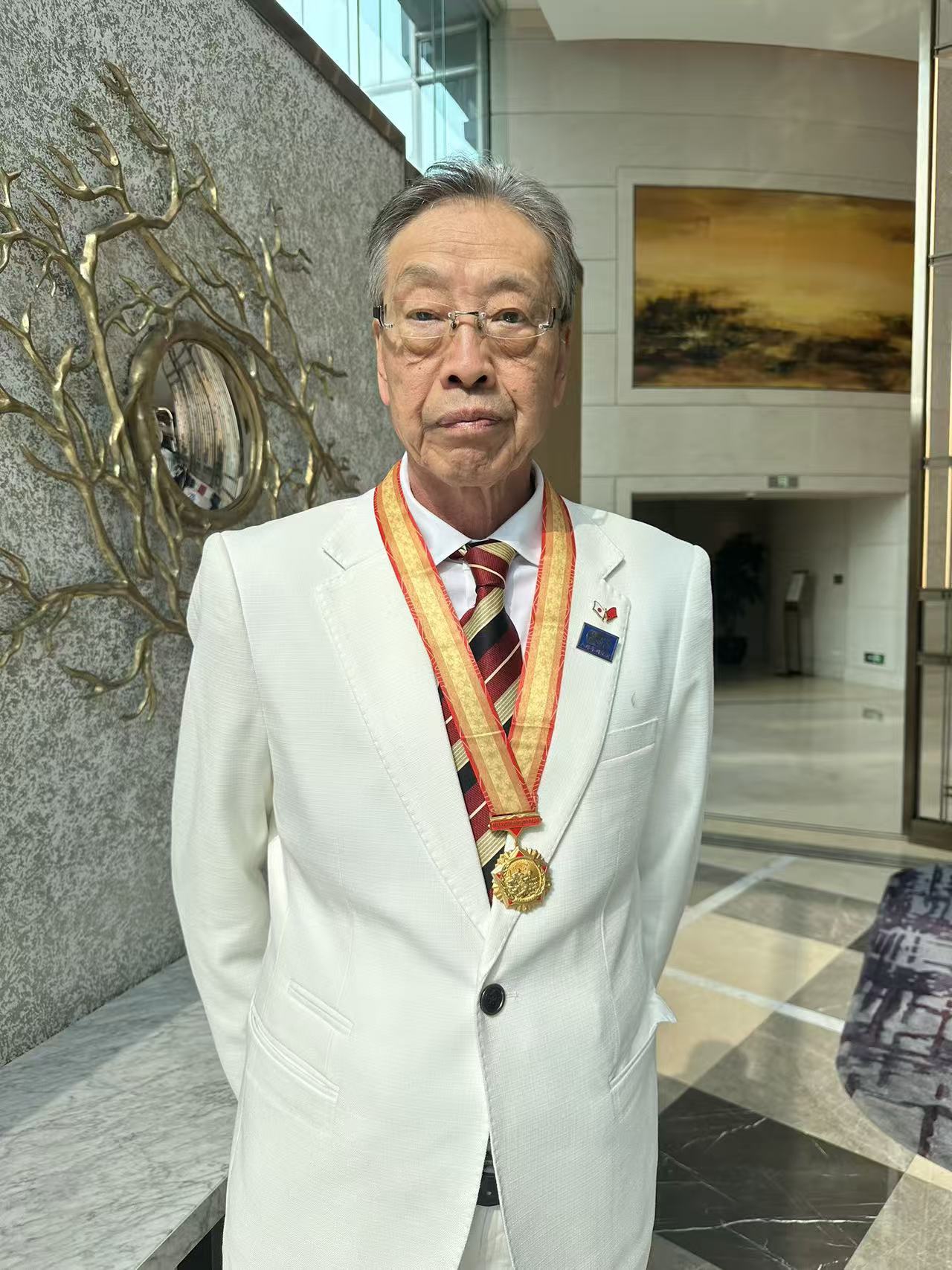
Yokichi Kobayashi, the son of Kiyoshi Kobayashi, a Japanese veteran of China's Eighth Route Army Photo: Ding Yazhi/GT
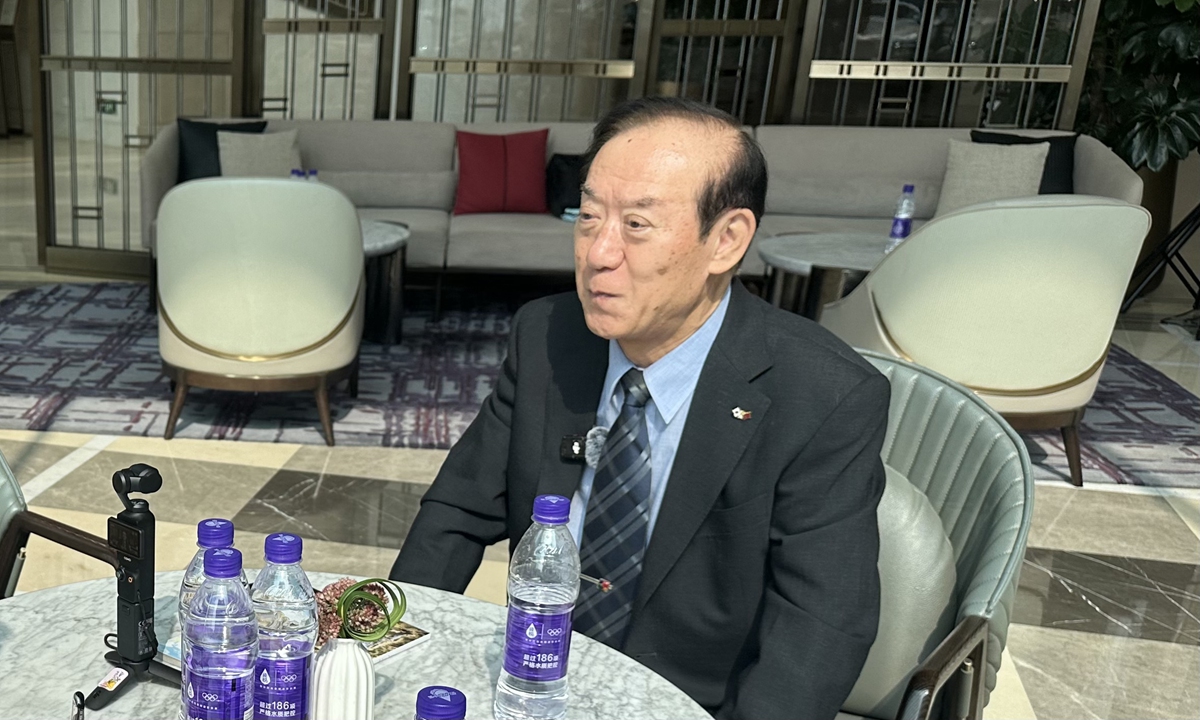
Tetsuo Maeda, the 78-year-old son of Mitsushige Maeda, the late Japanese anti-war activist and the first Japanese soldier of China's Eighth Route Army Photo: Ding Yazhi/GT
On Wednesday, commemorative events marking the 80th anniversary of the victory in the Chinese People's War of Resistance Against Japanese Aggression and the World Anti-Fascist War were held in Beijing. Among the attendees were representatives of international friends who contributed to China's victory in the War of Resistance, or their descendants -including Yokichi Kobayashi, son of Kiyoshi Kobayashi, and Tetsuo Maeda, son of Mitsushige Maeda, both Japanese veterans who served in China's Eighth Route Army.
On Thursday, in an exclusive interview with the Global Times in Beijing, they expressed that participating in the commemorative event had left them deeply stirred and immensely honored, urging Japan to reflect on history and safeguard peace.
Yokichi Kobayashi, vice president and chief secretary of the Japanese association of comrades-in-arms of China's Eighth Route Army and New Fourth Army, is the son of Kiyoshi Kobayashi - a former soldier of the invading Japanese forces. After being captured by the Eighth Route Army, Kiyoshi Kobayashi was sent to Yan'an for re-education and ultimately joined the anti-war cause, fighting alongside Chinese soldiers.
As a member of the delegation of descendants of Japanese veterans who served in China's Eighth Route Army, Yokichi Kobayashi visited China to attend this year's commemorative events. He told the Global Times on Thursday that "he didn't sleep well last night - I'm still incredibly excited!"
Noting that conflicts persist in many parts of the world today, he pointed out that the root cause often lies in weakness and an inability to ensure self-protection. This perspective on history and reality led him to a deeper appreciation of the weight borne by today's powerful Chinese military in its mission to guard peace.
"It is a great honor to be invited to the 80th anniversary commemorative activities," Yokichi Kobayashi said.
Also attending this year's event was Tetsuo Maeda, the 78-year-old son of Mitsushige Maeda, the late Japanese anti-war activist and the first Japanese soldier of China's Eighth Route Army. He told the Global Times that this year was his first time participating in the commemorations as a relative of a deceased veteran, and he was awarded a commemorative medal for the 80th anniversary of the victory in the War of Resistance.
As a "familiar face" who has participated in the victory commemorations three times, Yokichi Kobayashi remembers the scenes from the 2005, 2015, and 2025 events vividly. Attending this year's commemorations and witnessing the highly cohesive ranks of the Chinese PLA, Yokichi Kobayashi was moved to tears.
"My father once said that Chinese People's War of Resistance Against Japanese Aggression was of profound significance-the greatest war in the history of national struggles. For a Japanese, being able to participate in the War of Resistance was the fortune and glory of his lifetime," Yokichi Kobayashi told the Global Times.
"When I was a child, most of my peers had fathers who served in the Japanese forces invading China. They never spoke of the atrocities they committed, but my father was engaged in anti-war activities, which made me feel proud," Tetsuo Maeda told the Global Times.
On the occasion of the 60th anniversary of the Victory in the Chinese People's War of Resistance Against Japanese Aggression and the World Anti-Fascist War, Tetsuo Maeda also accompanied his father to China. He recalled, "When I entered the Great Hall of the People to attend the event, I felt even more profoundly the greatness of my father."
Tetsuo Maeda stated that during the war, his father was captured by China's Eighth Route Army and received preferential treatment. "The soldiers usually ate coarse grains, but they specially sought out white rice for my father," truly implementing the policy of "not killing prisoners of war and treating them well." It was this humanitarian treatment, coupled with his firsthand witness of the Japanese military's atrocities, that led Mitsushige Maeda to reflect on the meaning of the war and ultimately realize that "this aggression was fundamentally wrong." Thus, on January 2, 1939, Mitsushige Maeda, along with two other Japanese soldiers announced their enlistment in Eighth Route Army, becoming the first Japanese soldiers to join its ranks. On November 7 of the same year, he initiated the establishment of the first Japanese anti-war organization—the Japanese soldiers' awakening league—and from then on, devoted himself actively to anti-war efforts.
On Tuesday, at the third press conference for the commemorative events, Yokichi Kobayashi responded to a question from a Global Times reporter by stating, "A nation's introspection is far more important than another nation's forgiveness. Only a country that has the courage to reflect on itself can earn the respect of the world." This remark has quickly gone viral on the internet.
When asked why this statement resonated so widely, Yokichi explained that China has long treated Japan with a forgiving attitude: after the victory in the War of Resistance, China safely repatriated millions of Japanese soldiers and civilians, allowing them to take their belongings and clothing with them. These individuals later became an important force in Japan's post-war economic revival. However, Japanese society has consistently failed to truly confront history, with right-wing forces long selectively promoting a "victim" narrative.
"On the 80th anniversary of the end of the war, Japan should have frankly admitted its acts of aggression and apologized to China and other victimized countries, as expressed in the Murayama Statement on the 50th anniversary of the end of the war. However, some Japanese politicians and political forces have claimed that 'Japan's historical responsibilities have already been resolved', which essentially denies Japan's history of foreign aggression and even glorifies its war of aggression," Yokichi said.
Yokichi has long been dedicated to anti-war and peace initiatives and was involved in organizing the Japanese veterans' association "Coconut Society', where he currently serves as Vice President and Executive Director. He is the creator of the manga The Miracle of Pagoda Mountain,through which he actively promotes anti-war messages, peace advocacy and Sino-Japanese friendship activities in Japan.
Tetsuo Maeda expressed the same aspiration. He stated that he feels ashamed as a Japanese citizen that his government has yet to squarely face history, reflect on its actions, or offer a sincere apology. Amid Japan's increasingly pronounced right-wing tilt, he vowed to continue his efforts to contribute to advancing friendly exchanges between China and Japan.
RELATED ARTICLES