Illustration: Xia Qing/Global Times
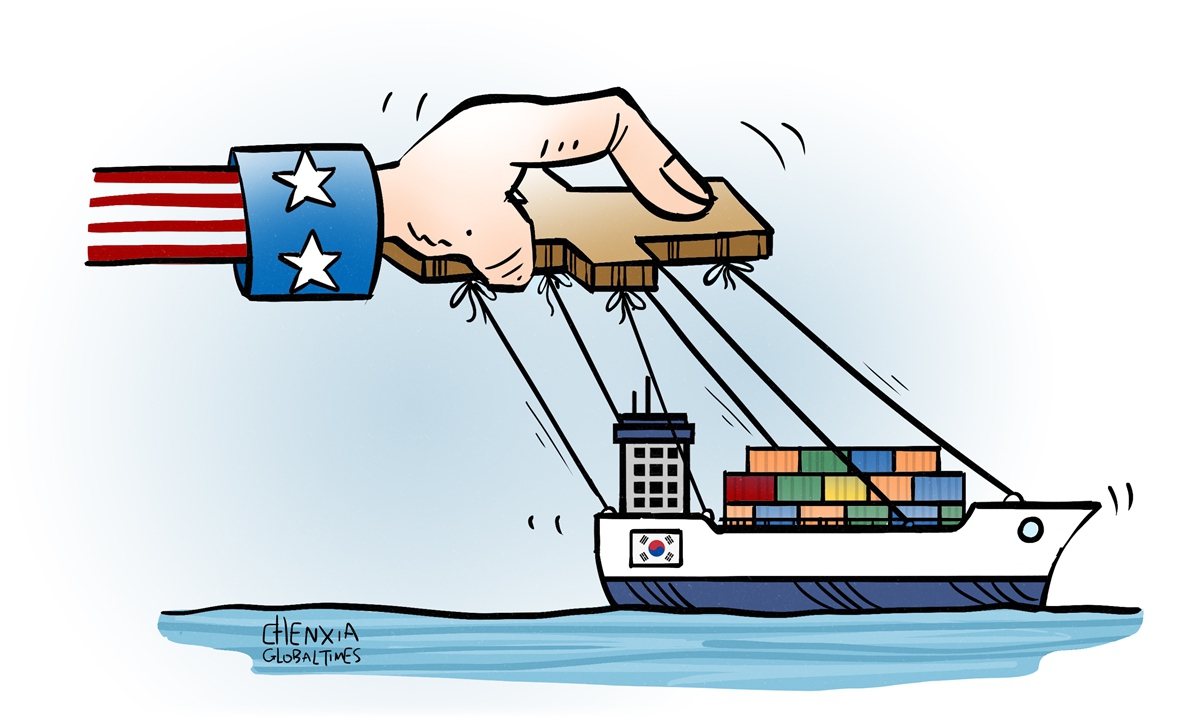
US regulatory pressure on South Korean chipmakers' factories in China has heightened uncertainty for an industry already grappling with the complexities of US policy shifts. The US is proposing annual approvals for exports of chipmaking supplies to Samsung Electronics' and SK Hynix's China-based factories, Bloomberg reported on Monday.While exact details of the new measures remain unclear after the US government revoked the so-called validated end-user authorizations that are set to expire at the end of this year, it seems certain that South Korean chip factories in China may face additional regulatory pressure from the US.
These pressures are not short-term policy fluctuations, but structural challenges that are likely to persist, with the most direct consequence being the gradual erosion of South Korean chipmakers' global competitiveness.
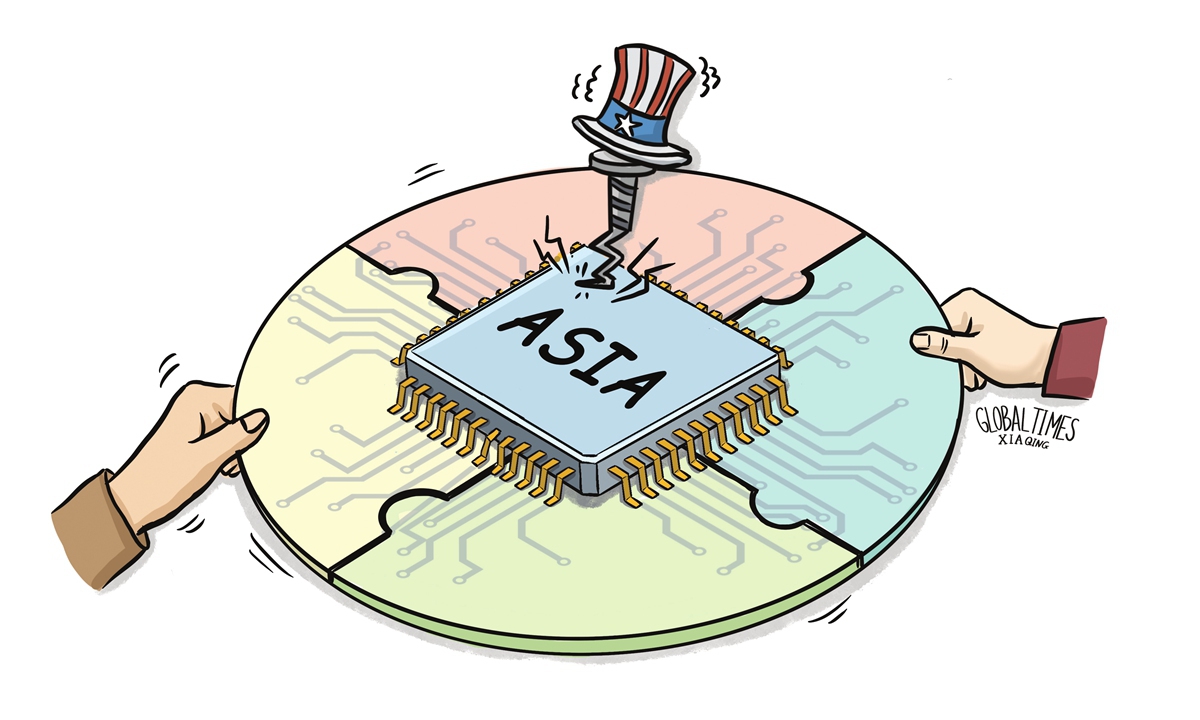
In recent years, the US has imposed various restrictions on China's tech industry, particularly in the semiconductor sector, aiming to contain the development of China's semiconductor industry. However, this approach underestimates China's pivotal role in the global semiconductor supply chain. China is not only the world's largest chip consumer market but also boasts an increasingly sophisticated industrial chain support system, providing South Korean chipmakers with broad market demand and economies of scale. To a certain extent, the competitiveness of South Korea's chip industry is built on its deep integration and positive interaction with the Chinese market.
The renewed regulatory pressures from the US have introduced greater uncertainty for South Korean chipmaking companies. In China's rapidly evolving semiconductor industry, any delays and uncertainties stemming from US regulatory approvals may impede the timely updates of production equipment and process enhancements at South Korean factories in China. Consequently, these production lines could lag behind market demand, diminishing their responsiveness and flexibility, and ultimately undermining their global competitiveness.
Faced with these challenges, South Korea must acknowledge that over-reliance on the US carries significant risks and could lead to increased strategic vulnerability, potentially placing the country in a more passive position. If South Korean companies are compelled to adjust their strategies in China due to US pressure, this may not only hurt their share in the Chinese market but also jeopardize their position in the global industrial chain. Aligning with US geopolitical priorities under external pressure could severely affect South Korea's semiconductor industry.
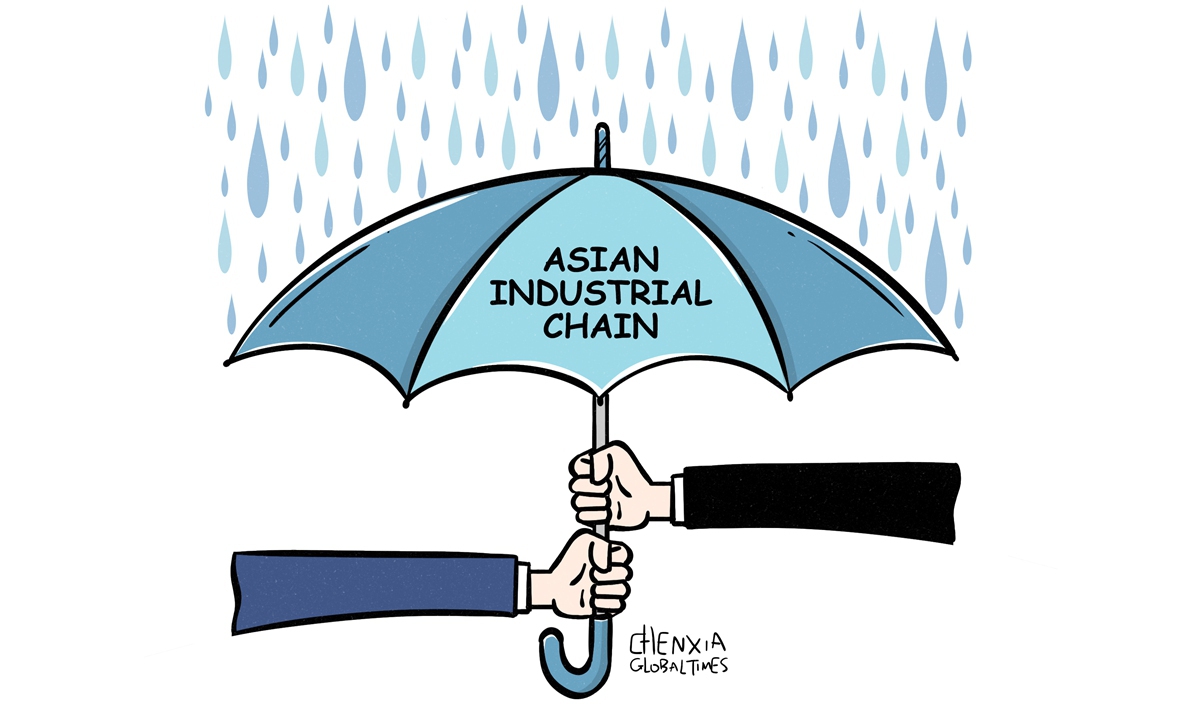
Therefore, for South Korea, actively seeking a balanced approach is in line with its own interests, especially by strengthening collaboration with Chinese partners to jointly explore effective strategies to expand cooperation.
In the long run, US restrictions on China's semiconductor industry are essentially accelerating the process of China's chip industry independence. For South Korean companies, this brings challenges as well as cooperation opportunities that can support the construction of a more diversified industrial ecosystem.
Specifically, South Korean companies can increase research and development investment in China, strengthen cooperation with local Chinese equipment manufacturers and material suppliers, and gradually raise the utilization rate of local supply chains in their Chinese factories. This will not only reduce supply risks caused by geopolitical factors but also help South Korean companies better integrate into China's semiconductor industrial chain and achieve deeper integration with the Chinese market.
Additionally, the two sides can establish closer cooperation mechanisms, such as joint laboratories and industrial alliances, to share market information and experience in responding to external policy risks.
The global semiconductor industry is undergoing profound transformation and adjustment, and the involvement of geopolitical factors has undoubtedly increased the variables in industrial development. Against this backdrop, South Korea needs to formulate a more independent and resilient strategy to safeguard its industrial interests and global competitiveness. Unlike the US' unilateral and protectionist approach to crack down on cooperation, China is always open to win-win cooperation with countries including the US and South Korea.
RELATED ARTICLES